
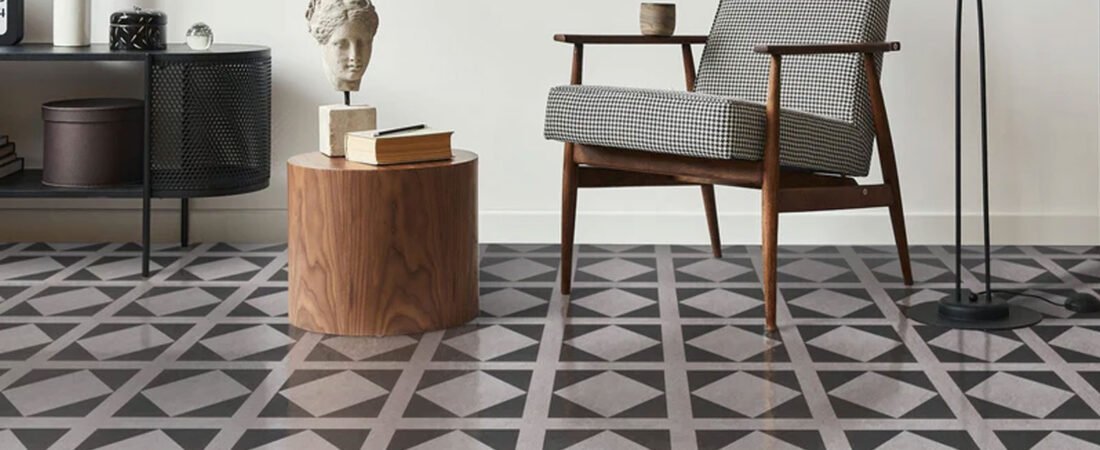
Peel and stick flooring is one of the easiest flooring option to give any room a fresh new look and you don’t need any experience to do it. In this guide, we’ll walk through what it is, how it works, what it costs, and the mistakes most beginners make so you can skip them. Let’s get started.
If you’ve been scrolling home renovation ideas and keep seeing floors that look easy to install, there’s a good chance you’ve found peel and stick flooring. It’s one of the few flooring upgrades you can genuinely do yourself in a weekend, with no experience and almost no tools.
What Is Peel and Stick Flooring? (Also Called Self-Adhesive or Stick-On Flooring)
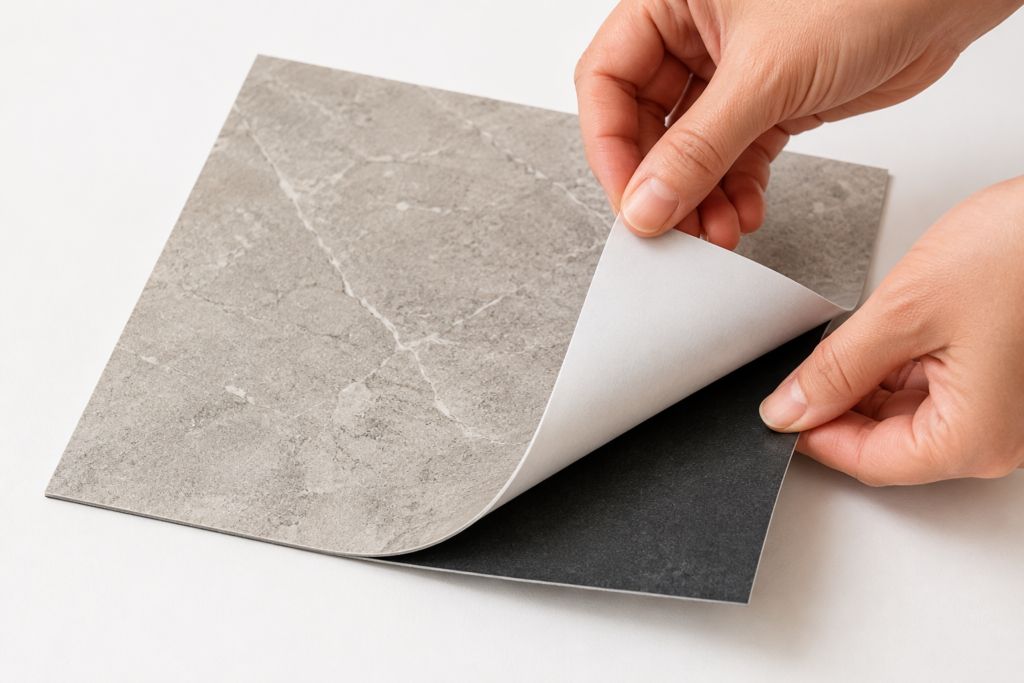
Peel and stick flooring is a floor covering that already has sticky glue built right onto the back. You peel off a paper layer, then press the piece down onto your floor. That’s really it. You do not need any mixing glue. No special tools. Think of it like a big sticker for your floor.
You might see it called by a few other names. They all mean the same thing:
- Self-adhesive flooring
- Stick-on flooring
- Adhesive-backed vinyl flooring
- Removable vinyl flooring (be a little careful with this name, not every brand comes off as easily as it sounds, more on that soon)
Most peel and stick flooring is very thin, usually thinner than a pencil. That’s why it fits nicely under doors and cabinets without you needing to cut or trim anything. You can also use peel and stick tiles in bathroom.
How Does Peel and Stick Flooring Work?
Here’s the simple version. Each tile or plank has a sticky layer on the back. You peel off the paper cover, then press the piece down firmly onto your floor.
The tricky part isn’t the sticking part, it’s what’s underneath. If your floor is clean, dry, and flat, the glue holds strong for years. If your floor is dusty, bumpy, or damp, the glue won’t hold as well, and the edges can start to lift. So before you even open a box, cleaning your floor really well matters more than any tool you’ll use.
When peel-and-stick tiles start lifting or lose their grip, the problem may be with the floor, moisture, temperature, or adhesive. Find out what is causing the tiles to come loose and how to fix it.
3 Types of Peel and Stick Flooring: Tiles, Planks, and Sheets
If you think, only tiles come in peel and stick, you are mistaken. It isn’t just one thing. It comes in three main shapes. Let’s go through these shapes to understand this flooring type better.
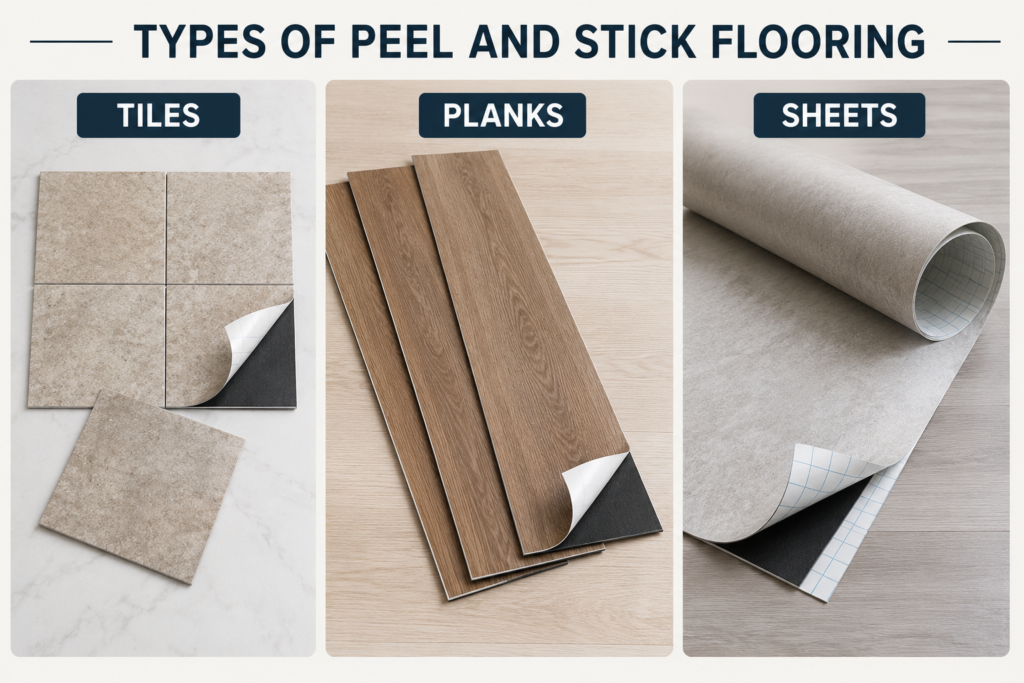
Floor Tiles
Usually square, about 12 inches by 12 inches. They’re made to look like stone or ceramic tile. Best for bathrooms, kitchens, and laundry rooms. Peel and stick tile is not the only easy-to-install flooring option. If a more durable floor is being considered, it is worth comparing peel and stick tiles with vinyl plank flooring before making a choice.
Peel and Stick Planks
Long and skinny, like little strips of wood. Best for living rooms and bedrooms where you want that wood-floor look.
Peel and Stick Sheets
Big rolled-out pieces. Less common in residential use, however, it is sometimes used for quick full-room coverage with fewer seams. The drawback is it is harder to find in as many styles as tiles or planks.
If your project is bathroom- or kitchen-focused, you’ll almost always be looking at tiles. If you want a wood look for a living space, planks are the better fit.
What Is Peel and Stick Vinyl Flooring Made Of? (VCT vs. LVT vs. SVT)
Almost all peel and stick flooring is made from vinyl. Vinyl is another common surface people consider covering with peel-and-stick tiles. If that’s the surface you have, here’s what you need to know about putting peel-and-stick floor tiles over vinyl. But not all vinyl is the same. Here are the words you’ll see on the box, explained in plain terms:
VCT: Cheaper vinyl mixed with limestone. Tough, but it usually needs waxing to stay protected. Not very common for home peel and stick flooring anymore.
LVT: Better vinyl, with a printed picture layer on top (that’s what makes it look like real wood or stone), plus a clear layer to protect it. This is what most home peel and stick flooring is made from today.
SVT: A lot like LVT, but the color runs all the way through the tile, not just on the top layer.
WPC / SPC: Thicker, stronger vinyl used in click-together flooring. You won’t usually see this in peel and stick, but you’ll spot these letters when comparing flooring types.
Easy takeaway: look for “LVT” on the label. That’s the good stuff for most homes.
Peel and Stick Flooring Quality Levels: Cheap, Middle, and Best
Not all peel and stick flooring performs the same, even within LVT. The price usually tells you which level you’re getting.
| Tier | Thickness | Wear Layer | Typical Use | What to Expect |
| Budget | 1–1.2mm | Thin or none | Rentals, temporary fixes | Visible seams, shorter lifespan (1-3 years), prone to lifting |
| Mid-range | 1.5–2mm | Light printed layer | Most home DIY projects | Realistic look, moderate durability (3-7 years) |
| Premium | 2–3mm | Reinforced wear layer | Higher-traffic rooms | Best realism and grip, longest lifespan (5-10+ years) |
A Pro Tip: If a listing doesn’t tell you the thickness, that’s usually a hint it’s the cheap kind.
Is Peel and Stick Flooring Waterproof?
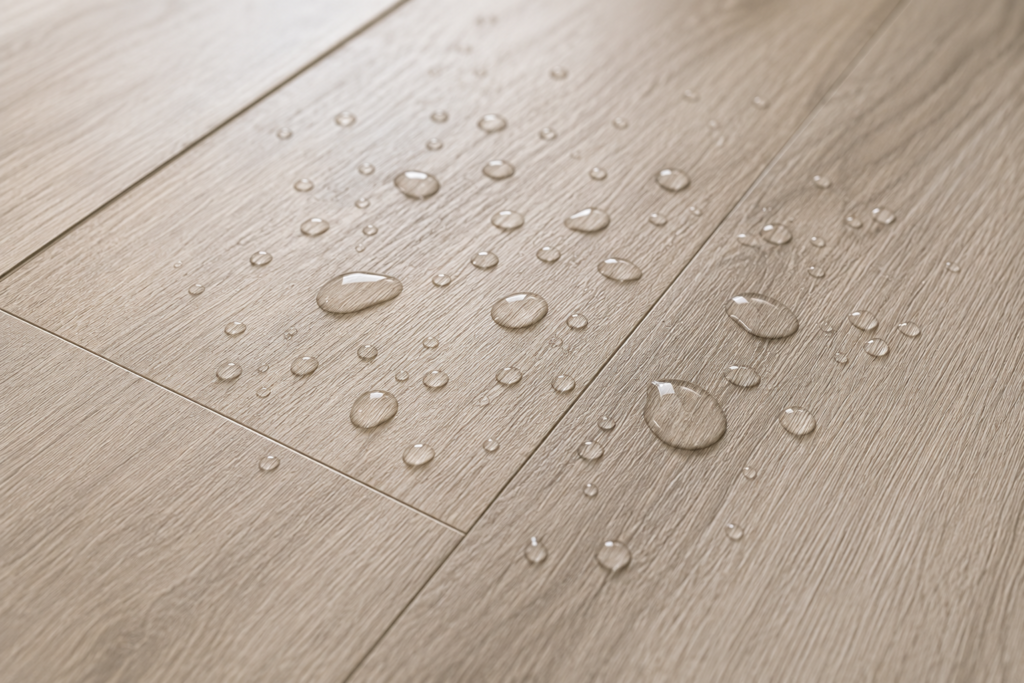
Short answer: not completely.
The vinyl tile itself doesn’t soak up water. But you will notice the seams, the thin lines where two tiles meet, are the weak spot. If water sneaks into those cracks, it can loosen the glue underneath, even though the top of the tile stays perfectly dry.
That means peel and stick flooring can handle small spills just fine, as long as you wipe them up. But standing water, like a leaky shower pan or a flooded bathroom floor, is a real risk, especially with the cheaper tiles.
If you want to use it in a bathroom, choose the thicker, premium tiles, and make sure the edges are pressed down and sealed well.
Peel and Stick Flooring vs. Other Flooring Types
| Type | Install Difficulty | Cost (per sq ft) | Lifespan | Best For |
| Peel and stick vinyl | Easiest (DIY) | $0.50–$5 | 3-7 years | Renters, budget refreshes, quick updates |
| Click-lock LVP | Easy–moderate (DIY) | $2–$7 | 10-20 years | Long-term homeowners wanting durability |
| Ceramic/porcelain tile | Hard (pro install) | $5–$15 installed | 20+ years | Permanent, high-moisture areas |
| Laminate | Moderate (DIY) | $2–$8 | 15-25 years | Wood look with more durability than vinyl. |
How Long Does Peel and Stick Flooring Last?
Realistically, most peel and stick flooring lasts 3 to 7 years with normal household use.
However, you will notice that premium products in low-moisture rooms can stretch to 10 years. There is no doubt that this is significantly shorter than click-lock LVP (10–20 years) or ceramic tile (decades). That is why peel and stick floor tiles are considered a cost-effective interim flooring solution rather than a permanent one.
Where Peel and Stick Flooring Works Best (and Where It Doesn’t)
| Room | Good Fit? | Why |
| Bathroom | Conditional | Works with proper sealing and premium tiles; budget tiles risk adhesive failure from moisture |
| Kitchen | Yes | Good option if subfloor is flat and dry; wipe up spills quickly to protect edges |
| Laundry room | Conditional | Similar moisture concerns as bathrooms, premium tier recommended |
| Bedroom | Yes | Low moisture, low traffic, one of the best-suited rooms |
| Living room | Yes | Works well, especially plank styles; higher traffic means mid-to-premium tier is worth it |
| Basement | Conditional | Fine over dry, sealed concrete; risky over basements with any moisture history |
| Entryway/mudroom | Not ideal | High grit, moisture, and traffic combine to shorten lifespan significantly |
| Directly over carpet | No | Adhesive won’t bond properly to soft or uneven surfaces |
What You’ll Need to Install Peel and Stick Flooring
Even though this is a simple project, a few basic supplies make a big difference:
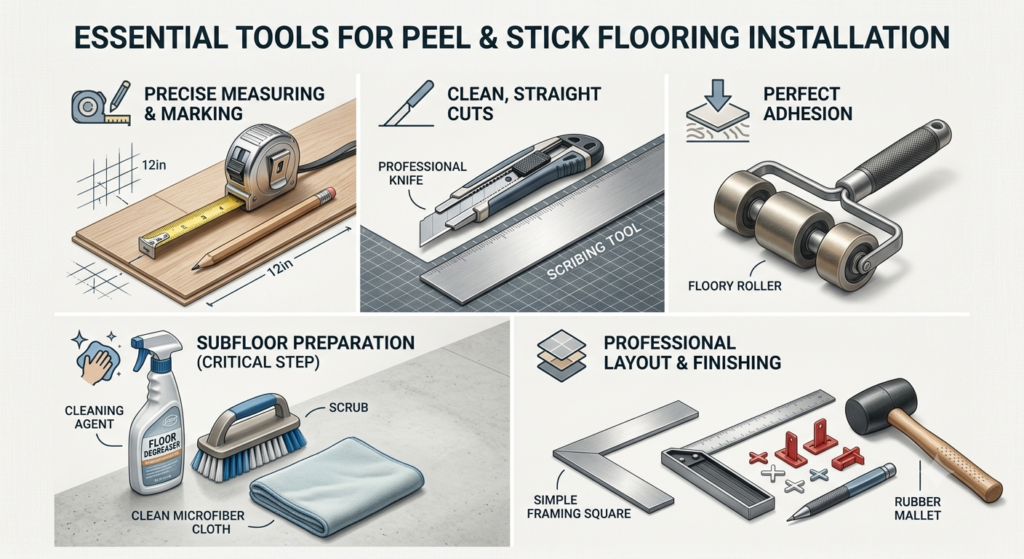
- Tape measure and pencil
- Utility knife or vinyl tile cutter
- Straightedge (for clean, straight cuts)
- Floor roller (helps press tiles down firmly and stops early lifting)
- Cleaning supplies for the subfloor (this step matters more than any tool on this list)
We walk through the full step-by-step process, including how to prep your subfloor, in our companion installation guide.
How Much Does Peel and Stick Flooring Cost?
Peel and stick flooring is one of the cheapest flooring options you can buy.
| Level | Cost per sq ft | 200 sq ft room |
| Budget | $0.50–$1 | $100–$200 |
| Mid-range | $1–$2.50 | $200–$500 |
| Premium | $2.50–$5 | $500–$1,000 |
Since it’s made for DIY, most people skip paying for installation altogether. Compare that to hardwood, which can run $5–$12 per square foot installed, and you can see why peel and stick is such a popular starting point.
Is Peel and Stick Flooring Right for You? A Quick Self-Check
Answer honestly, if you check more “yes” boxes, peel and stick is a strong fit:
- Are you renting, or do you want a flooring option you can remove without penalty?
- Is your budget under $2 per square foot for materials?
- Do you want to complete the project yourself, without hiring anyone?
- Is the room low-to-moderate moisture (not a shower area or basement with a flooding history)?
- Are you comfortable replacing or refreshing the floor again in 3-7 years, rather than committing to a decade-plus flooring investment?
If you checked mostly “no”, particularly on the moisture or long-term commitment questions , click-lock luxury vinyl plank or traditional tile is likely a better long-term investment, even at a higher upfront cost.
Common Myths About Peel and Stick Flooring, Debunked
Myth 1 : “It’s always temporary and easy to remove.”
Reality: Removability depends heavily on the product and how long it’s been down. Some budget tiles bond more permanently than advertised, especially after a year or more. When it is time for a change, the tiles can usually be taken up carefully. Here is a simple guide on how to remove peel and stick floor tiles step by step.
Myth 2 : “You can put it on any floor.”
Truth: It needs a flat, clean, and firm surface. Carpet, bumpy old tile, or an uneven wood floor will cause problems.
Myth 3: “All peel and stick flooring is the same.”
Truth: Thickness and quality vary a lot, as we saw in the quality levels section above.
Frequently Asked Questions
Is peel and stick flooring good for a bathroom?
It can work if you choose a premium, thicker product and seal the edges properly, but it carries more moisture risk than tile or click-lock vinyl. Budget tiles are not recommended for bathrooms.
Can you put peel and stick flooring over tile?
Yes, as long as the existing tile is flat, clean, and free of major grout-line texture. Deep grout lines can telegraph through thinner tiles. If you want to make sure your old tile is ready for peel-and-stick flooring, read our full guide before you start pulling old vinyl tiles.
Does peel and stick need underlayment?
No, most of the time you don’t need it. You can put peel and stick flooring right on top of your floor, as long as it’s clean, dry, and flat. Underlayment is a padding layer, and it’s mostly used for click-together vinyl planks, not peel and stick. If your floor has small bumps, you don’t need a whole underlayment. You just need to smooth those bumps out first.
Does peel and stick flooring ruin the floor underneath?
Generally no, though how “clean” the removal is depends on the product quality and how long it’s been installed. Premium products marketed as removable tend to lift more cleanly.
How long does it take to install peel and stick flooring?
A single room can typically be completed in an afternoon, though subfloor prep and drying time (if any leveling compound is used) can extend the full project to a full day.
Is peel and stick flooring worth it?
For renters, budget-conscious updates, or rooms you plan to redo again in a few years, yes. For a long-term forever home investment, click-lock LVP or tile is usually the better return.
Final Thoughts
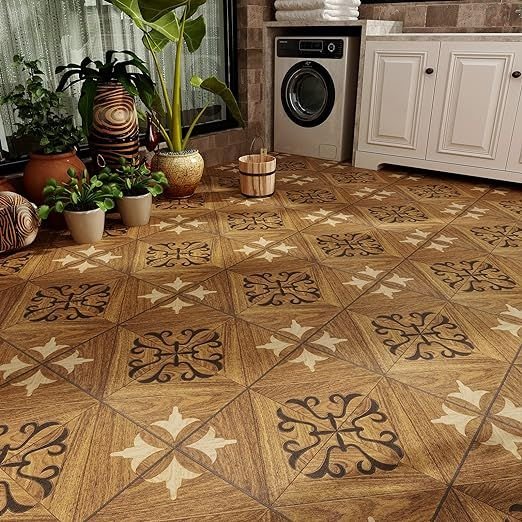
I would love to say that peel and stick flooring earns its popularity honestly. It’s one of the easiest ways to change a floor without hiring anyone, spending a lot of money, or losing a whole weekend. The trade-off is that it won’t last forever, but for most people, that’s a fair deal. Now that you know the types, the costs, and the mistakes to avoid, you’re ready to pick the right flooring for your space with confidence.
If you already know you want the tile format specifically, our complete guide to peel and stick floor tiles covers everything from installation to room-specific picks in more depth.