
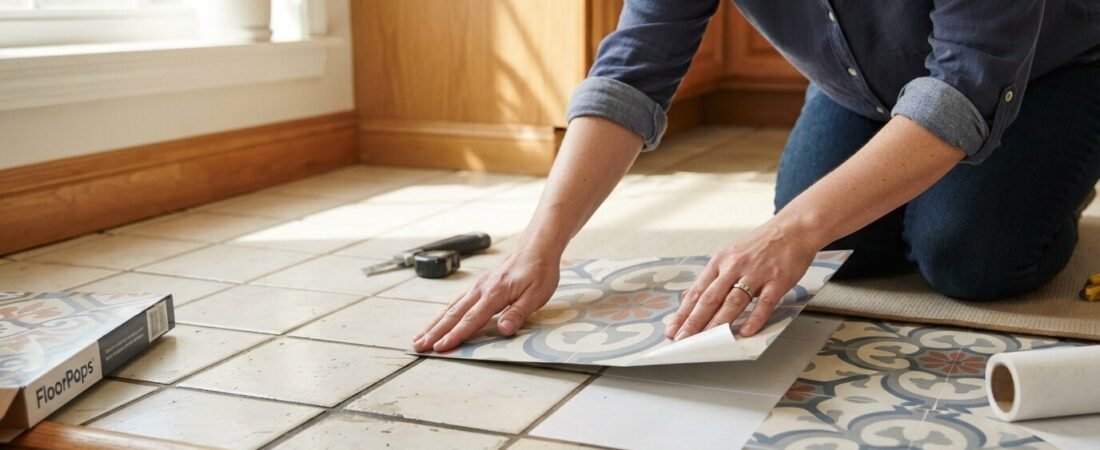
An old tiled floor does not always need to be removed before a new floor goes in. That can make peel and stick floor tiles an appealing option, especially when the existing tile is still in good condition.
The real question is whether the old tile is a suitable surface for the new flooring. A firm, fairly flat tiled floor can often work well, but loose tiles, deep grout lines, cracks, or major uneven areas can create problems. As not all existing floors give peel and stick tiles the same base, and laminate has a few things you should check first. Here is the complete laminate guide for you.
The type and condition of the existing tile also matter. A smooth ceramic or porcelain floor may be easier to cover than a heavily textured surface or a floor with many deep grout joints. The peel and stick product itself also has its own installation requirements.
This guide focuses specifically on putting peel and stick floor tiles over existing tile. It explains what to check before starting, how grout lines and tile condition can affect the result, and when covering the old tile makes sense instead of removing it.
How Can Peel and Stick Floor Tiles Go Over Existing Tile?
Short answer: Yes, you can put peel and stick floor tiles over existing tile, as long as the old tile is flat, clean, and firmly attached. If the tile has loose pieces, cracks, or deep grout lines, you will need to fix those areas before installing the new floor.
You usually don’t need to remove the old tile first. This can save you time, money, and a lot of mess. However, the condition of the old tile matters. Make sure it is smooth and secure before you start.
One thing to check is the grout lines. If they are deeper than about 1/8 inch, fill them before putting down the peel and stick tiles. Otherwise, the grout lines may show through and make the new floor look uneven. Most standard peel and stick vinyl tiles are about 1.5–3 mm thick, so small surface imperfections may still be noticeable after installation.
What Should Your Existing Tile Floor Look Like Before Covering It?
Your old tile does not need to look perfect before you cover it with peel and stick floor tiles. What matters is whether the existing surface is stable, reasonably flat, clean, and dry. Moreover, laminate can also be covered with peel-and-stick tiles, but its surface and condition need to be considered first. If laminate is the floor you’re working with, this guide explains what to check before installing over it.

Before you start, walk across the floor and check a few areas by hand. Look for movement, damaged tiles, large height differences, and anything else that could affect the surface underneath the new flooring.
1. Make Sure the Existing Tiles Are Firm
Press down on different tiles and check for movement. If a tile shifts, rocks, or feels loose, it should not simply be covered with a new peel and stick tile.
The new flooring will follow the condition of the floor underneath it. Covering a loose tile does not make that tile stable.
2. Check for Major Uneven Areas
Your existing tile floor does not have to be perfectly smooth, but it should not have large dips, raised tiles, or sudden changes in height.
Small surface imperfections may be less noticeable, while major uneven areas can affect how the new tiles sit and may remain visible after installation.
3. Look for Cracked or Broken Tiles
Check the floor for tiles that are badly cracked, broken, or damaged. A damaged tile can create an unstable spot beneath the new flooring, especially if the damage allows the tile to move.
You do not need to remove every tile just because it has a small mark or hairline crack. The bigger concern is damage that affects the stability or level of the floor.
4. Make Sure the Surface Is Clean and Dry
Your existing tile may look clean but still have a thin layer of grease, polish, wax, or cleaner residue on it. These residues can interfere with the adhesive on peel and stick flooring.
The surface should be properly cleaned and allowed to dry completely before the new tiles are applied.
5. Pay Attention to the Grout Lines
The grout between your tiles can be just as important as the tiles themselves. Shallow, narrow grout lines are different from deep or wide recessed joints.
A deep grout line creates a lower area between two tiles. When a new peel and stick tile is placed over it, that change in height can affect the way the new flooring sits and may allow the old grout pattern to show through.
For that reason, check the depth and shape of your grout lines before deciding that the existing tile is ready for an overlay.
Quick Checklist To Consider Before Replacing Existing Tile
Whether you can cover your existing tile depends mainly on its condition and the requirements of the peel and stick flooring.
| Existing Tile Condition | Can you cover it? | What to Consider |
| Firm, smooth tile | Usually yes | Clean and prepare the surface properly |
| Shallow grout lines | Usually yes | Check the product requirements |
| Deep or recessed grout | Maybe | The grout may need to be filled or leveled |
| Loose tiles | No | Repair or remove the unstable areas first |
| Major lippage | Usually no | Large height differences can affect the new flooring |
| Cracked or broken tile | Maybe | Minor cosmetic damage may be different from structural damage |
| Heavily textured tile | Maybe | The adhesive may not get consistent contact |
| Moisture-damaged tile | No | Fix the moisture problem first |
| Product does not allow tile | No | Follow the manufacturer’s instructions |
The easiest situation is an existing tile floor that is firm, reasonably flat, clean, dry, and compatible with the peel and stick product.
If the floor has major surface problems, do not assume the new flooring will hide them. Correcting the existing floor first can give you a more stable and better-looking result.
Can Peel and Stick Floor Tiles Go Over Ceramic and Porcelain Tile?
Yes, peel and stick floor tiles can often go over ceramic or porcelain tile if the existing floor is firm, clean, dry, and reasonably flat.
Smooth ceramic and porcelain tile can provide a good base, but the finish still matters. Very glossy or heavily textured surfaces may make it harder for some adhesives to bond properly.
The condition of the grout also matters. Deep or recessed grout lines can create uneven areas under the new flooring, even when the tiles themselves are in good shape.
Before covering ceramic or porcelain tile, check the installation instructions for the peel and stick product. Different products can have different requirements for existing tile surfaces.
In short: ceramic and porcelain tile can work, but the surface condition and grout lines need to be checked first.
What About Grout Lines Under Peel and Stick Tiles?
Grout lines are one of the main things to check before you cover an existing tile floor. Shallow grout joints may cause little trouble, while deep or wide joints can create noticeable dips under the new flooring.
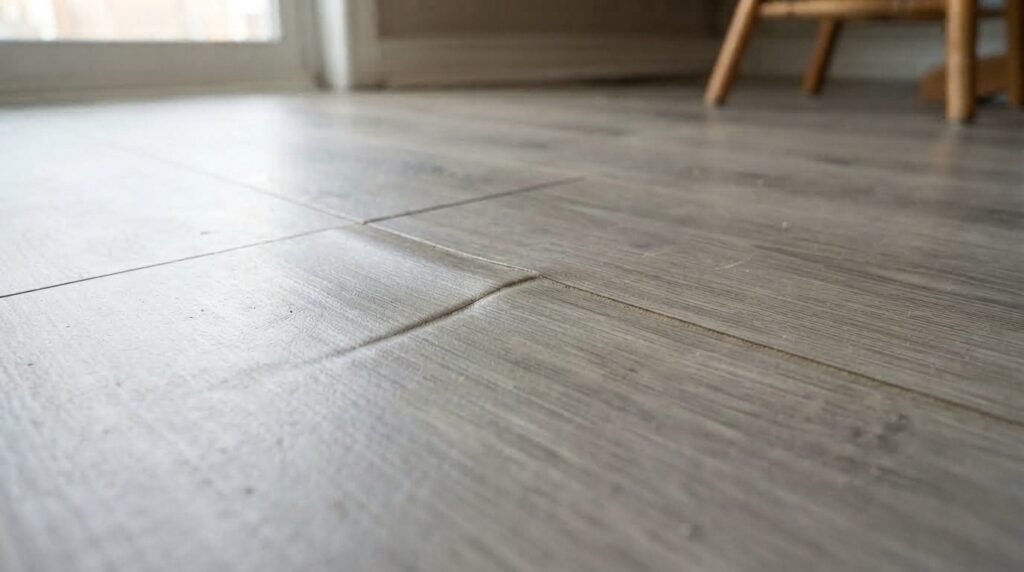
Deep grout can also affect how evenly the peel and stick tiles sit on the floor and may allow the old grout pattern to show through. If you are dealing with a tiled floor in a bathroom, the room’s moisture and water exposure also need to be considered, you can check out the favorable bathroom conditions.
If your existing tile has deep or uneven grout lines, check the product instructions before installation. Some surfaces may need to be made flatter first.
Does Tile Size and Layout Make a Difference?
Yes, but tile size is not usually the deciding factor. What matters more is whether the existing tiled floor gives the peel and stick flooring a stable and even surface to sit on.
Large-format tile is generally easier to cover because there are fewer tile joints across the floor. With fewer joints, there are fewer recessed areas that can interfere with creating a flat surface for the new flooring.
Small tiles and mosaics are more difficult when they have many closely spaced grout joints. Even if every tile is firmly attached, all those joints can create a more uneven surface underneath the new peel and stick flooring.
The same applies to old tile with wide or irregular spacing between tiles. The issue is not simply the size of the tile. It is the amount of joint area and the difference in height between the tile faces and the recessed areas.
For example, a floor with large, evenly installed tiles may be easier to cover than a floor made from small mosaic pieces, even if both floors are in good condition.
So before covering your existing tile, look at the tile size, joint pattern, and overall surface together. If the floor has many small tiles or wide recessed joints, more surface preparation may be needed before the peel and stick flooring can be installed.
How to Prep Old Tile Before Installing
Proper surface preparation matters more than you might expect. Peel and stick tile can only stick as well as the surface underneath it, so the old tile needs to be ready before the new flooring goes down.
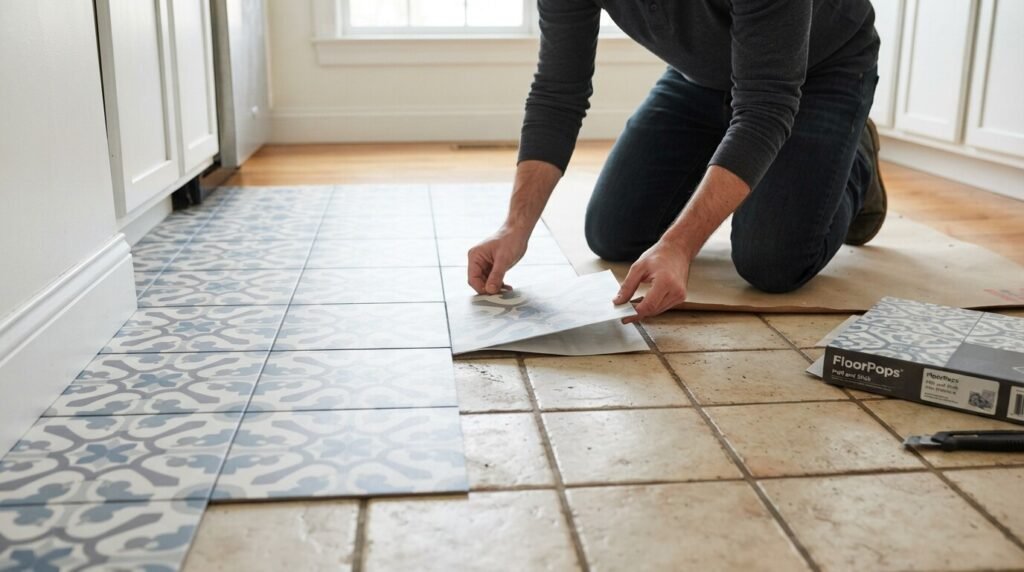
1. Clean the Tile Thoroughly
Start by cleaning the entire floor. Use a regular cleaner first, then use a pH-neutral degreaser if you are working on a kitchen floor.
Avoid anything oil-based or wax-based. These products can leave a film on the tile and weaken the adhesive bond. Even a small amount of leftover residue can keep the peel and stick tile from gripping properly.
2. Check Every Tile for Looseness
Check the whole floor rather than only the areas that look damaged. Tap around each tile with your knuckle and listen for hollow or unusual sounds.
If a tile sounds hollow or feels loose, re-secure or replace it with a compatible tile adhesive before you continue. The new flooring should not be used to cover a tile that is already loose underneath.
3. Fill Deep Grout Lines
Check the depth of the grout lines between your existing tiles. Grout lines deeper than 1/8 inch should be filled before the new flooring is installed.
A cement-based floor patching compound or a dedicated grout filler can work for this. Spread the material with a flexible putty knife and feather it level with the surrounding tile surface.
Let the material cure fully according to the product’s instructions. This is usually about 24 hours, but the actual curing time can vary by product.
4. Sand High Spots, Glaze, or Texture
If the old tile has small ridges, a glossy glaze, or surface texture that could interfere with adhesion, lightly sand the problem areas.
120-grit sandpaper is usually enough to dull a glossy glaze or knock down small ridges without heavily damaging the tile underneath.
Do not use sanding as a way to correct major unevenness. Large height differences need more than light surface sanding.
5. Let the Floor Dry and Vacuum
Once the cleaning and surface preparation are finished, let everything dry completely.
Then vacuum the floor carefully to remove dust and fine grit. These small particles can interfere with the adhesive and are one of the common reasons peel and stick tile fails to hold properly over time.
Once the old tile is clean, dry, stable, and properly prepared, you have a much better surface for installing the new peel and stick flooring.
When Should You NOT Put Peel and Stick Tiles Over Existing Tile?
Putting peel and stick flooring over existing tile can be a good option when your old floor is stable and reasonably smooth. However, some tile conditions make an overlay a poor choice.
- Loose or hollow-sounding tiles
If your tiles move, rock, or sound hollow when you tap them, covering them will not fix the underlying problem. The old tile can still move beneath your new flooring and cause problems with the finished surface.
- Tile edges that sit at different heights
Check for lippage, which means one tile edge sits higher or lower than the tile next to it. A noticeable height difference can remain visible or create a raised spot under your new peel and stick tile.
This is different from normal grout depth. The problem here is that the tile faces themselves are not on the same level.
- Deeply textured tile
A heavily textured tile surface can make it harder for the adhesive backing to make consistent contact. This can be a problem if your existing tile is embossed, ridged, or heavily patterned.
A smooth tile surface is generally easier to cover than one with deep raised and recessed areas.
- Tiles with continuing movement or failure
If your tiles are cracking, lifting, shifting, or breaking apart, you should not use an overlay to hide the problem. Your existing tile needs to be stable before you add another flooring layer.
- Moisture behind or beneath the tile
If your tiled floor has an ongoing moisture problem, water damage, or dampness coming from below, installing peel and stick flooring over it can trap the problem underneath the new floor.
You need to fix the moisture source first.
- A product that does not allow installation over tile
This is an important exception. Even if your tile floor is clean, flat, and stable, it may not be an approved surface for every peel and stick product.
Always check the installation instructions for the exact flooring you are using. The manufacturer’s approved surfaces should determine whether that particular product can go over existing tile.
If your tile is stable, flat enough, dry, and compatible with the product, an overlay can make sense. If your old floor has movement, significant tile-to-tile height differences, heavy texture, or an unresolved moisture problem, removing or properly correcting the existing floor is the safer option.
Do Existing Tiles Need to Be Removed First?
No, not always. You can install peel and stick floor tiles over existing tile when the old floor is firm, reasonably flat, clean, dry, and suitable for the product.
Keeping the old tile can save time, dust, and demolition work. However, removal may make more sense if the floor has widespread loose tiles, major unevenness, large height differences, or heavy texture that cannot be corrected easily. If you decide that the old tile needs to come out, see our guide on removing the flooring for step-by-step help.
Always check the installation instructions for the specific peel and stick flooring before deciding to cover the old tile.The goal is not simply to avoid removing the old floor. The goal is to give the new peel and stick flooring a stable and suitable surface.
Will Peel and Stick Tiles Raise the Floor?
Yes. Installing peel and stick floor tiles over existing tile will raise the finished floor slightly because you are adding a new flooring layer on top of the old one.
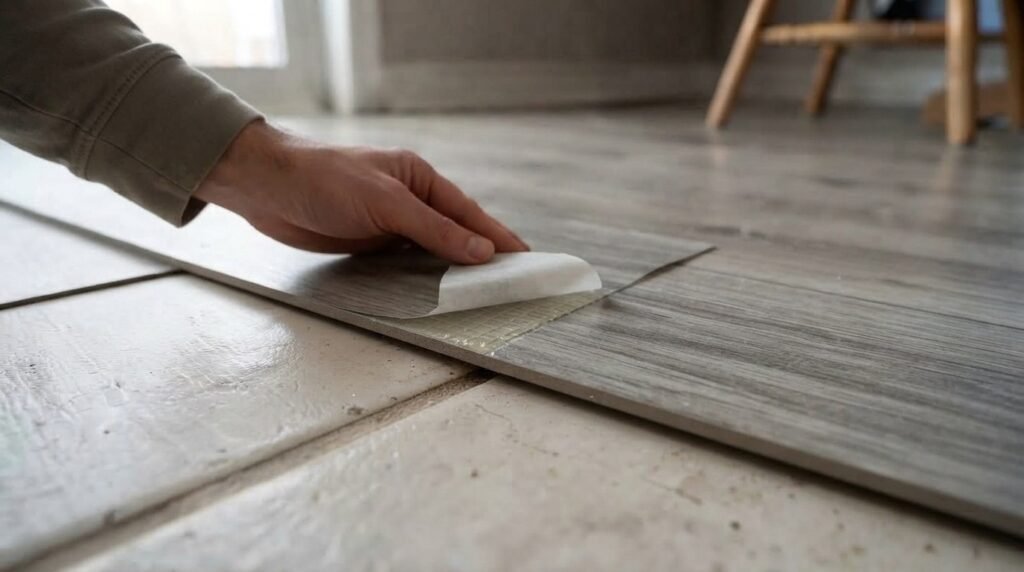
The increase is usually small, but it can matter around doors, thresholds, transitions, and appliances.
Before you start, check that doors still have enough clearance to open properly and that the new flooring will not create a large height difference where it meets another floor.
Measure the thickness of the peel and stick flooring and check the available space in these areas. If clearance is already tight, removing the existing tile or choosing another flooring option may make more sense.
A Few Things Worth Knowing
| What to know | Why it matters |
| You’re adding height | Peel and stick flooring only adds a small amount, usually just a couple of millimeters, but it can matter at doorways or where the room meets another type of flooring. |
| It won’t fix an uneven floor | Peel and stick flooring follows the surface underneath it. If the old tile has real dips or slopes, that unevenness can come through even after the surface is properly prepared. |
| The same idea can work on walls | Peel and stick products can also be used on backsplashes and bathroom walls, but wall applications have their own preparation requirements and should be checked separately. |
| Check the manufacturer’s instructions | Surface requirements can vary slightly between peel and stick products. A quick check before buying is especially useful if you’re working with a less common brand. |
Tile Conditions That Need Extra Attention
A few less obvious conditions can affect whether your existing tile is a good surface for peel and stick flooring.
1. Glossy or Heavily Sealed Tile
A very smooth, glossy tile can sometimes be difficult for adhesive to grip. If your tile has a high-shine glaze, light sanding or a primer made for slick surfaces may help the new flooring bond properly. However, if the new tiles still do not hold properly, see why peel and stick floor tiles are not sticking for common causes.
2. Heated or Radiant Floors
If your tile floor has in-floor heating underneath it, check the peel and stick manufacturer’s guidelines before installing. Not all adhesives are designed to handle constant heat, and the temperature can affect how well the flooring holds over time.
3. Small Mosaic or Heavily Patterned Tile
Small mosaic tile means more individual tiles and usually more grout lines. That can mean more preparation because there are more recessed areas to deal with.
It is not necessarily a reason to avoid the project, but you should expect more prep work than you would have with large-format tile.
4. Test a Small Area First
If you are unsure how well the peel and stick flooring will bond to your existing tile, test one or two tiles in a low-visibility area first.
A closet or an area under an appliance can work well for this test. Leave the tiles in place for a few days and check whether they are still holding properly before covering the entire floor.
Frequently Asked Questions
Can you put peel and stick tile over natural stone tile like marble or travertine?
It’s riskier than porcelain or ceramic. Natural stone is often more porous and less consistently flat, so it typically needs sealing and sometimes a self-leveling compound before peel and stick tile will bond well and stay flat over time.
Do you need to remove old tile before installing peel and stick?
Not usually. Removal is only necessary if the old tile is loose, cracked, or has deep, uneven grout lines that can’t be filled and leveled.
How long does peel and stick tile last when installed over old tile?
About the same as it would on any other properly prepped surface. As long as the tile underneath stays sound and the surface was prepped correctly before installation. The actual lifespan depends on the product, traffic, moisture, and how well the existing tile was prepared.
Can peel and stick tiles go over cracked tile?
A small cosmetic crack does not always mean the tile must be removed. However, a cracked tile that is loose, moving, broken, or creating an uneven surface should be repaired or removed before the new flooring is installed.
Do grout lines need to be filled before installing peel and stick tiles?
Not in every situation. Shallow grout lines may be acceptable for some products, while deeper joints may need to be filled to create a flatter surface. Always follow the instructions for the specific peel and stick flooring.
Conclusion
Peel and stick floor tiles can be a practical way to update an old tile floor without removing everything underneath.
The key is to make sure the existing tile is a stable, suitable base and to deal with problems such as deep grout lines, lippage, heavy texture, or moisture before installation.
If the old floor is in good shape and the product allows an overlay, proper preparation can make covering the tile much easier than removing it.