
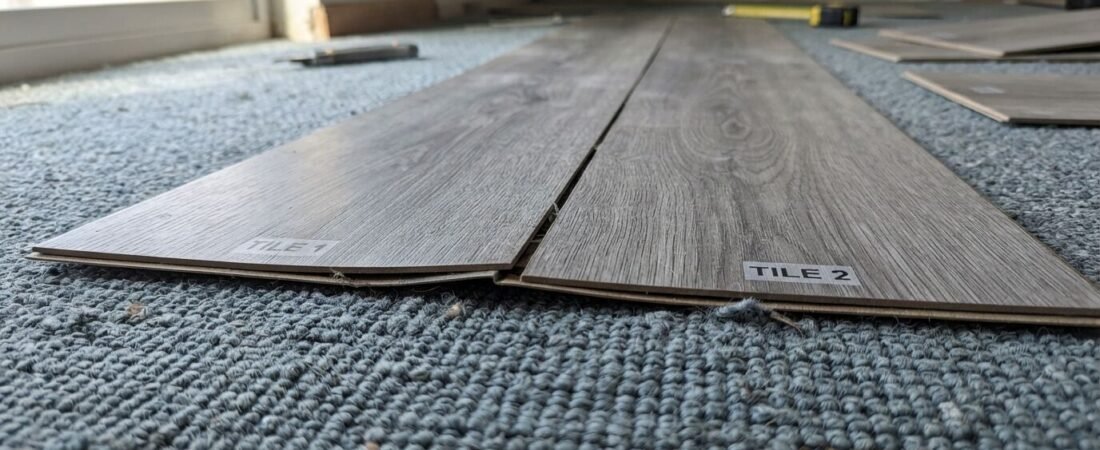
If you have old carpet and want to change your floor, you may wonder if you can put peel and stick floor tiles over carpet instead of removing it. Although this may seem like an easier option, carpet is too soft for self-adhesive tiles.
Peel and stick tiles need a hard, flat, and stable surface to hold properly. Since carpet can compress and move under your feet, the tiles may shift, lift, or come loose. Therefore, you should understand why carpet is not a suitable base and what options you have before choosing your new floor. For this, you need to remove the carpet, or cover it with a rigid underlayment first.
Before you install peel and stick tiles, it helps to know what kind of surface they can actually stick to. If you are considering existing hard flooring instead of carpet, see our guide on putting peel and stick floor tiles over existing tile.
One quick note: this article is about peel and stick vinyl floor tiles, the thin, hard type. Peel and stick carpet tiles are a different product, so if you are looking for information about those, this is not the type of installation covered here.
Can You Put Peel and Stick Tiles Directly Over Carpet?
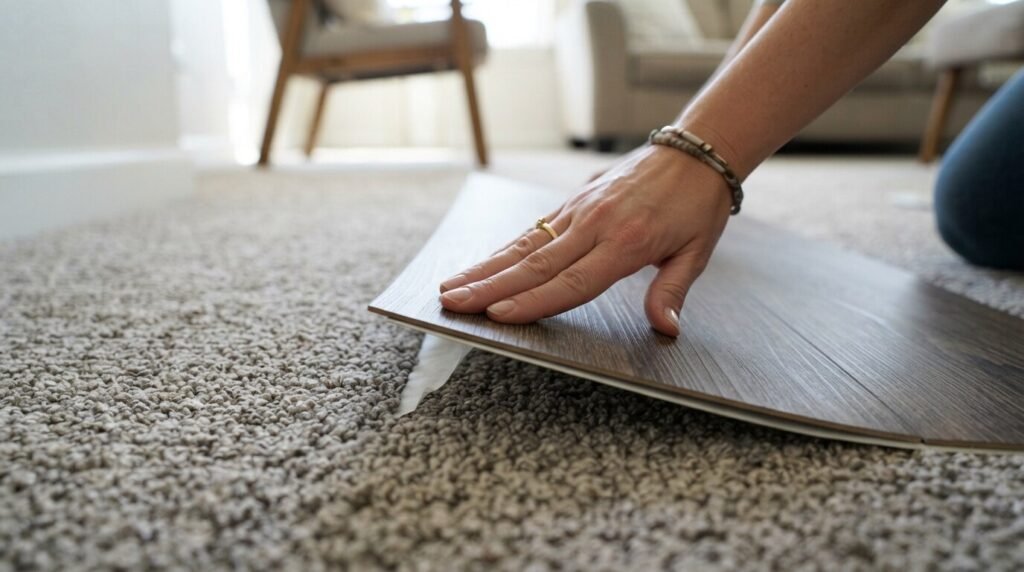
Generally, no. You should not put peel and stick tiles directly over carpet because they need a hard, smooth, and stable surface to stick properly. Concrete, plywood, and suitable existing hard flooring provide a firmer base, but carpet can compress and move when you walk on it. So, the glue cannot get the solid contact it needs to hold the tile in place.
The sticky backing on peel and stick tile is called a pressure-sensitive adhesive. In simple terms, it needs to press firmly against a solid, flat surface so it can grip properly. Carpet does not provide that kind of surface, so the tiles may not stick well or stay in place for long.
You also have to consider what is underneath the carpet. Most wall-to-wall carpet has foam or rubber padding underneath, which adds another soft layer. For foam padding, you can read our guide on how these sticky tiles work over carpet padding. Because, when you walk on the floor, that foaming can compress and move under your feet, which can create problem with tiling.
Why Peel and Stick Tiles Don’t Work Well Over Carpet
If you have decided to put self-adhesive tiles over carpet, you may run into several problems.
However, before going into details, if your peel and stick tiles are already coming loose, you can also check our guide on why peel and stick floor tiles are not sticking to find the common causes.
1. Poor adhesive contact:
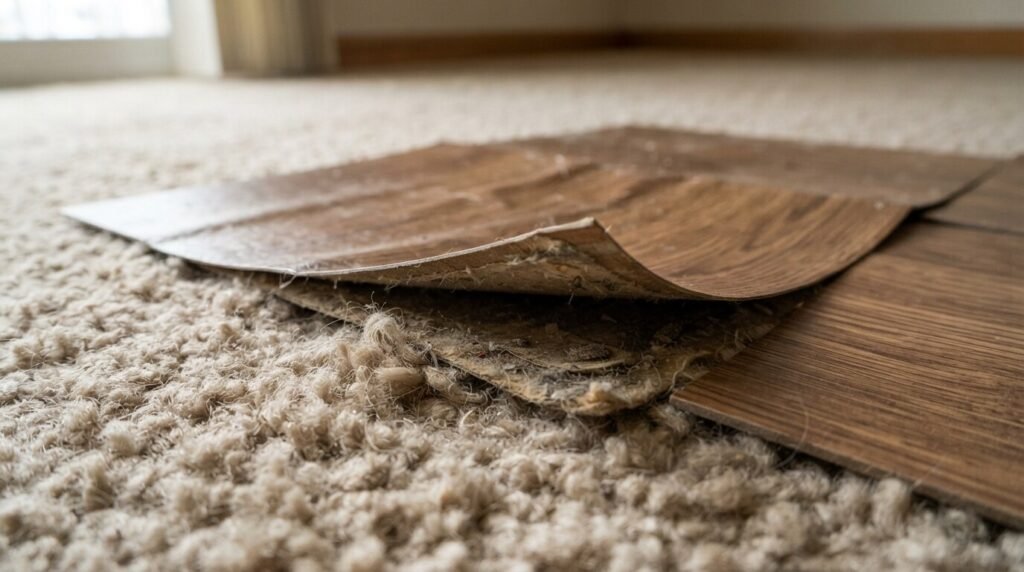
The adhesive on peel and stick floor tiles needs a solid surface to hold onto. When you place the tile over carpet, the adhesive presses against carpet fibers instead of a hard surface. So, the tile does not get the same strong grip, and it may start coming loose.
2. Carpet movement and compression:
Think about what happens when you walk across the carpet. It pushes down under your feet and then springs back up. The carpet padding underneath does the same thing. A peel and stick floor tile is only about 1.5 to 3 mm thick, so it can move with the carpet underneath it. Over time, this movement can make the tiles loose.
3. An uneven surface:
Your carpet may look flat, but it is not always perfectly even. You may have worn areas, thicker spots, or raised seams. These small changes can show through a thin peel and stick tile and make it harder for the tiles to stay flat.
4. Lifting, shifting, and separating:
Once the tiles start losing their grip, you may see the edges lift or the tiles move out of place. Gaps can also appear between the tiles. If a corner curls up far enough, it can catch your foot and become a tripping hazard.
So, even if your carpet looks smooth and flat, it can still cause problems underneath peel and stick floor tiles. The soft surface and movement are very different from the hard, stable surface these tiles need.
Can Peel and Stick Tiles Go Over Low-Pile Carpets?
If you have low-pile carpet, you may think it is firm enough for peel and stick floor tiles because the fibers are short and tightly packed. However, how the carpet feels when you walk on it is more important than how flat it looks.
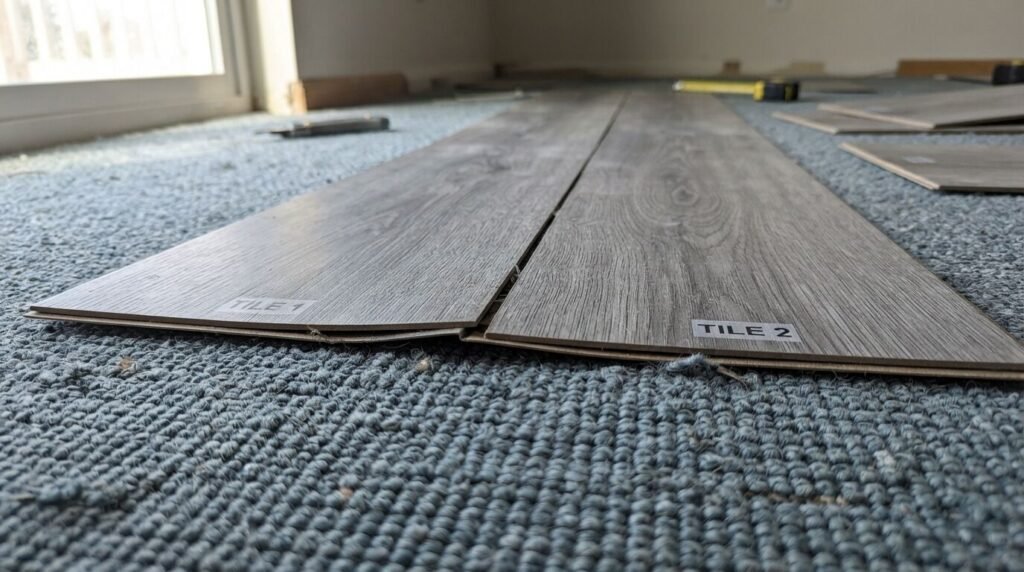
With low-pile carpet, the short fibers usually compress less than thick or plush carpet, so you may notice less movement under your feet. However, that does not mean the surface is stable enough for peel and stick tiles. The carpet can still flex when you put weight on it, and the padding underneath can add even more movement. As a result, the tiles may slowly shift or lose their flat position.
You should also check whether the carpet is glued down or stretched over padding. A low-pile carpet that feels firm may still have a soft pad underneath, so the surface can move more than you expect once the floor is used every day.
So, if you are asking whether you can put peel and stick floor tiles over low-pile carpet, the answer is still not recommended for direct installation. Because, low-pile carpet may give you a slightly better surface than thick, soft carpet, but you should not treat it like a solid floor. It can improve the situation, but it does not guarantee that your peel and stick floor tiles will stay in place.
Which Carpet Types Work With Peel and Stick Tiles?
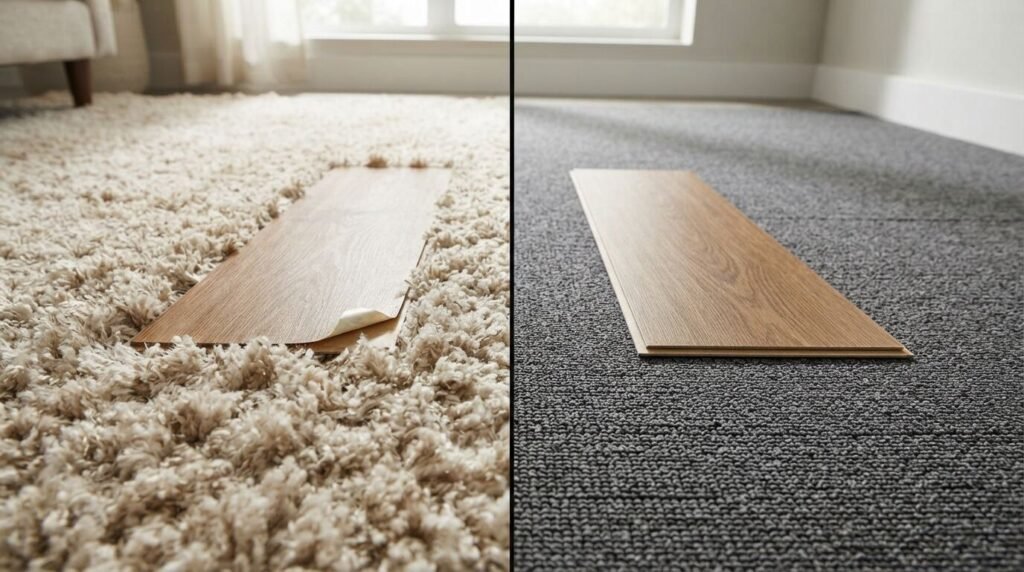
Yes, the type of carpet matters because some carpets are firmer than others. However, even the firmest carpet is still not the same as a hard, solid floor. Here is how the most common carpet types compare:
| Carpet Type | Verdict | Reason |
| Low-pile commercial or loop | Better, but not recommended directly | This type is usually firmer and moves less, but it is still soft. The adhesive also has to grip the carpet fibers instead of a solid surface. |
| Cut pile | Not recommended | The fibers can move and compress when you walk on them, which can make it harder for the tiles to stay firmly in place. |
| Plush | Not recommended | The thick, soft fibers compress easily under pressure, so the tiles can move, lift, or become uneven over time. |
| Shag | Not suitable | The long, loose fibers create an uneven and unstable surface, so the adhesive cannot get the solid contact it needs. |
Should You Remove the Carpet Before Installing Peel and Stick Tiles?
If you can remove the carpet, that is usually the better option. Once the carpet is gone, your peel and stick floor tiles can stick to a hard subfloor instead of trying to hold onto a soft, moving surface.
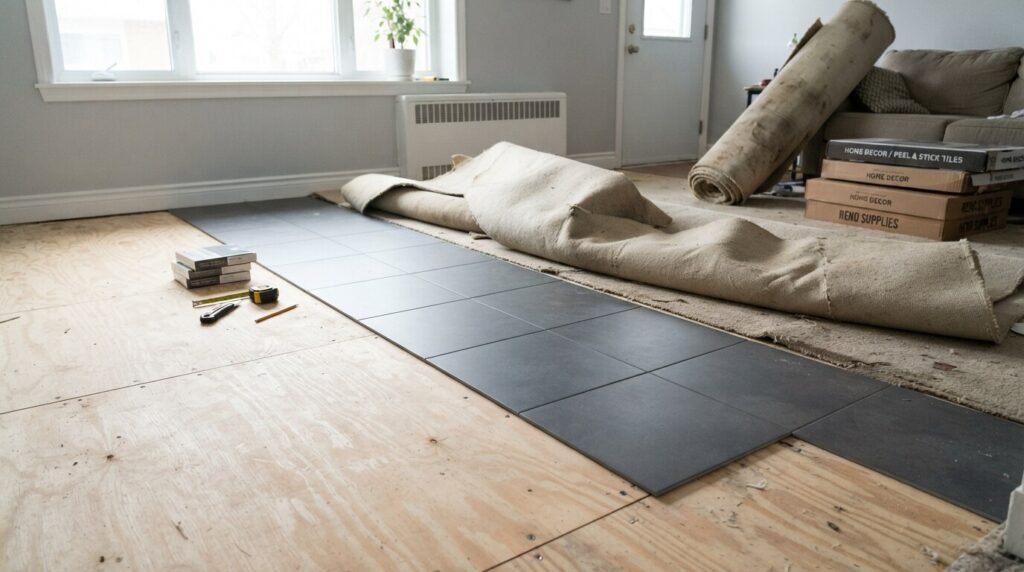
You will see what is underneath the carpet once you pull it up. In most cases, it will be plywood or concrete, but you may need to do some cleanup before you install your peel and stick floor tiles.
As you remove the carpet, you will also find the things that were holding it in place. There can be Tack strips around the edges, or even the carpet pad is often held down with staples. You need to remove these because any raised nails, staples, or pieces left behind can create bumps under a thin peel and stick tile. If the carpet was glued down, you may also need to remove the old adhesive.
Once everything is removed, check the surface underneath. Your subfloor should be clean, dry, flat, and firm, with no dust, loose staples, nails, or old glue left behind.
If you find a concrete floor underneath, you also need to check it for moisture before installing peel and stick floor tiles.
What Can You Do If You Don’t Want to Remove the Carpet?
If you really do not want to remove your carpet, you can create a firmer base for your peel and stick floor tiles. One option is to place a hard underlayment, such as 1/4-inch plywood or hardboard panels, over the carpet. You would then install the peel and stick floor tiles on top of the panels instead of sticking them directly to the carpet.
This gives your tiles a much more solid surface to stick to. However, this method works better over low-pile carpet because thick or soft carpet can still move underneath the panels. If the panels flex or rock when you walk on them, the tiles can have the same problem.
Before you choose this option, there are a few things you should check:
- Make sure the panels stay in place.
You may need to fasten the panels to the subfloor so they do not move. However, this can put holes through the carpet and subfloor, so check your lease first if you are renting.
- Keep the panel seams flat.
The edges of the plywood or hardboard panels should meet evenly. If you leave gaps or raised edges, they can show through the peel and stick floor tiles.
- Check the new floor height.
You are adding the carpet, underlayment, and tile together, so the finished floor will be higher. Therefore, check the space under your doors and around transitions before you start.
This can be an option when you want to avoid removing the carpet, but you should check your peel and stick floor tile manufacturer’s instructions first. The product may have specific requirements for the surface underneath it.
Can Self Adhesive Tiles Damage Carpet?
Yes, they can. If you put peel and stick floor tiles over carpet, the adhesive can grab onto the carpet fibers and backing. That may not seem like a problem at first, but it can become one when you decide to remove the tiles.
When you pull the tiles up, the adhesive may leave sticky residue on the carpet. It can also pull out fibers or tear the loops, and in some cases, it can weaken the carpet backing. The more strongly the tile has stuck to the carpet, the harder it may be to remove without causing some damage.
Cleaning up that leftover adhesive can be difficult too. You may remove some of it, but the carpet can still end up with a stiff or discolored patch that looks different from the rest of the floor. So, if you are hoping to keep the carpet in good condition, putting peel and stick tiles over it can create a problem when you want to change the floor again.
This matters even more if you are renting. If the carpet belongs to your landlord, any damage could mean repair costs or a deduction from your security deposit. So, before you stick anything to the carpet, check your lease and make sure you are allowed to do it.
If you already have peel and stick tiles over carpet and want to remove them, take your time and remove them carefully to reduce the chance of damaging the carpet.
FAQs
Can you use peel and stick tiles on carpet temporarily?
You can, but it is still risky if you want to keep the carpet in good condition. Even a temporary installation can leave adhesive behind or damage the carpet when you remove the tiles. If you are renting, check your lease before using peel and stick tiles over the carpet.
How do you remove peel and stick tiles from carpet?
Start at one corner and slowly lift the tile instead of pulling it up quickly. A slow, careful removal can reduce the amount of carpet fiber that gets pulled up with the adhesive. If the adhesive has bonded strongly to the carpet, some damage may still occur.
Can you put peel and stick tiles over carpet in a rental?
You should be careful with this. The tiles may damage the carpet when removed, and securing an underlayment may require holes through the carpet or subfloor. So, check your lease and get permission if needed before making any changes to the floor.
What happens if you put peel and stick tiles over carpet padding?
The tiles will have an unstable surface underneath them because carpet padding compresses when you walk on it. This movement can make the tiles shift, lose their bond, or separate over time. That is why carpet padding should not be used as the direct base for peel and stick floor tiles.
Final Words
If you are planning to use peel and stick floor tiles, the surface underneath them matters just as much as the tiles themselves. Carpet can make that difficult because it moves and compresses under your feet. So, if you have carpet, take the time to create a firm surface first, and you will have a much better base for your new floor.