
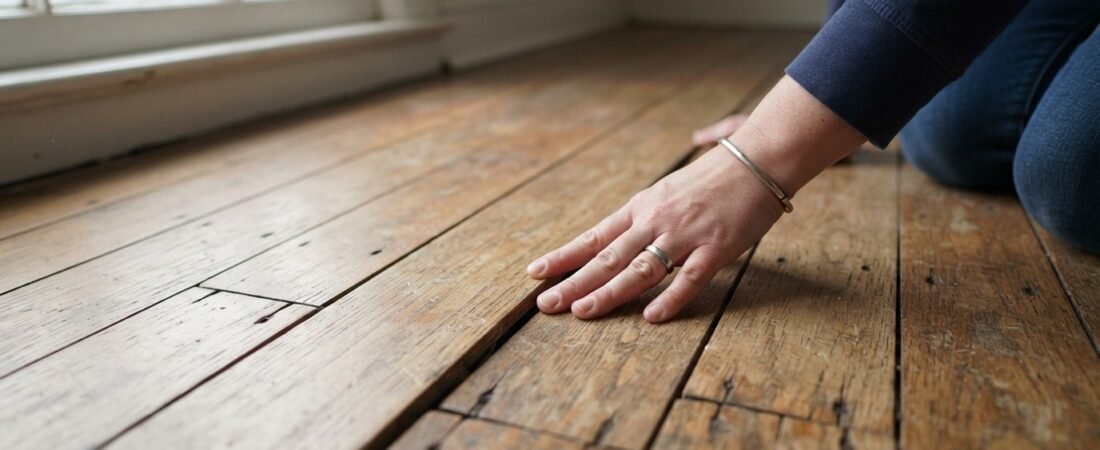
Hardwood is a floor many people want to keep visible, but there are times when you may want to cover it. The finish may be worn, the color may no longer fit your room, or you may want a new look without paying for a full hardwood refinish.
That is where peel and stick floor tiles can seem like an easy option. However, hardwood needs a little more attention than some other flooring surfaces. The wood can expand and shrink as the seasons change, and the finish on top can affect how well the tile adhesive sticks. You also need to think about whether you may want to refinish the hardwood later.
So, can you put peel and stick floor tiles over hardwood? Yes, but the hardwood needs to meet a few important conditions first. A firm, smooth, clean, and well-maintained wood floor can provide a better surface for peel and stick tiles. However, loose boards, large gaps, damaged wood, or a finish that prevents good adhesive contact can cause problems later.
Can You Put Peel and Stick Floor Tiles Directly Over Hardwood?
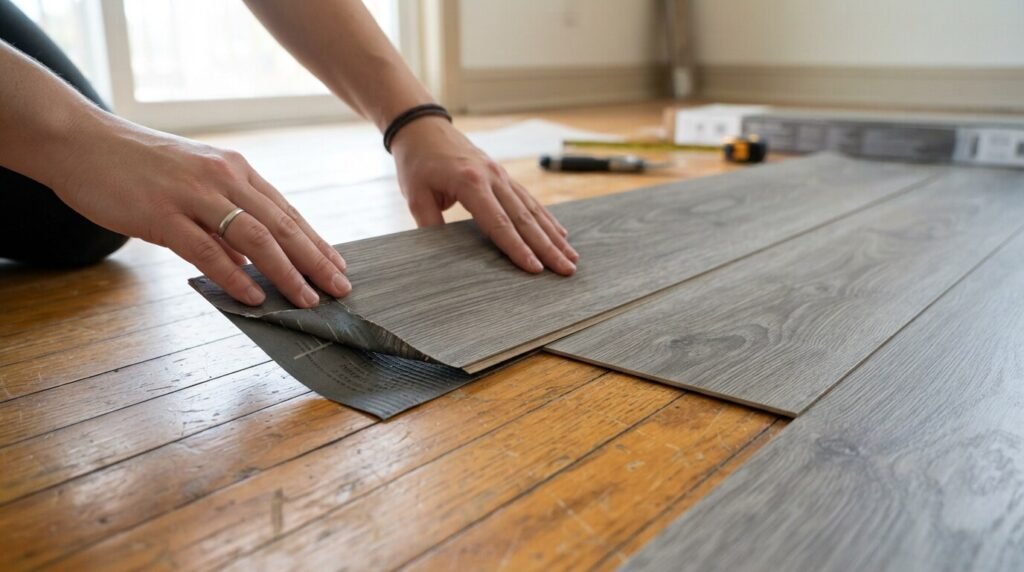
Yes, you can put peel and stick floor tiles directly over hardwood in many cases. Before you do, check that the boards are firm, the floor is in good condition, and there are no loose or damaged areas that could affect the tiles.
You also need to check the surface finish. If it is too slick or prevents the adhesive from making good contact, your tiles may not stay down properly. Hardwood can also expand and shrink as temperature and humidity change, so you need to be a little more careful than you would with a stable surface such as concrete or ceramic tile.
As long as your hardwood is firm, smooth, clean, and suitable for the adhesive, you do not necessarily need to remove it before installing self-adhesive tiles.
Is It Solid Hardwood or Another Type of Wood Flooring?
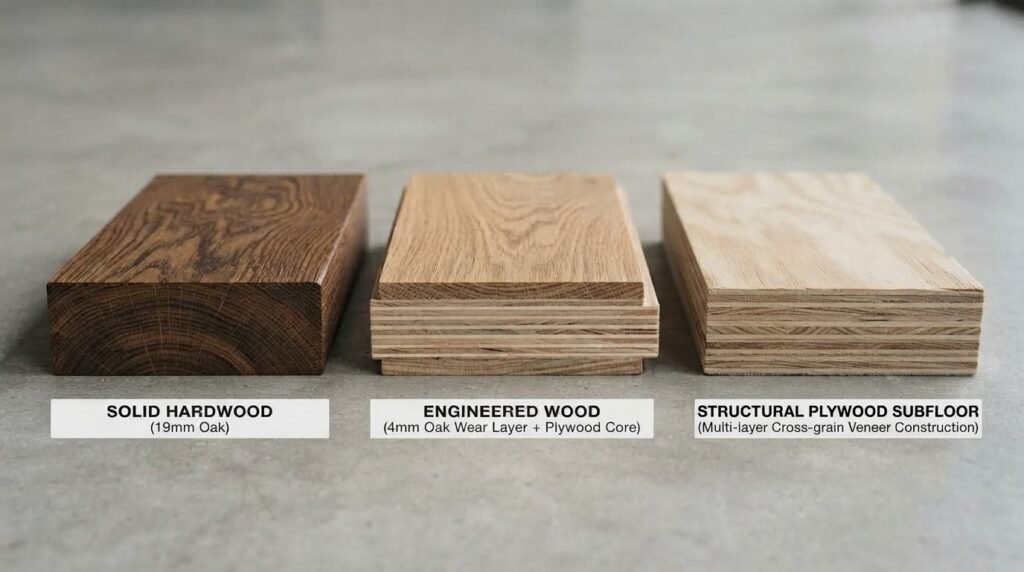
Before you put peel and stick floor tiles over a wood floor, you first need to know what type of wood you have. Solid hardwood, engineered wood, and plywood can look similar, but they behave differently. Once you know which one is under your feet, you can better understand what you need to check before covering it.
1. Solid Hardwood
If you have solid hardwood, you are looking at real wood from the top of the board all the way through. This is the traditional hardwood floor you see in many older homes.
The main thing you need to know is that solid wood can expand and shrink as the humidity in your home changes. Because of this movement, check your floor for loose boards, large gaps, or areas that move when you walk over them. These problems can affect the peel and stick tiles you put on top.
2. Engineered Wood
You may instead have engineered wood, which can look almost the same as solid hardwood from the top. The difference is underneath the surface. Engineered wood has a real wood layer on top, with several layers of wood underneath that are glued together.
This layered construction makes engineered wood more stable than solid hardwood when temperature and humidity change. Even so, you still want to make sure your floor is firm, flat, clean, and in good condition before you put self-adhesive tiles over it.
3. Plywood Subfloor
Plywood is different from both because it is usually not the finished floor. If you can see plywood, it may be the wooden subfloor underneath the flooring that was previously installed.
In this case, you are not dealing with a hardwood finish or finished wood boards. Instead, you need to check whether the plywood is flat, dry, firm, and suitable for the tile adhesive. Any damaged, loose, or uneven areas should be dealt with before you cover the surface.
Once you know which type of wood surface you have, you can move on to the condition of that surface. That matters because even the right type of wood will not give you a good base if it is loose, damaged, uneven, or poorly prepared.
How to Choose Peel and Stick Tiles for Hardwood Flooring Installation
Before you choose peel and stick floor tiles for your hardwood, you need to check whether the product is made for wood flooring. A tile may work well on concrete or vinyl but still have trouble bonding to a wood surface. So, even if your hardwood is clean and properly prepared, the wrong tile can still give you a weak adhesive bond.
Once you find a tile that is suitable for hardwood, you also need to follow its preparation instructions. The manufacturer may have specific requirements for cleaning, sanding, priming, or the condition of the wood surface. Following those instructions gives the adhesive the best chance to bond properly.
So, do not choose your peel and stick tiles based only on the design or thickness. Check the approved surfaces first, make sure your hardwood meets the product requirements, and then prepare the floor as directed. This can help you avoid finding out after installation that the tiles were not suitable for your wood floor in the first place.
Humidity Can Affect Your Hardwood Floor
If you have solid hardwood, remember that the wood keeps reacting to the air around you even after it has been installed. When humidity rises, the boards absorb moisture and swell slightly. When the air gets dry, they lose moisture and shrink again.
You may not notice this movement, but it can change the small gaps between the boards throughout the year. Those changes matter when you cover the floor with peel and stick tiles because the tiles need a stable surface underneath them.
Engineered wood also moves with changes in humidity, but its layered construction makes it more stable than solid hardwood. That is why, before you install self-adhesive tiles, you need to make sure your wood floor is firm and not showing signs of movement or separation.
How to Check Your Hardwood Floor for Movement
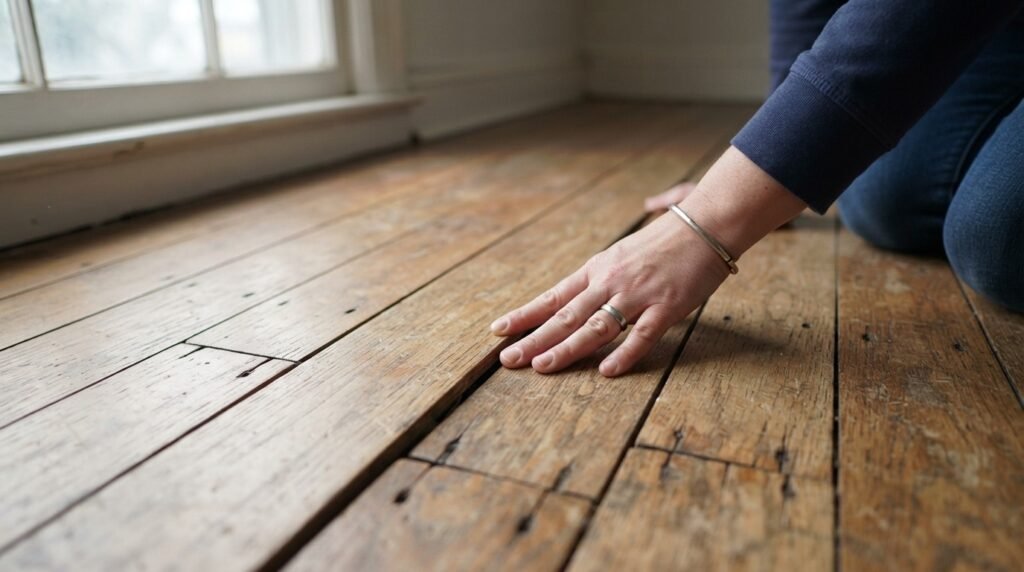
Before you cover your hardwood with peel and stick floor tiles, you need to make sure the boards are firmly in place. You can do a simple check yourself by walking slowly across the floor and pressing down with your foot in different areas.
Pay extra attention near walls, doorways, and places where people walk often. As you check the floor, look for:
- Boards that flex, dip, or bounce slightly under your weight
- Creaking or squeaking when you step on them
- Areas where a board feels loose or no longer fully attached
If a board moves when you step on it, that movement will still be there after you install the tile. You can learn more about these problems in our guide to why peel and stick floor tiles are not sticking. The adhesive cannot make an unstable board stable. So, fix any loose or moving boards before you cover the hardwood.
Can Hardwood Seams Show Through Peel and Stick Tiles?
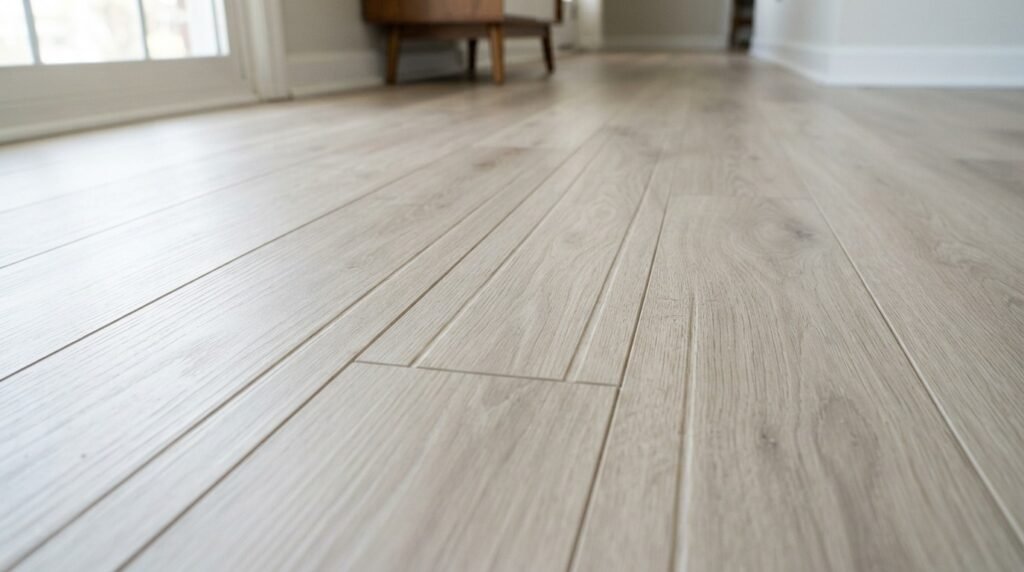
Yes, they can, especially if you have wider gaps between the hardwood boards or strong light coming across the floor. Peel and stick floor tiles are fairly thin, usually around 1.5 to 3 mm, so they can follow the shape of the surface underneath them.
If your hardwood has small, tight seams, you usually do not need to worry about them showing through. However, wider gaps can leave a faint line under the new tile. The same can happen if the gaps change noticeably as the wood expands and shrinks with the seasons.
So, take a close look at the seams before you install the tiles. If you can clearly see or feel large gaps between the boards, you may need to deal with them first rather than expecting the thin tile to hide them.
Check the Finish on Your Hardwood Before Installing Tiles
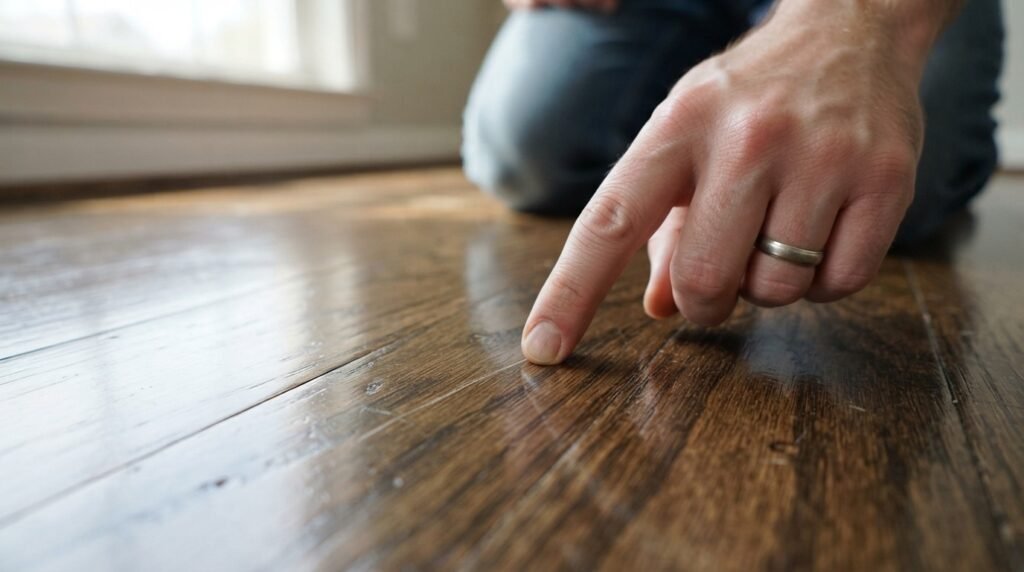
The finish on your hardwood can make a big difference in how well peel and stick floor tiles hold. Before you buy your tiles, take a moment to figure out what is on the surface.
- Sealed or Polyurethane Finish
If your hardwood has a polyurethane or another sealed finish, you will usually see a smooth, tough surface. This finish protects the wood, but its smoothness can also give the tile adhesive less to grip.
If you have this type of finish, light sanding may help the adhesive make better contact with the surface. However, always check the tile manufacturer’s instructions first because the required preparation can vary between products.
- Waxed Hardwood
If your hardwood has been waxed, you have another issue to deal with. The wax leaves a protective layer on the wood, and that layer can sit between the hardwood and your tile adhesive.
You cannot usually remove this layer with a normal mop and floor cleaner. So, if your floor has been waxed, make sure the wax is properly removed before you install peel and stick tiles. Otherwise, the adhesive may stick to the wax instead of the wood.
- Polish or Other Floor-Care Products
You may not have a waxed floor, but polish and other shine products can still leave a film on the surface. That film can make it harder for the adhesive to get a good grip.
If your hardwood feels unusually slick or you know you have used a shine product on it, check the surface carefully before installing the tiles. You may need to remove that residue and prepare the wood first.
- Bare or Unfinished Wood
If your hardwood is bare or unfinished, there is no sealed layer covering the wood. However, you should not assume that means the surface is automatically ready for peel and stick tiles.
Bare wood can absorb adhesive differently in different areas, which may give you an uneven bond. You still need to make sure the surface is clean, dry, smooth, and suitable for the adhesive before you cover it.
Can You Still Refinish Hardwood After Removing Peel and Stick Tiles?
Hardwood can often be sanded and refinished several times during its life, so you may want to keep that option open. Peel and stick tile adhesive can make that process more difficult, especially if the tiles stay in place for years or leave residue behind when you remove them.
Some adhesive may remain on the wood surface or work into the grain. You may then need extra preparation before the floor can be sanded evenly. In some cases, more of the wood surface may need to be removed to get back to a clean, smooth finish.
So, before you cover your hardwood, think about what you may want to do with the floor later. If you expect to refinish the hardwood in the future, covering it with peel and stick tiles may require more work when you decide to bring the original wood floor back.
Hardwood Problems to Fix Before Installing Peel and Stick Tiles
Before you install peel and stick tiles, check your hardwood closely for any damage that could affect the surface underneath. Look for these common problems:
| Hardwood Problem | What to Look For | What It Means for Peel and Stick Tiles |
| Water damage | Look for dark spots, discoloration, or a musty smell, especially near plumbing, exterior walls, or areas with past leaks. | Moisture damage should be fixed before you cover the floor. |
| Swollen or warped boards | Check for boards where the edges sit higher than the middle, often called cupping. | Warped boards can create an uneven surface and may affect how well the tiles stay down. |
| Cracks | Small surface cracks are usually less concerning, but deep splits can mean the board is damaged more seriously. | Deep cracks should be repaired before you install the tiles. |
| Missing pieces or deep gouges | Look for areas where part of the wood is missing or the surface has deep damage. | These areas should be patched or replaced so the tile has a solid surface underneath. |
| Soft spots | Press firmly on different areas of the floor and check for any noticeable give. | A soft area can point to rot or damage underneath, so fix the problem instead of covering it. |
Can Removing Peel and Stick Tiles Damage Hardwood?
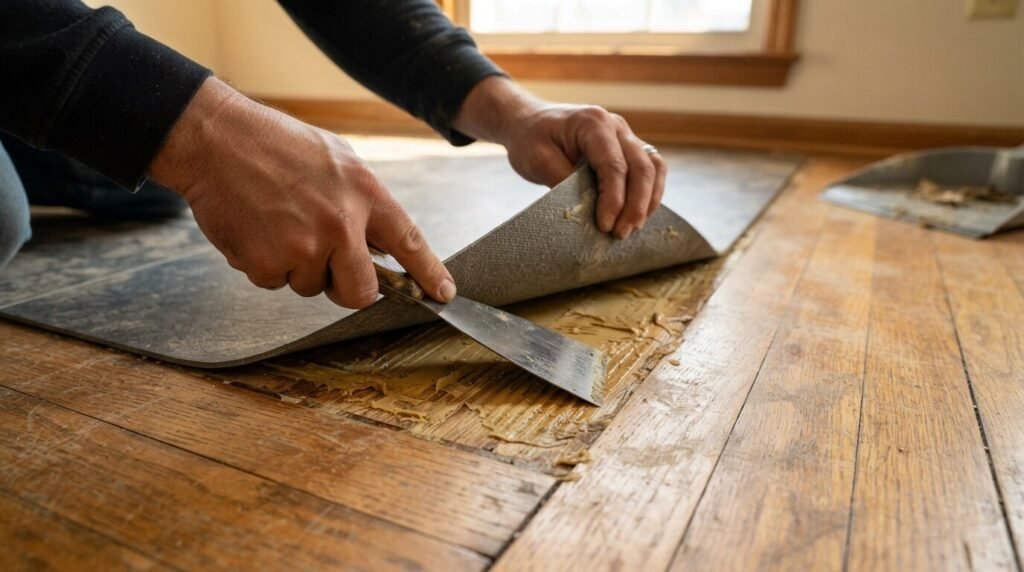
When you eventually remove the tiles, you may find that the hardwood does not look exactly the way it did before. The result depends on the type of finish you have, the adhesive used on the tiles, and how long you leave them in place.
However, if you want to know how to smoothly remove the peel and stick tiles over any surface, you can check out our step by step guide.
As you start pulling up the tiles, you may notice a few different things:
- Sticky residue: You may find adhesive left behind on the hardwood after the tile comes off. Some residue can be difficult to remove without further cleaning or surface preparation.
- Lifted finish: If the adhesive has bonded strongly to the finish, pulling the tile up can sometimes take small areas of that finish with it.
- More visible marks: If you have waxed or oiled hardwood, you may notice changes in the surface more easily after removing the tiles. A sealed polyurethane finish may handle removal differently.
So, if you think you may want the hardwood back later, keep the removal process in mind before you install the tiles. You will have a better chance of protecting the surface if you remove each tile carefully instead of pulling it up quickly or forcefully.
When You Should Not Install Peel and Stick Tiles Directly Over Hardwood
Your hardwood may look fine at first glance, but some problems can make it a poor surface for direct installation. Before you cover the floor, check whether any of these conditions apply:
- Several boards are loose or moving: If you notice repeated squeaking, flexing, or movement as you walk across the floor, fix those areas first. The tiles will not stop the boards from moving underneath them.
- Widespread damage: Cupping, swelling, deep cracks, or rot across a larger area should be repaired before you cover the hardwood. A peel and stick tile cannot correct a damaged or unstable wood surface.
- Wax or polish buildup: If you cannot properly remove wax, polish, or another residue from the surface, the adhesive may not get the contact it needs to hold the tiles securely.
- You want to preserve the hardwood: If you have original, valuable, or otherwise important hardwood that you may want to refinish later, covering it directly may not be the best option. The adhesive and removal process can affect the finish and may make future refinishing more difficult.
If your hardwood passes these checks and the surface is properly prepared, you can move on to the installation itself. The next step is making sure you lay the peel and stick tiles in a way that works with the wood floor underneath.
Hardwood Compatibility Checklist Before Installing Peel and Stick Tile
Before you install peel and stick tiles over hardwood, use this checklist to make sure your floor and the tile are suitable for direct installation.
| Check | What You’re Looking For |
| Board movement | No flexing, bouncing, or creaking when you walk across the floor |
| Board seams | Tight, consistent seams with no wide or shifting gaps |
| Surface finish | Know whether your hardwood is sealed, waxed, oiled, or bare |
| Wax or polish | Properly removed rather than simply cleaned or sanded over |
| Damage | No water damage, cupping, deep cracks, or signs of rot |
| Surface condition | Flat, stable, and free of soft or weak areas |
| Manufacturer instructions | Confirmed that the peel and stick tile is rated for wood surfaces |
FAQs
Do peel and stick floor tiles make hardwood floors waterproof?
No. Peel and stick tiles can add a layer over your hardwood, but they do not turn the wood floor into a waterproof surface. Water can still reach the hardwood through seams, edges, or damaged areas in the tile. If you plan to use them in an area where spills or moisture are common, you should pay close attention to the product’s water-resistance and installation requirements.
Can you install peel and stick tiles over hardwood with floor vents?
You can, but you need to account for the vents before you begin. If a tile covers a floor vent, you will need to cut an opening that matches the vent properly so air can still move through it. You should also avoid covering removable vent covers in a way that makes future access difficult.
Can you put peel and stick tiles over hardwood floors without removing the wood?
Yes, you can often cover hardwood without removing it if the floor is stable and suitable for the tile. If you want to keep the original wood underneath, direct installation lets you change the look without tearing out the hardwood. However, you should still check the condition of the floor and the tile manufacturer’s requirements before you start.
Can you use peel and stick tiles over hardwood in a rental?
You can, but you should think about what will happen when you move out. Removing the tiles may leave adhesive, affect the finish, or require extra work to restore the hardwood. If you are renting, check your lease and get permission before covering the original floor, especially if the hardwood is exposed and in good condition.
Final Thoughts
Peel and stick floor tiles can work over hardwood, but your wood floor needs to be stable, clean, and suitable for the adhesive. Before you cover it, check the condition of the boards, the surface finish, and the tile manufacturer’s requirements.
If your hardwood is in good shape and you are comfortable with the possible changes to the surface and future removal, peel and stick tiles can give you a new floor without removing the wood underneath.