
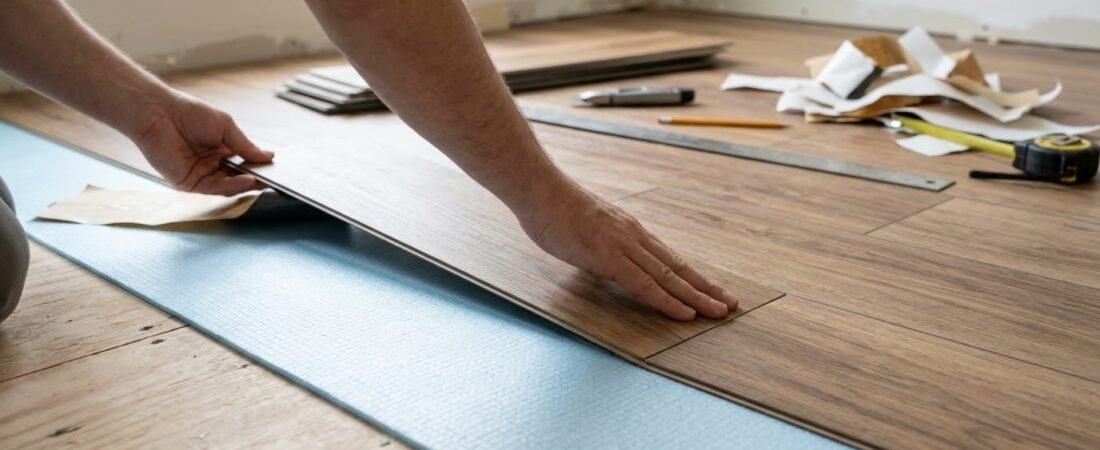
You pulled up the carpet, and now you see a soft pad on the floor. So, you wonder if you can stick peel-and-stick tiles right on top of carpet or foam padding or not.
I understand why. It would save you time and money. But there is one problem.
Soft padding moves when you walk on it, but floor tiles need a firm, stable surface. Let’s look at why this causes problems and what you can do instead. If you still have carpet on your floor, read our guide on peel and stick floor tiles over carpet. It explains why carpet is not a suitable base and what to consider before installing your new tiles
Short answer: No, you should not put peel-and-stick floor tiles directly over carpet padding or foam underlay. Here’s why.
Does Any Peel and Stick Tile Work Over Foam Padding?
You should not count on it.
Most peel-and-stick floor tiles need a hard, flat, clean, and dry surface. Foam padding is soft, so it can move under your weight. Always check the tile box or the manufacturer’s website for approved surfaces. Unless the manufacturer specifically approves your foam layer, do not install the tiles directly over it.
You may find tiles advertised as extra thick or extra strong. However, a thicker tile does not solve the problem underneath. The foam still compresses when you walk on it, which puts stress on the tile and its adhesive.
The same rule applies to peel-and-stick vinyl planks. They are longer than square tiles, but they still need a firm, stable surface to stay in place.
What about carpet tiles with foam on the back?
Those are different. Some carpet tiles have a foam layer attached to the back as part of their design. They are made for a different type of flooring system. This article focuses on self-adhesive vinyl floor tiles that look like wood, stone, or marble. You should not assume that a product designed for carpet will work the same way as a vinyl floor tile.
Can You Install Peel and Stick Tiles Over Different Types of Foam Padding?
No. Most types of foam padding are not suitable for peel-and-stick floor tiles. Although these materials look different, they share one problem: they can move or compress under your weight. Here is how common types compare.
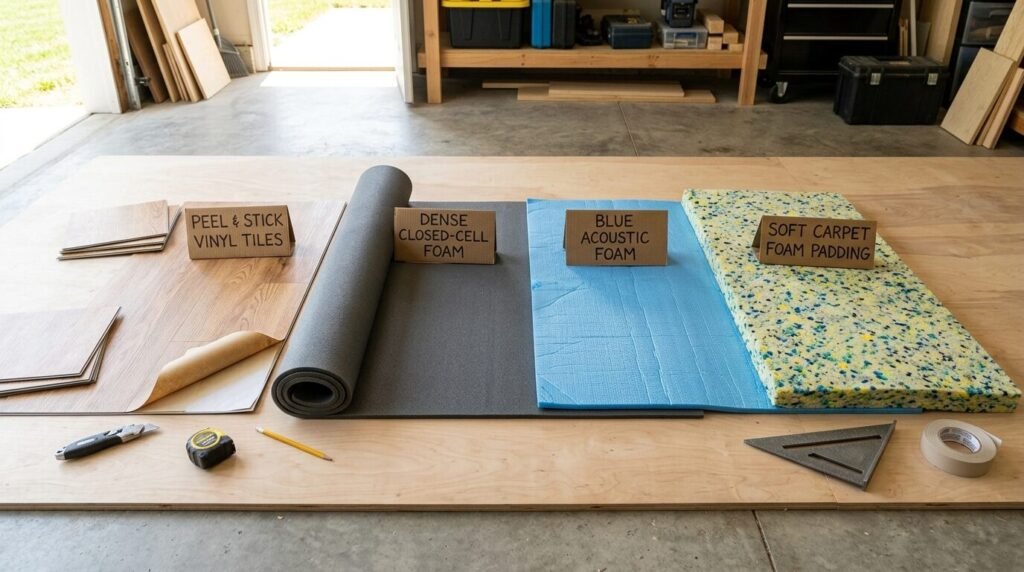
| Type of padding or underlay | What it is | Can you install peel-and-stick tiles over it? |
| Rebond carpet padding | A thick, bumpy pad made from pieces of recycled foam. | No. It is too thick and soft to provide a stable base for the tiles. |
| Polyurethane foam padding | A lightweight, springy material often used under carpet. | No. It compresses when you walk on it, which can put stress on the tiles and their adhesive. |
| Memory foam padding | A soft material that slowly returns to its original shape after pressure. | No. Its softness allows too much movement beneath the tiles. |
| Thin foam underlay | A thin layer often placed under floating, click-together flooring. | No. Even thin foam can compress underfoot. It is designed for certain floating floors, not as a base for self-adhesive tiles. |
| Foam with a plastic film on top | Foam covered with a thin plastic layer. | No. The foam can still compress, and the plastic surface may not provide a suitable bond for the tile adhesive. |
| Rubber or felt padding | A denser padding material used in some flooring systems. | Generally no. Even if it feels firmer than foam, it may still move and may not meet the tile manufacturer’s requirements for a suitable base. |
You may think thin foam underlay is firm enough because it does not feel as soft as thick carpet padding. However, it can still press down when you walk on it. Your peel-and-stick tiles need a hard, stable surface so the adhesive can hold them firmly in place.
Why Does Peel and Stick Tile Fail Over Padding?
Think of a sticker on a desk. It sticks well because the desk stays hard and still. Now imagine putting that same sticker on a pillow. The soft surface bends and moves, so the sticker cannot stay firmly in place.
Carpet padding and foam underlay cause a similar problem. When you walk on them, they compress under your weight and then spring back. This repeated movement puts stress on the tile and its adhesive, even if the tile feels secure at first.
Over time, you may notice these problems:
- The edges start to lift. The tile moves as the padding compresses, which can weaken the adhesive bond around the edges.
- Gaps appear between tiles. Repeated movement can cause tiles to shift, leaving small spaces between them.
- The tiles crack or break. Thin vinyl tiles can become damaged when the soft layer beneath them bends or moves too much.
- The surface looks uneven. Dips and soft spots in the padding can affect how the tiles sit on the floor.
The problem is not just whether the adhesive sticks at first. Your tiles also need steady support every time you walk across them. Even if you press them down firmly, the soft padding underneath can cause the tiles to loosen later.
That’s why you should remove carpet padding or foam underlay before installing peel-and-stick floor tiles directly over the subfloor.
What Should You Do With the Padding Before Installing Peel-and-Stick Tiles?
If you still find carpet padding or foam on your floor, you need to decide what to do with it before laying your new tiles. The right choice depends on how the padding is attached and what lies underneath it.

Option A: Remove the Padding (Best Choice)
Here, you can start by removing the soft padding. This way, can check the floor underneath and prepare a firm base for your peel-and-stick tiles.
Here is what you should do:
- Remove the carpet if it is still in place.
- Roll up the carpet padding and take it out.
- Remove the staples carefully. Wear gloves because the sharp ends can hurt your hands.
- Remove the tack strips around the edges of the room. These are narrow wooden strips with small nails that hold the carpet in place.
- Scrape away any padding or glue left on the floor.
- Sweep and vacuum to remove dust and loose pieces.
Now check the floor underneath. It should be firm, flat, clean, and dry before you install your self-adhesive floor tiles. If you find damaged or uneven areas, fix them first.
Option B: Use a Suitable Rigid Panel (Only If Approved)
If you cannot remove the padding easily, you may be able to use a rigid panel as part of your new flooring base. However, you cannot simply install plywood over soft foam and expect a stable floor.
You need to make sure the panel has proper support and is suitable for the floor underneath. For this, check the panel manufacturer’s instructions and ask your tile manufacturer if they approve this type of base.
Before you choose this option, keep these points in mind:
- Check the floor height. The added panel can make your floor higher, so check the space under doors and around doorways.
- Consider the extra cost. You will need to buy the panel and may need additional tools or materials.
- Make sure the base stays firm. If the foam compresses under the panel, the new floor may still move. You may need to remove the padding to create a stable base.
If you cannot make the base firm and stable, it is better to remove the padding instead.
Option C: Stick Tiles Directly Over the Padding (Not Recommended)
Do not stick vinyl floor tiles directly onto carpet padding or soft foam. The padding compresses when you walk on it, so your tiles may not stay firmly in place.
You are better off removing the padding first than risking a floor that needs repairs later.
Which Option Should You Choose?
| Option | Work and Cost | Expected Result |
| A. Remove the padding | Usually the simplest starting point | Lets you prepare a firm, suitable floor |
| B. Use an approved rigid panel | More work and higher cost | May work if the panel has proper support and the tile manufacturer approves it |
| C. Leave the padding in place | May seem easier at first | Not recommended because the soft base can cause problems |
For most homes, removing the carpet padding is the best first step. You can then check the floor underneath and decide what it needs before you install your new peel-and-stick floor tiles.
FAQs
Can you put peel-and-stick tiles over carpet padding if you cover it with plastic?
No. A plastic sheet does not make soft padding firm enough to support the tiles. It can also create a surface that the tile adhesive cannot grip properly. You need to remove the padding and prepare the floor underneath.
Can you put peel-and-stick tiles over thin carpet padding?
No. Even thin carpet padding can compress when you walk on it. Your tiles need a firm, stable surface to keep the adhesive in place, so remove the padding before you install them.
Can you glue foam padding to the floor before installing peel-and-stick tiles?
You should not rely on glue to make foam padding suitable for peel-and-stick tiles. The foam can still compress under your weight, even if it stays attached to the floor. Remove the padding and follow your tile manufacturer’s instructions for preparing the surface.
Can you install peel-and-stick tiles over foam underlay made for laminate flooring?
No, unless your tile manufacturer specifically approves that type of installation. Foam underlay for floating laminate flooring serves a different purpose. It does not provide the firm, stable base that self-adhesive vinyl tiles usually need.
Final Thoughts
You might think foam padding is harmless because it sits beneath your new floor. However, even a thin layer can affect how well your peel-and-stick tiles hold. Remove the padding, check the surface underneath, and make sure it meets your tile manufacturer’s requirements before you start. This small step can help you avoid loose tiles and extra work later.