
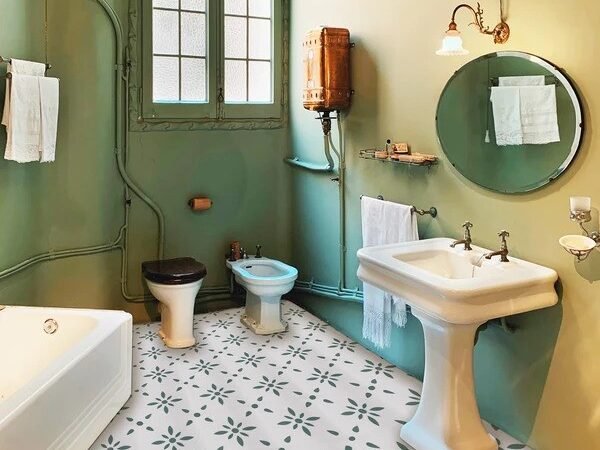
Can you use peel and stick tiles in a bathroom? Find out which bathroom areas work, how water affects the tiles, and what to check before installing them.
Yes, peel and stick tiles can be used in some bathrooms, but they are not the right choice for every part of the room. A dry powder room or a bathroom floor that only gets small amounts of water can be a good fit. This is the same case with areas of constant water, such as a shower floor, and they need much more care.
You also don’t want to assume that a tile marked “waterproof” means the entire floor will be protected from water. The tile surface, adhesive, seams, and floor underneath all play a part.
So, if you’re planning to use peel and stick bathroom floor tiles, the real question is not simply “Can they be used in a bathroom?” It is “Which bathroom areas are suitable, and what should you watch out for?”
This guide breaks that down so you can decide whether peel and stick tiles are a good fit for your bathroom before spending money on them. So let’s walk through it properly, spot by spot, so you know exactly where these tiles will hold up, and where they won’t.
Choose Between Bathroom Floor vs. Bathroom Wall Tiles: Why It Matters
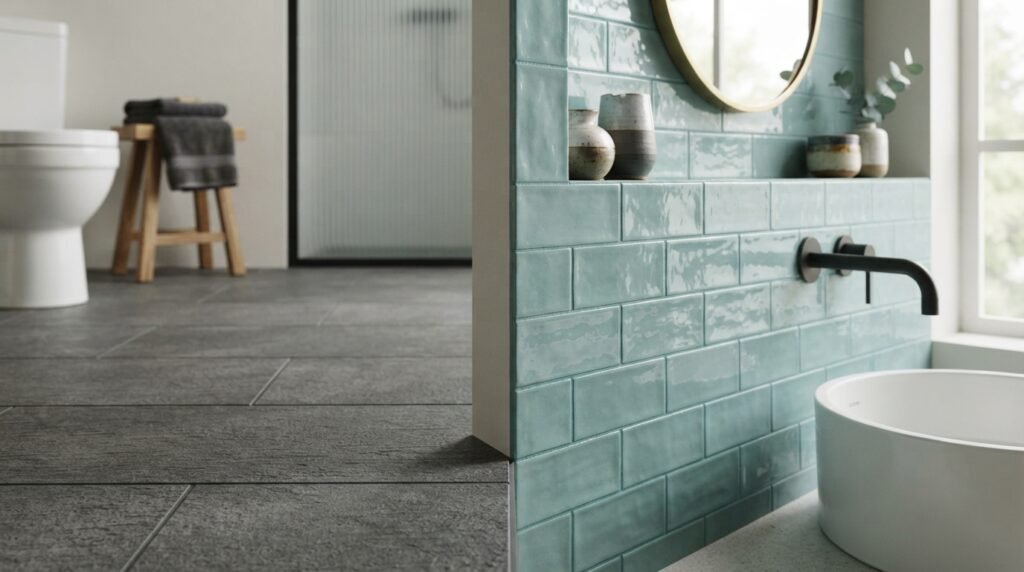
If you’re choosing peel and stick tiles for a bathroom, don’t assume the same tile will work equally well on the floor and walls. These two areas deal with very different conditions.
1. Bathroom Floor Tiles Take More Stress
A bathroom floor has to handle people walking on it every day. It can also get wet from showers, baths, sinks, or wet feet. That means the tile needs to handle foot traffic, moisture, cleaning, and regular wear.
For a bathroom floor, look for a product that is specifically made for floor use. A stronger wear layer and good adhesive can help the tiles hold up better over time.
2. Bathroom Wall Tiles Have a Different Job
Bathroom walls usually don’t have to carry foot traffic, so they don’t face the same wear as flooring. A peel and stick tile may work well as a backsplash or on a wall away from constant water.
But a wall near a shower or bathtub has a different level of moisture exposure. Before installing anything there, check that the product is actually rated for that area.
3. Don’t Choose by Appearance Alone
Two peel and stick tiles can look almost the same but be made for completely different uses. One may be designed for floors, while another is meant only for walls.
So, if you’re buying tiles for a bathroom, check the product’s intended use before looking only at the color or pattern. A good-looking tile is not automatically a good bathroom floor tile.
Dry Zone vs. Wet Zone: Where Can Peel and Stick Tiles Go?
Not every part of a bathroom gets the same amount of water. Before you install peel and stick tiles, look at where the tile will be placed and how often it will get wet.
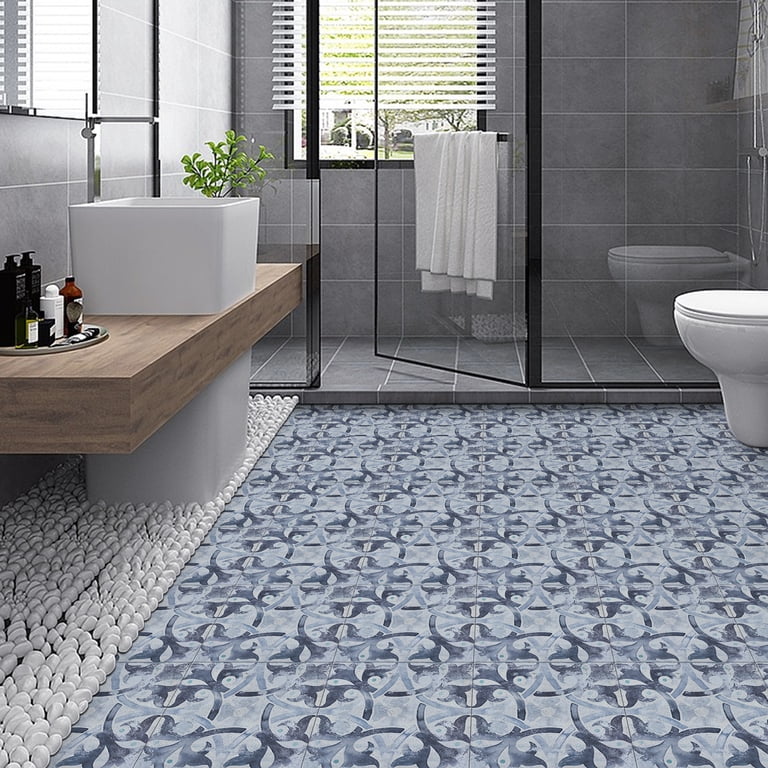
A simple way to think about it is to divide the bathroom into dry, splash-prone, and wet areas.
| Bathroom Area | Suitability | Why |
| Powder room floor | Good | Little direct water |
| Floor near the vanity | Usually good | Mostly small splashes |
| Around the toilet | Usually good | Some moisture, but not constant |
| Main bathroom floor | Depends | More humidity and water |
| Around a bathtub | Use caution | Regular splashes can reach the floor |
| Shower wall | Product-specific | Constant moisture |
| Shower floor | Usually avoid standard products | Standing and direct water |
What Makes a Bathroom Floor Harder on Peel and Stick Tiles?
A bathroom floor has to deal with more than just people walking across it. You may have wet feet coming out of the shower, water around the sink, small splashes near the tub, and humidity in the air. All of this can affect how well peel and stick tiles perform.
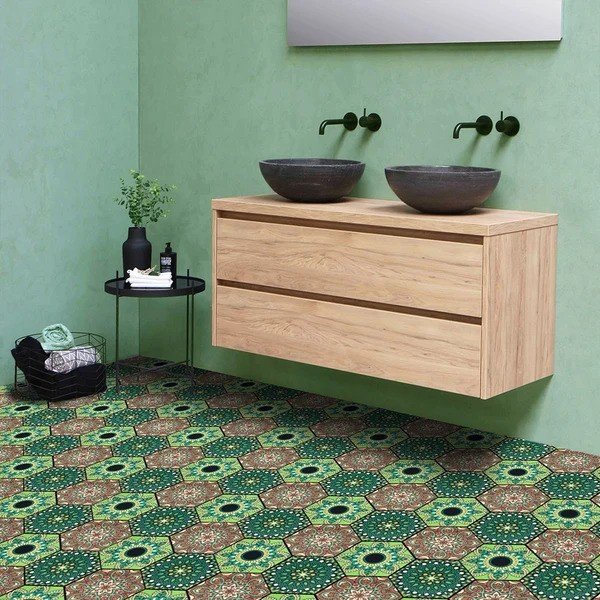
1. Water Can Reach the Seams
The top of a tile may handle water well, but the small spaces between tiles are more important. If water keeps reaching those seams, it can work its way underneath and affect the adhesive.
Once moisture gets under a tile, you may start to notice lifting edges, loose tiles, or movement underfoot.
2. Bathrooms Get Humid
A hot shower can leave a lot of moisture in the air. Good ventilation helps, but a bathroom that stays damp for long periods can be harder on flooring than a dry room.
This is one reason a bathroom-rated product is a better choice than simply using any peel and stick tile that looks good.
3. Wet Floors Get More Wear
Bathroom floors are also cleaned often. Water, cleaning products, wet feet, and daily foot traffic all add to the wear.
That does not mean peel and stick flooring will automatically fail in a bathroom. It means surface preparation, product quality, moisture control, and installation quality all matter if you want the tiles to stay in place.
The more moisture a bathroom floor receives, the more carefully the product should be chosen.
Are Peel and Stick Bathroom Floor Tiles Waterproof?
This is one of the most important things to check before you use peel and stick tiles in a bathroom. Not every peel and stick tile is waterproof, and a waterproof tile does not always mean the whole installed floor is waterproof. You can also check the pros and cons of these peel and stick tiles to understand the maintenance, and common drawbacks.
You may see words like water-resistant or waterproof on the package, but these terms should not be treated as the same thing.
- Water-Resistant vs. Waterproof
Water-resistant means the tile can handle some water without being damaged right away. This may be enough for a bathroom floor that gets small splashes, as long as water is not left sitting on it.
Waterproof means the tile material itself is designed to resist water from passing through it. But the complete floor still has other areas that matter, such as the seams, edges, adhesive, and surface underneath.
- The Seams Can Be the Weak Spot
Even when the tile surface does not absorb water, there are still small joints where one tile meets another. If water repeatedly sits around these seams, it can eventually find a way underneath the tile. Once that happens, the adhesive may weaken and the tile can start to lift.
This is why simply choosing a tile labeled “waterproof” is not enough. You also need to consider how the tiles will be installed and how much water the bathroom floor normally gets.
- Check the Product Before Buying
If you’re planning to install peel and stick bathroom floor tiles, look at the manufacturer’s instructions before making a purchase. Check whether the product is:
- Made for floor use
- Suitable for bathrooms
- Rated for the amount of moisture in the area
- Designed for the type of surface underneath
If the package does not clearly say that the product is suitable for bathroom use, it is better not to assume that it will be.
Can Peel and Stick Tiles Go Over Old Bathroom Tiles?
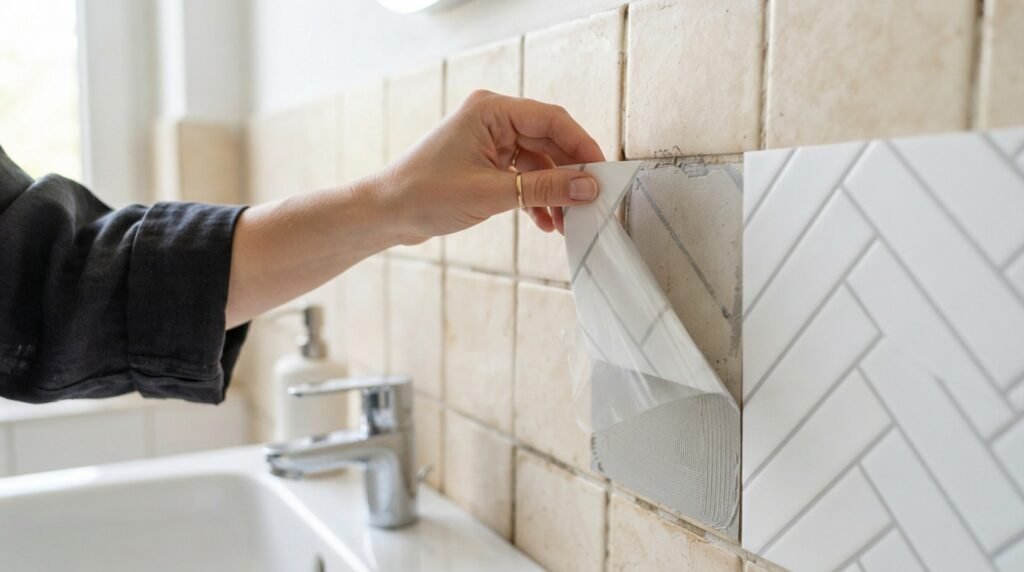
Yes, peel and stick tiles can sometimes be installed over old bathroom tile, but the existing tile needs to be in good condition first. You cannot simply stick the new tiles over any old surface and expect them to stay in place.
However, if you’re planning to install the tiles yourself, it also helps to understand the complete process of installing peel and stick floor tiles, especially surface preparation and getting the first tiles straight.
1. Check the Old Tile First
The existing tile should be:
- Firmly attached
- Clean and free from soap or grease
- Dry
- Smooth enough for the new tile
- Free from major cracks or loose areas
If an old tile is moving or coming loose, fix that problem before covering it.
2. Watch the Grout Lines
Deep grout lines can create low spots under the new tiles. Over time, those lines may show through or make the new tiles sit unevenly.
If the grout is deep or damaged, the surface may need extra preparation before installation.
3. Look for Moisture Problems
This is especially important in a bathroom. If the old floor has moisture trapped underneath it, covering it with new tiles does not solve the problem.
Check for damp areas, soft spots, mold, or signs that water has been getting underneath the old flooring. These problems should be fixed before installing anything over the top.
4. Don’t Skip Surface Preparation
Even when the old tile looks clean, bathroom floors can have soap residue, cleaning products, and other buildup. The new adhesive needs a suitable surface to bond to.
If you’re planning to install over existing tile, check the new product’s instructions first. Some peel and stick tiles can be used over certain existing surfaces, while others may require additional preparation.
What to Look for in Peel and Stick Bathroom Floor Tiles
If you’re buying peel and stick tiles for a bathroom, don’t choose them only because the pattern looks good. The tile needs to suit the room and the amount of water it will face.
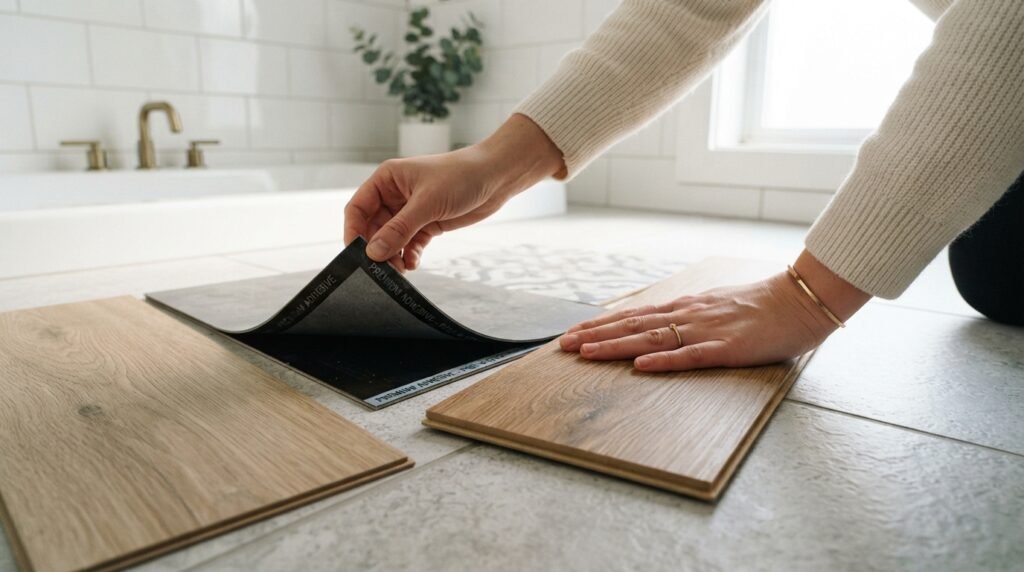
- Check the Bathroom Rating: Look for products that clearly state they are suitable for bathroom or floor use. If the manufacturer gives limits on where the tile can be installed, follow those instructions.
- Look at Water Resistance: Check whether the product is described as water-resistant or waterproof. Remember that this describes the tile material, not necessarily the whole finished floor. For a bathroom, a product made to handle moisture is a better starting point than a general-purpose peel and stick tile.
- Check the Adhesive: The adhesive is just as important as the tile itself. A tile may look great on top but still fail if the adhesive cannot handle the bathroom conditions. Look for “pressure-sensitive” adhesive or titles labeled as “marine-grade adhesive.” If the pre-applied adhesive is weak, you may need to apply an additional vinyl floor primer or tile adhesive to the subfloor for a permanent bathroom hold.
- Consider Slip Resistance: A bathroom floor can become wet, so slip resistance is worth checking before buying. A tile made for walls may not have the same properties as one designed for walking on.
- Check the Wear Layer: If the tiles will be used on the floor, look for a product made to handle regular foot traffic. A stronger wear layer can help protect the printed surface from everyday use and cleaning. Check for a protective wear layer (ideally 12 mil or higher) on top of the vinyl to prevent scuffs, scratches, and fading from regular cleaning.
- Thickness: Look for tiles that are at least 1.5mm to 2mm thick. Thinner tiles (under 1mm) tear easily, show subfloor imperfections, and degrade quickly underfoot.
- Texture and Finish: Choose the tiles with a textured, matte, or slightly embossed finish. Glossy peel-and-stick tiles become extremely slick and dangerous when wet, making them unsuitable for bathroom floor use.
How to Keep Peel and Stick Tiles From Peeling in a Bathroom
Bathroom moisture can put extra stress on the adhesive, but good preparation and installation can help the tiles stay in place.
1. Deep Clean and De-grease the Subfloor
The most common cause of peeling is microscopic dust, hair, or grease under the tile. Sweep, vacuum, and then scrub the floor with a heavy-duty degreaser or TSP (trisodium phosphate). Let the floor dry completely for at least 24 hours before installing tiles. Because even a good adhesive can struggle to bond to a dirty or damp surface.
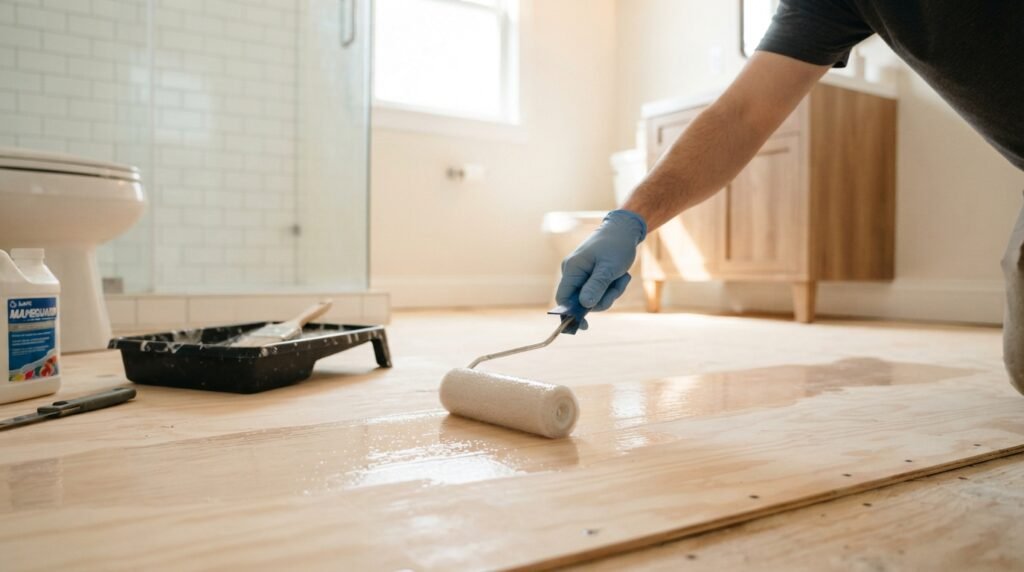
2. Apply a Latex Floor Primer (Highly Recommended)
Standard wood or concrete is too porous for peel-and-stick backing, and old tile is often too slick. Applying a self-stick latex floor primer creates a uniform, tacky barrier that dramatically increases the bond strength of the tiles.
3. Use a 100-lb Floor Roller
Simply stepping on the tiles or pressing them down with your hands won’t fully activate pressure-sensitive adhesive. Rent or buy a hand roller or a heavy 100-lb linoleum roller. Roll over the entire floor after installation, paying special attention to the seams, to force out air pockets and set the adhesive. Don’t rush this step. A tile that looks stuck in the middle may still have a loose edge.
4. Seal the Seams and Perimeter
Water seeping between tiles is the absolute enemy. Apply a thin, invisible coat of seam sealer specifically designed for vinyl flooring across all tile joints. Additionally, run a clean bead of silicone caulk around the perimeter of the bathroom (where the floor meets the baseboards and tub) to seal off moisture pathways.
5. Acclimate the Tiles
Keep your peel-and-stick tiles inside the bathroom for 48 hours before installation. This allows the vinyl to expand or contract to the room’s average temperature, preventing shrinkage gaps later on.
6. Keep Water From Sitting on the Floor
Small splashes are different from water that stays on the floor for a long time. Wipe up puddles around the sink, bathtub, or toilet instead of letting water sit around the seams.
Good bathroom ventilation also helps reduce the amount of moisture in the room.
7. Check the Edges From Time to Time
If you notice a corner starting to lift, deal with it early. A small lifted edge can allow more water and dirt underneath the tile.
Avoid adding glue, caulk, or another product simply because a tile is lifting. First find out why it is happening and check the tile manufacturer’s instructions for the recommended repair method.
Good floor preparation + the right product + careful installation = a much better chance of keeping the tiles firmly in place.
When Peel and Stick Bathroom Tiles Are Not Worth the Risk
Peel and stick tiles can work well in the right bathroom, but they are not the best answer for every situation. If the floor deals with a lot of water every day, choosing a different flooring option may save you trouble later. Further, if you have tile throughout the bathroom and want to cover it instead of removing it, see our full guide on putting peel-and-stick floor tiles over existing tile.
1. Areas With Constant Water
A floor inside a shower or another area that stays wet for long periods is a poor match for standard peel and stick tiles. Constant water can reach the seams and edges and may weaken the adhesive.
2. Bathrooms With Moisture Problems
If the bathroom already has damp flooring, leaks, mold, or water getting underneath the existing floor, installing new tiles over it will not fix the problem.
The moisture problem needs to be solved first.
3. Damaged or Uneven Floors
Peel and stick tiles need a suitable surface underneath them. A floor with loose sections, major bumps, deep gaps, or serious damage can cause problems with both the appearance and the adhesive.
4. When Long-Term Durability Matters Most
If the goal is a floor that can handle heavy moisture and last for many years with fewer concerns, a flooring option specifically designed for wet areas may be a better choice.
In short, peel and stick tiles make more sense when the bathroom is relatively dry and the surface is in good condition. The more water the floor has to handle, the more carefully you should consider other options.
Frequently Asked Questions
Can peel and stick tiles be used on a bathroom floor?
Yes. They can work well on some bathroom floors, especially areas that do not have constant water. Choose a product made for floor and bathroom use, and make sure the surface is clean, dry, and smooth before installation.
Can peel and stick tiles be used around a bathtub?
They can be used in some areas around a bathtub, but extra care is needed because these areas can receive frequent splashes. Choose a product approved for that level of moisture and keep water from sitting around the edges and seams.
Can peel and stick tiles be used in a shower?
Standard peel and stick tiles are generally not a good choice for a shower floor because they face constant water and standing water. Some products may be made for specific wet areas, so always check the manufacturer’s instructions rather than assuming a regular peel and stick tile is suitable.
How do you stop peel and stick tiles from peeling in a bathroom?
Start with a clean, dry, suitable surface and press the tiles firmly into place, especially around the edges and corners. Good ventilation and cleaning up standing water can also help reduce moisture problems.
How long do peel and stick tiles last in a bathroom?
There is no single lifespan for every product. How long they last depends on the tile quality, surface preparation, adhesive, foot traffic, cleaning, and how much water the bathroom receives. A dry powder room may be easier on the tiles than a heavily used, high-moisture bathroom.
Final Verdict
So, can peel and stick tiles be used in a bathroom? Yes, but the bathroom and the product both matter.
For a powder room, guest bathroom, or a bathroom floor that only gets occasional splashes, they can be a practical way to change the look of the space without a major flooring project.
For areas that stay wet, such as a shower floor or a spot with regular standing water, standard peel and stick tiles are a much riskier choice. In those areas, a flooring material made specifically for constant moisture may be a better option.
Before you buy, check three things:
- Where the tiles are approved for use
- How much water the area receives
- Whether the existing surface is clean, dry, and suitable
If those three things line up, peel and stick tiles can be a simple bathroom update. If the area is constantly wet, it is better to choose a flooring system designed for that level of water exposure.