
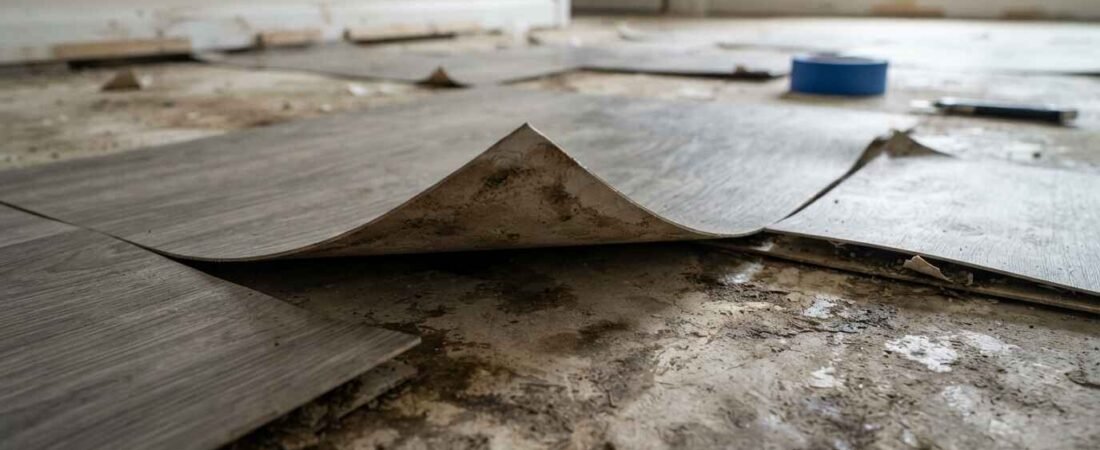
Peel and stick tiles usually fail to stick because of dust on the floor, a cold room, not enough pressure when installing, an uneven subfloor, or hidden moisture. Fixing the surface and reheating the tile solves most cases.
Did you just put down your new peel and stick floor tiles, and now they won’t stay flat? This happens a lot, and it’s usually easy to fix.
You are not alone. Many people run into this problem the first time they try peel and stick flooring. If you’re still deciding whether this flooring type is right for you, our complete guide to peel and stick flooring covers the basics. But if you’ve already got tiles down and they’re lifting, let’s find out why it happens and how you can fix it.
Check the Areas From Where they are not Sticking
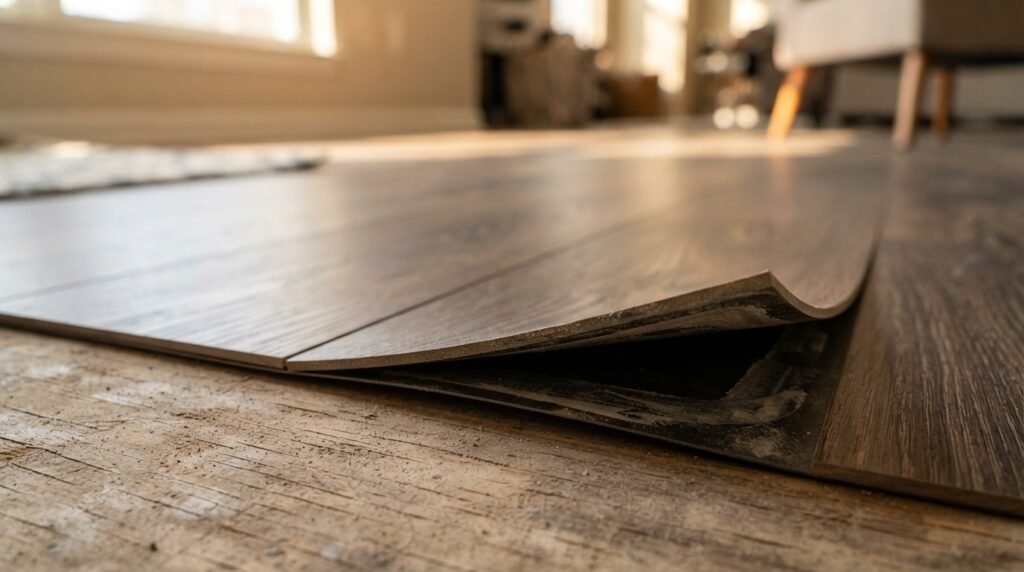
If Only the Corners or Edges Are Lifting
Corners and edges are often the first areas to come loose. This can happen when the edge did not make full contact with the floor. There can be dust underneath the tile, an uneven spot, or pressure from a nearby wall.
You need to check the loose area carefully. If the same corner lifts again, do not keep pressing it down without checking the surface underneath. There may be a problem with the floor or the adhesive. However, if the same corner keeps coming loose, it is worth looking at what is making that edge lift before you try to stick it down again. Read out the reasons for lifting edge before you try anything else.
If the Whole Tile Is Coming Loose
A tile that is loose across most or all of its surface usually hints that there is a bonding problem.
Check for:
- Dust or dirt under the tile
- Moisture
- Wax or polish
- A very smooth coating
- Weak or damaged adhesive
If several tiles in the same area are coming loose, look at the floor rather than treating each tile as a separate problem. This is especially important because replacing one tile will not solve a surface problem that affects the whole floor. However, if the tiles cannot be fixed and it is time to take them out, follow this guide on how to remove peel and stick floor tiles step by step.
6 Reasons of Peel and Stick Tiles Not Sticking
Peel-and-stick floor tiles are designed to bond directly to the floor. But sometimes the tiles do not stay down. The edges may lift, corners may curl, or the whole tile may move after installation. Here are few things you can look up to;
1. The Floor Was Not Clean Enough
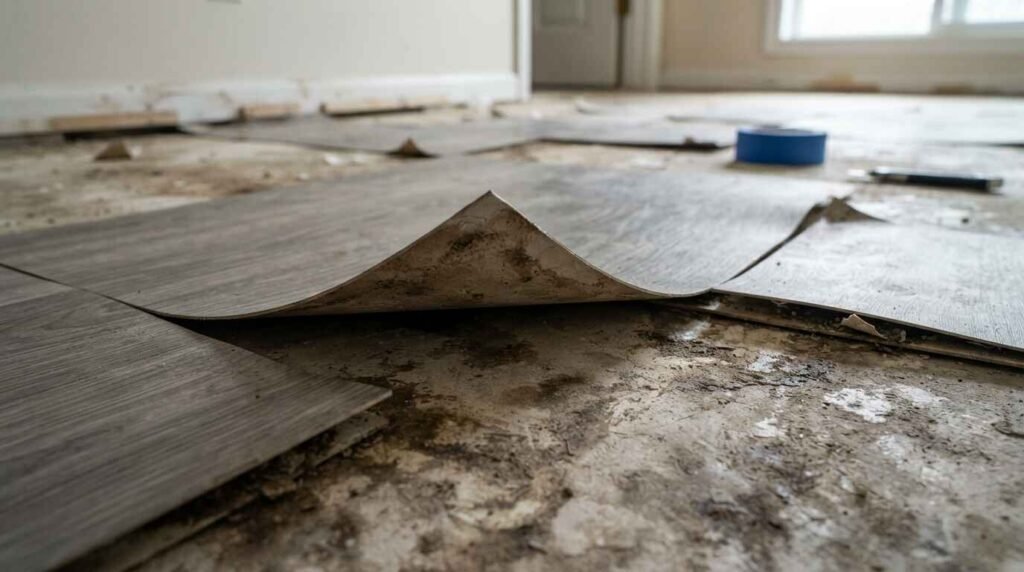
This is the number one reason tiles don’t stick. Peel and stick tiles need a clean, flat, and dry floor to grip onto.
If there is dust, dirt, grease, or old wax on your floor, the sticky side of the tile can’t hold on. Even a layer of dust as thin as a coat of paint can stop the glue from bonding.
What you should do:
- Sweep and vacuum the floor first
- Mop it with a mix of water and dish soap, or a cleaner without oil or wax in it (oil-based cleaners leave a film that blocks the glue)
- Wait at least 30 minutes for the floor to dry completely before laying tiles
For a full walkthrough of getting your floor ready the right way from the start, check out our guide on how to prep your floor for peel and stick tile.
2. The Room Was Too Cold
Peel and stick tiles need warmth to stick well. If your room is too cold, the glue on the back of the tile gets stiff. Stiff glue does not grip the floor the way it should.
Most brands say your room should be between 65°F and 85°F (18°C to 29°C) when you install the tiles. Below 65°F, the adhesive stiffens and loses its grip. If your house is cold, turn up the heat before you start, and keep the room at that temperature for at least 48 hours after installing, since the glue keeps curing during that time.
3. The Tile Was Not Pressed Down Properly
Sticking the tile down is not just about placing it. You need to press on it, and press hard.
A 75-pound (or heavier) floor roller works best for this. If you don’t have one, a rolling pin or even standing on the tile with your full body weight can work for small areas. For this, you need to push down on the whole tile, then go back over the edges and corners a second time. These spots lift first because they get the least pressure during a normal walk-over.
If you haven’t installed your tiles yet, our step-by-step guide on how to install peel and stick flooring walks you through the whole process, including the right way to press and roll each tile.
Other than that, you need to pay particular attention to the:
- Edges
- Corners
- Seams
4. The Subfloor Was Uneven
If your floor has bumps, dips, or old flooring underneath, the tile can’t lay flat. A tile that can’t lay flat can’t stick well either.
Peel and stick tiles work best on a smooth, even surface, with bumps no higher than about 1/8 inch (3mm). If your old floor has damage or bumps bigger than that, fill low spots with a floor leveling compound and sand down high spots first.
5. The Tiles Are Old or Low Quality
Sometimes it’s not you, it’s the tile. Cheap tiles or tiles that have been sitting in a store (or your garage) for a long time can lose their stickiness. Heat, cold, and time can all weaken the glue.
If you bought a bargain brand or the box was open for a while, this could be your problem.
6. Too Much Moisture Under the Floor
Peel and stick tiles don’t like moisture. If your floor is a concrete basement or a bathroom, there could be moisture coming up from underneath, even if the floor looks dry.
This moisture stops the glue from bonding right. A simple test: tape a 2-foot square of plastic sheeting to the floor and leave it for 24 hours. If you see water droplets or a dark, damp patch underneath when you peel it back, there’s too much moisture to install yet, and you’ll need a moisture barrier first.
Why Do Peel-and-Stick Tiles Stick at First but Come Up Later?
A peel-and-stick tile can look firmly attached immediately after installation and still fail later. This often happens when the adhesive initially makes contact but does not form a strong, lasting bond.
However, for it, there would be many possible causes that include:
- Moisture below the flooring
- Dust or cleaning residue
- Wax or polish left on the floor
- Temperature changes
- Weak adhesive
If tiles begin lifting after several days or weeks, check the conditions under the tiles instead of assuming the tiles themselves are defective. However, if the tiles keep coming loose and replacing them does not seem worth it, vinyl plank is another option. This guide compares peel and stick vs. vinyl plank flooring to help decide which makes more sense.
How to Fix Tiles That Won’t Stay Down
If a few tiles have already lifted, here’s what you can try:
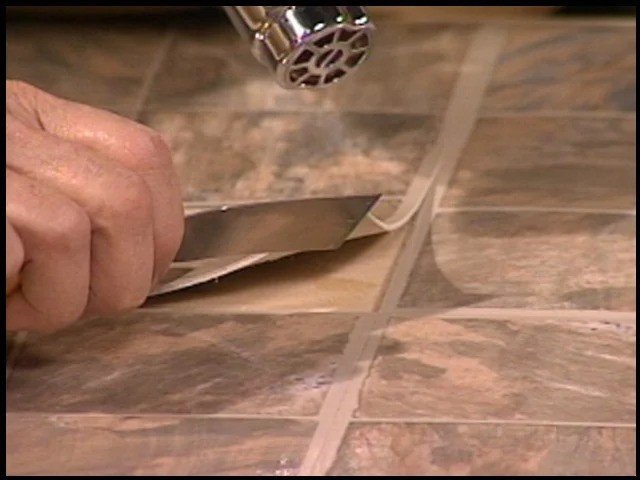
- Warm it up. Use a hairdryer on low heat to warm the tile and the glue, then press it down firmly.
- Clean under the tile. Lift the tile gently, wipe away any dust, then stick it back down.
- Add more pressure. Use a roller and go over the whole tile again, pushing extra hard on the edges.
- Replace it. If a tile has lost its stick for good, it may be easier to swap in a new one.
A Quick Checklist Before You Try Again
- Floor is clean, dry, and dust-free
- Room is warm enough
- Floor is smooth and even
- Tiles are fresh, not old stock
- No hidden moisture underneath
Getting these five things right solves almost every sticking problem.
Common Questions
How long does it take for peel and stick tiles to fully bond?
Most tiles reach full strength in 24 to 48 hours. Avoid heavy furniture or rolling loads on the floor during this time.
Can I reuse a peel and stick tile after pulling it up?
Usually not. Once the adhesive touches dust or loses contact with the floor, it won’t stick the same way again. It’s better to replace it with a new tile.
Does peel and stick flooring stick to painted floors?
Not well. Paint can peel away from the surface underneath it, taking your tile with it. Removing the paint or adding proper underlayment first is the safer choice.
What If the Tiles Keep Coming Loose?
If one tile comes loose, the problem may be limited to that tile. If several tiles in the same room start lifting, there is a better chance that the problem is related to the floor surface, moisture, temperature, or installation conditions. That is a sign to stop replacing tiles and inspect the floor first.
Ending Thoughts
Once your tiles are down and staying put, the next thing you’ll want to know is how long they’ll actually last, and what can make them wear out faster. We’ll cover that in our next guide on how long peel and stick flooring lasts and how to make it last longer.