
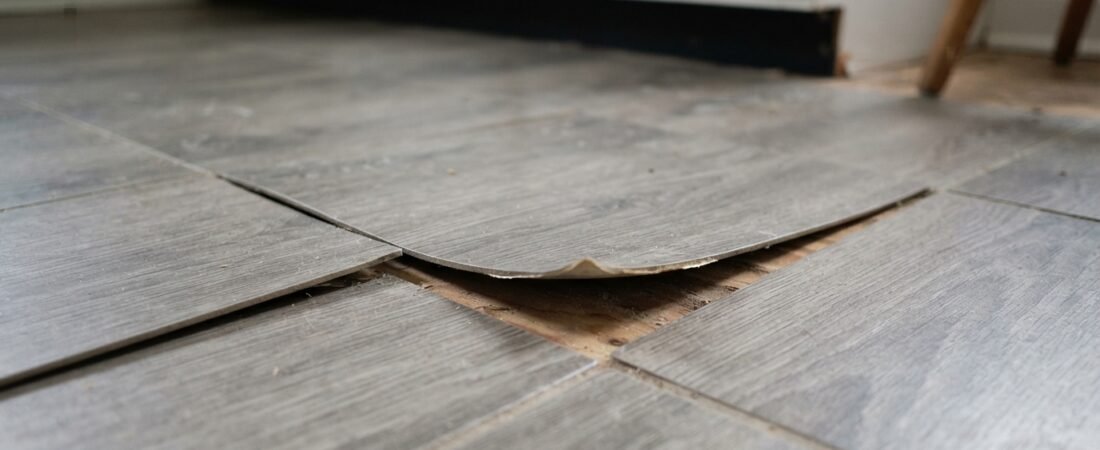
Peel and stick floor tile edges curl due to adhesive breakdown from moisture, heat, or poor subfloor prep. Here’s exactly why it happens.
Introduction
Have your peel-and-stick floor tiles started curling at the edges or lifting at the corners? A tile can look perfectly fine when it is first installed and then develop a raised edge later. In some cases, only one corner lifts. In others, several tiles begin curling in the same part of the room.
This can be frustrating because the rest of the tile may still look firmly attached. Because in most cases, if you press the edge back down it may make the floor look normal for a while, but the same area can lift again if the underlying problem is still there.
However, you do not need to worry. The good news is that where and when the curling happens can give you useful clues. A single curled corner is different from several tiles lifting together, and a tile that curls shortly after installation may need a different solution from one that stays flat for months.
This guide explains why peel-and-stick floor tiles curl at the edges, how to identify the likely cause, how to repair a curled tile, and when replacing it makes more sense.
Peel-and-Stick Floor Tiles Curl at the Edges
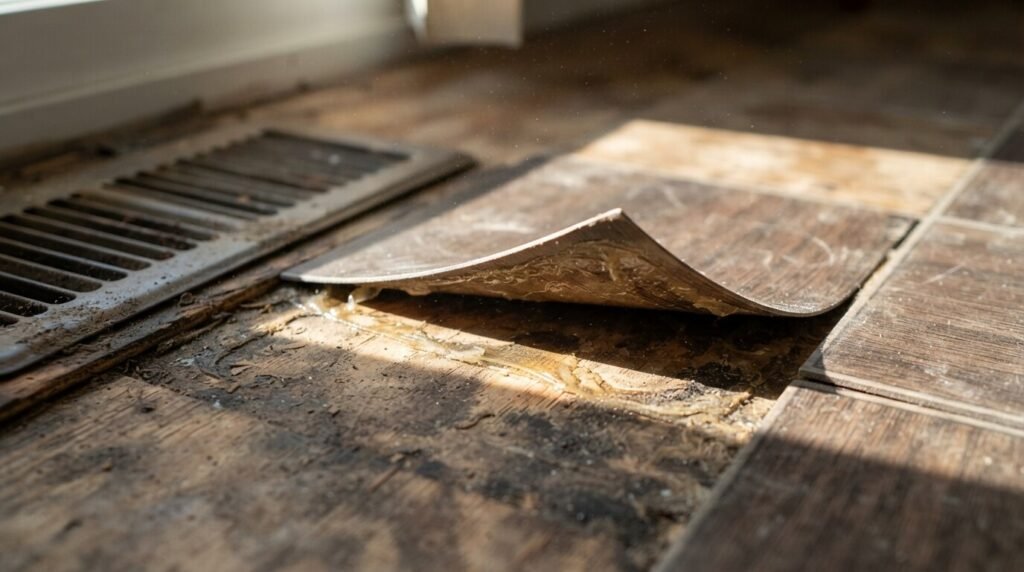
Peel-and-stick floor tiles curl when the tile can no longer stay flat and firmly bonded to the floor. The problem usually starts at the edge or corner because that part of the tile is easier to lift once the bond is disturbed.
A curled edge does not always mean the entire tile has failed. The middle can remain firmly attached while one side begins to rise. Once that happens, the raised edge is exposed to more foot traffic, dirt, and moisture, which can make the curl gradually worse.
The timing can also tell you something. A tile that curls almost immediately after installation is different from one that stays flat for weeks or months before lifting. The location matters too. A single corner, several tiles in one area, or tiles near a heat or moisture source can each point toward a different underlying problem.
However, If your tiles are also coming loose across a larger area, it may be more than a curled edge. See why your peel-and-stick floor tiles may not be sticking to narrow down the problem.
7 Causes of Peel-and-Stick Tile Edge Curling
The main causes are usually related to how well the tile is sitting on the floor and how the tile or adhesive reacts to the conditions around it. A small problem at the edge can be enough to start the curling. Here are a few reasons you can look up to.
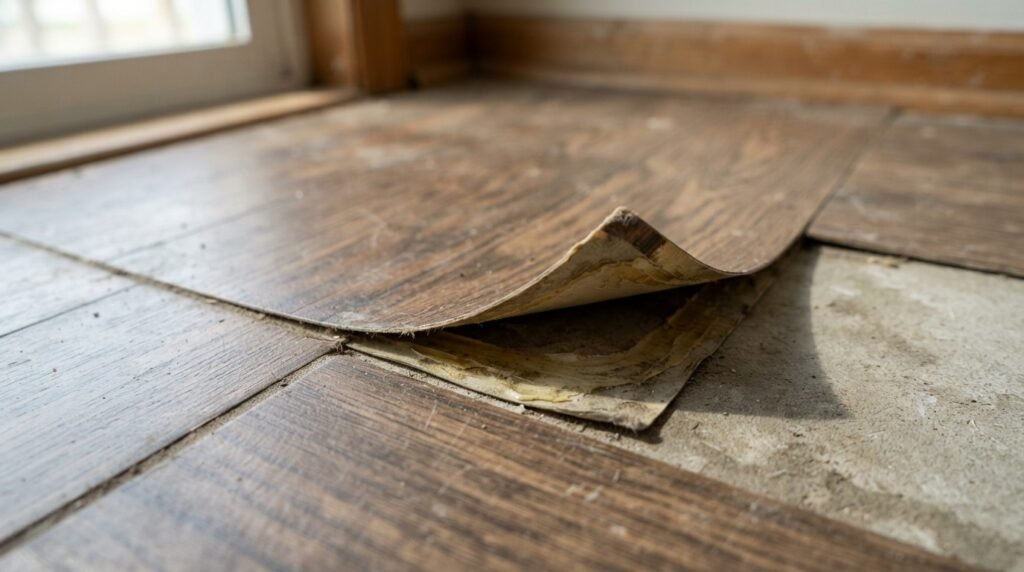
1. The Edge Never Made Full Contact With the Floor
A tile edge may not bond properly if something is trapped underneath it. A small amount of dust, cleaner residue, grease, or another film can keep the adhesive from making good contact with the floor.
The same thing can happen if the edge is sitting over a small raised spot or does not have enough pressure against the floor. Once that section is left slightly loose, it can start lifting with normal foot traffic.
2. The Surface Beneath the Edge Is Not Flat
Your peel-and-stick tile needs a smooth, flat surface underneath it. If the edge sits over a small bump, dip, raised grout line, or rough spot, that part of the tile may not sit flat.
You may notice this when only one corner or one side of a tile keeps curling. The rest of the tile can stay down because the surface under that part is fine.
If you press the edge down and it keeps coming back up, check the floor underneath. A new tile can curl in the same place if the uneven spot is still there. Peel-and-stick flooring manufacturers also commonly require the surface to be flat before installation.
3. Temperature Changes Are Affecting the Tile
Your vinyl tiles can expand and contract when the temperature changes. A room that gets very hot during the day and much cooler later can put stress on the tile and its adhesive bond.
You may notice this more near a sunny window, exterior door, or another spot that gets strong heat. If your tiles look fine most of the time but start curling during hot or cold weather, temperature changes may be part of the problem.
4. Moisture Is Getting Under the Tile
Moisture can weaken the bond under your peel-and-stick tile. It may come from a damp subfloor or from water getting through a gap or lifted edge.
You may see several tiles curling in the same area when moisture is the problem. Check for dampness, dark spots, or a musty smell under the affected tile before you stick it back down.
If the floor underneath is still damp, fixing the tile alone will not solve the problem. Moisture needs to be dealt with first.
5. Aging and Low-Quality Adhesive
Sometimes the problem is with the adhesive itself. Your tiles may have been stored for a long time, exposed to poor conditions, or made with an adhesive that does not hold well under the conditions in your room.
Heat, moisture, and age can all affect adhesive performance. Vinyl flooring can also interact with adhesives over time through plasticizer migration, which is a known issue with some PVC flooring systems.
You should not assume this is the cause just because a tile is curling. If your floor was clean, flat, dry, and installed according to the product instructions, but the tiles still keep lifting, the adhesive or tile quality may need closer attention.
6. The Tile Was Too Cold or Not Acclimated
Your tiles can react to the room temperature if you install them straight from a cold or hot place. Vinyl flooring is normally allowed to adjust to the room before installation so it is more stable when the temperature changes.
Your peel-and-stick floor tiles need time to adjust to the temperature of the room before you install them. If you bring them in from a cold garage, hot car, or delivery truck and install them right away, the vinyl may still change as it adjusts to the room.
The exact acclimation time depends on the product. For example, FloorPops tells you to lay its tile packages flat and let them adjust to room temperature for 48 hours before installation. Always follow the instructions for your own tiles. Hence, it is better to check your product instructions for the required acclimation time because it can vary between brands.
7. Heavy Foot Traffic Is Making the Curl Worse
A small lifted edge can become a bigger problem when you walk over it again and again. This is especially likely in busy areas such as hallways, doorways, and kitchens.
Your foot does not need to lift the whole tile. Repeated pressure on the raised edge can slowly pull more of it away from the floor.
That is why you should deal with a small curl early instead of waiting until the whole edge has lifted.
How to Identify the Signs and Reasons of Tile Curling
The location and timing of the curling can give you a good clue about the problem. Look at where the tile is lifting, how many tiles are affected, and when the problem started.
| What you see | Most Common Causes |
| One corner curls | A local contact problem or uneven spot under the tile |
| One whole edge curls | Poor edge contact or a weak adhesive bond |
| Several tiles in one area curl | A problem with the floor or conditions in that area |
| Tiles near a window curl | Heat or direct sunlight |
| Tiles near a bathroom or kitchen area curl | Moisture reaching the adhesive |
| Curling starts after cold weather | Temperature changes or weaker adhesive performance |
| Tile was curled straight out of the box | Storage or a possible tile defect |
| A replacement tile curls in the same spot | An underlying floor problem |
| Curling only along cut edges near walls or fixtures | Exposed cut edges + normal expansion stress |
| Curling near a bathroom, kitchen sink, or exterior wall | Moisture |
If your curling tiles are in a bathroom, find out whether peel-and-stick tiles are suitable for bathroom floors before you try another repair.
How to Check the Curls in Different Tiles
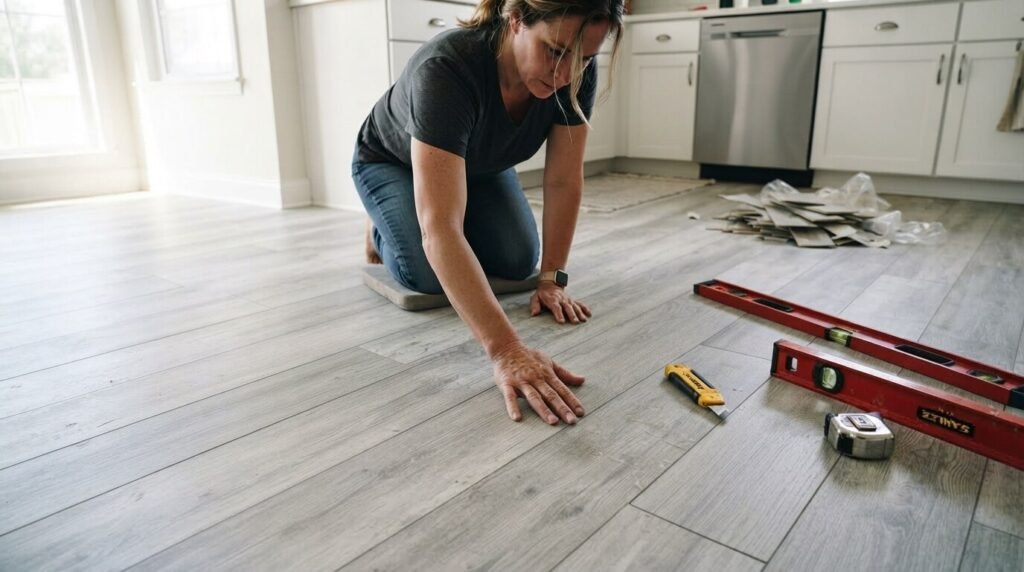
A single curled tile usually deserves a closer look underneath that tile. Check for a raised spot, residue, moisture, or anything that stopped the adhesive from making full contact.
If several tiles are curling together, look beyond the individual tiles. A shared problem such as moisture, temperature changes, or an uneven section of flooring is more likely. Vinyl can move when conditions change, especially when the flooring was not properly acclimated.
The timing matters too. A tile that curls right after installation may have had a contact or installation problem, while curling that appears months later can point to changes in moisture, temperature, sunlight, or the adhesive bond.
This is why you should find the cause before simply pressing the tile back down. If the same condition is still there, the edge may curl again.
Why Do Peel-and-Stick Tiles Curl After Being Flat at First?
Your peel-and-stick tiles may stay flat when you first install them and then start curling later. When the problem appears can help you narrow down the cause.
Curling Within Hours
If your peel-and-stick floor tiles start curling within hours, check the installation before looking for a long-term problem.
Look closely at the curled edge. If you can see dust, dirt, or another film under it, the adhesive may not have made good contact with the floor. You should also check whether the floor was damp or whether the tile was pressed firmly into place.
If you installed the tiles straight from a cold or hot storage area, that can also matter. Vinyl tiles need to reach the conditions required by the manufacturer before installation. For example, FloorPops requires its tiles to acclimate flat for 48 hours at at least 65°F (18°C).
Curling After Several Days
If your peel-and-stick tiles curl after a few days, look at what happened after installation.
Did the room become much hotter or colder? Did water get under the edge? Did you start walking heavily on the floor before the adhesive had a chance to settle?
Check whether one tile is curling or several tiles are lifting together. One tile usually deserves a close look underneath that tile. Several tiles curling in the same area can point to a condition affecting that part of the floor. Temperature changes can also make vinyl move after installation.
Curling Weeks or Months Later
If your vinyl floor tiles start curling at the edges months after installation, do not assume the original installation was the only problem.
Look for a change in the room. Has the area been exposed to more sunlight? Has the room become more humid? Has water started reaching the floor? Do the same tiles curl during hot or cold weather?
You should also check whether the problem is limited to one area. For example, if tiles near a sunny window are curling while tiles across the room remain flat, the local conditions are worth checking.
A problem that appears much later can also happen when the adhesive bond weakens over time or when repeated temperature changes put stress on the tile
Can You Fix Peel-and-Stick Floor Tiles That Are Curling?
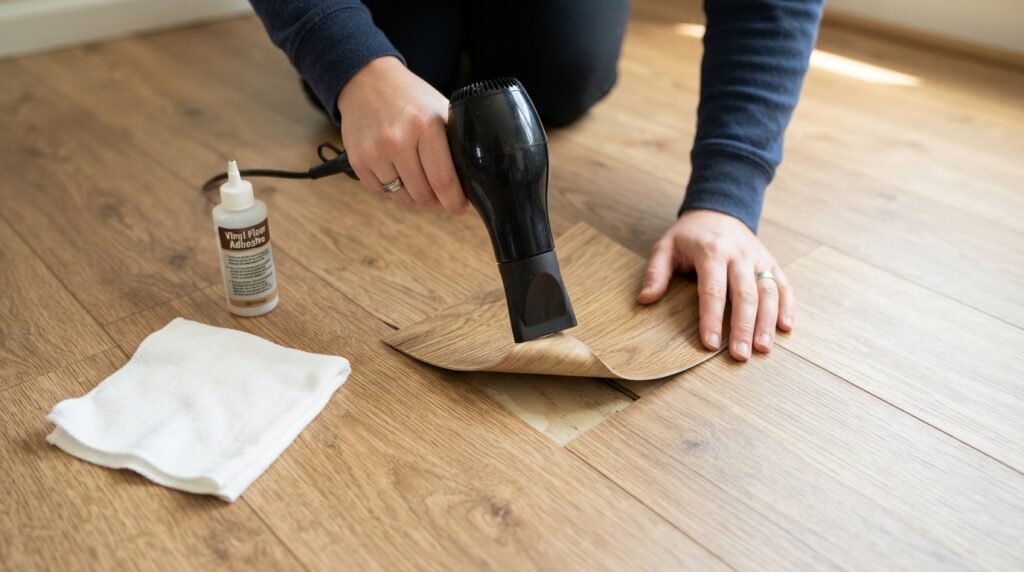
Yes, minor curling can often be fixed if the tile is still in good condition and the floor underneath is clean, dry, and suitable for the tile.
A small lifted corner is usually easier to repair than a tile that has become badly warped or keeps curling back after several repairs. Before you press it down again, check why it lifted. If moisture, an uneven floor, or another problem is still present, the edge may come back up.
For a tile that is only slightly curled, you may be able to soften the vinyl with gentle heat, press it back into place, and hold it down with firm pressure or weight. Some flooring manufacturers specifically recommend this approach for lifting self-adhesive vinyl tiles.
If the tile is badly damaged, stretched, cracked, or keeps lifting from the same spot, replacement may be a better option.
When Should You Replace the Tile Instead of Re-Sticking It?
A small lifted corner does not always mean you need a new tile. If the tile is still flat, flexible, and in good condition, you may be able to repair the edge.
Replacement makes more sense when:
- The tile is badly curled and will not flatten.
- The vinyl has cracked, stretched, or permanently changed shape.
- The adhesive backing is no longer holding after repeated repairs.
- Water has damaged the tile or the floor underneath it.
- The same tile keeps curling again even after you fix the original cause.
- The tile has become damaged around the edges and no longer sits flat.
You should also consider replacing the tile if the same problem keeps coming back. Pressing a badly curled tile down again may only hide the problem for a short time. A replacement will not solve an uneven or damp floor, so check the surface underneath before putting in a new tile.
If the tile needs to come out completely, see how to remove peel-and-stick floor tiles without damaging the subfloor before you start pulling it up.
If you have extra tiles from the original installation, this is the best time to use them. Keep replacement tiles stored flat and in suitable indoor conditions so they are ready when you need them.
A good rule is simple: repair a minor curl when the tile is still sound; replace it when the tile itself has become damaged or will not stay flat after a proper repair.
How to Prevent Peel-and-Stick Floor Tiles From Curling
A few simple steps can lower the chance of peel-and-stick tile edges curling later:
- Let the tiles acclimate according to the product instructions before installation.
- Keep the floor clean, dry, smooth, and flat.
- Press the entire tile firmly, especially around the edges and corners.
- Keep the room within the temperature conditions recommended for the flooring.
- Deal with moisture problems before installing the tiles.
The biggest thing to remember: don’t install over a floor that has a moisture, flatness, or temperature problem and expect the adhesive to overcome it.
FAQs
Why do the edges curl but not the center?
The edges are usually the first part to lift because they have less support and are more exposed to movement, moisture, and temperature changes. If you notice one edge starting to rise, check that area for dirt, moisture, or an uneven spot underneath. The center often stays attached because it still has good contact with the floor.
How long does it take for curling to show up if the subfloor was wrong?
There is no set timeline. If you installed the tiles over a poor surface, you may notice a problem within days. Moisture or temperature-related curling can take weeks or even months to appear. Pay attention to when the curling starts because that can help you find the cause.
Is it normal for peel-and-stick tile to curl?
Curling can happen, but you should not simply accept it as normal. When your tiles start curling, check for common problems such as poor surface contact, moisture, temperature changes, or an uneven floor. In some cases, the tile or its adhesive may also be the problem.
Can you flatten a curled vinyl floor tile?
Yes, a slightly curled vinyl floor tile can sometimes be flattened. Gentle heat can make the tile more flexible, after which you can press the edge back down and hold it in place. Avoid excessive heat, which can damage the vinyl.
Why did my peel-and-stick tiles curl after installation?
Tiles can curl after installation when the flooring moves as temperatures change, moisture reaches the adhesive, or an edge did not make proper contact with the floor. The timing of the curling can help you narrow down the cause.
Final Thoughts
Peel-and-stick floor tiles can curl at the edges for several reasons, but the curling itself usually gives you a clue. A single lifted corner may have a local problem underneath it, while several curling tiles can point to moisture, temperature changes, or another condition affecting the floor.
Before you press a curled tile back down, check what caused it. A small curl can often be repaired, but a badly warped or repeatedly curling tile may need to be replaced.
The best fix is not simply making the edge stick again. It is fixing the reason the edge lifted in the first place.