
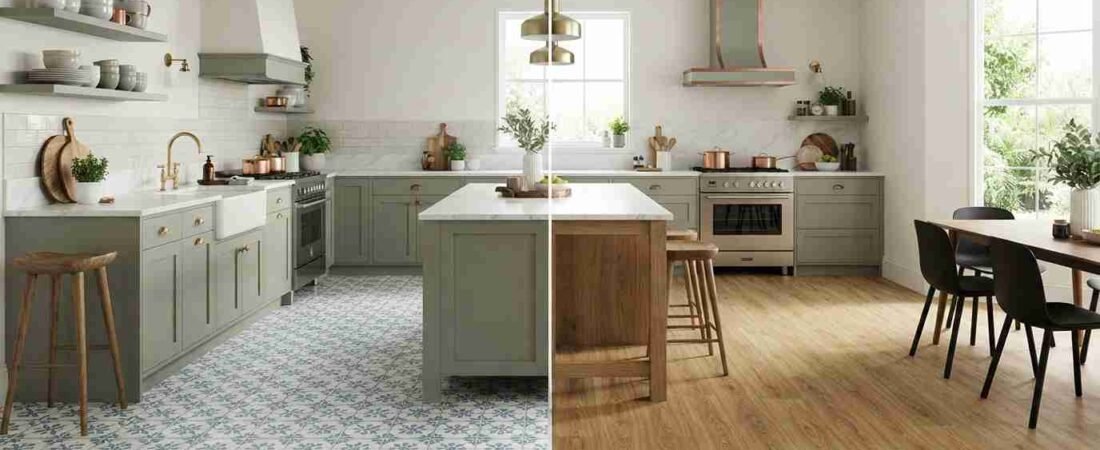
If you’re choosing between peel and stick tiles and vinyl plank flooring, the decision can feel confusing. Both are affordable, both are DIY-friendly, and both can work well around water.
But they are not the same type of flooring.
Peel and stick tiles are a good choice when you want a quick and affordable update. Vinyl plank flooring is made to last much longer.
Short answer: Peel and stick tiles cost less and are faster to install. They usually last 3 to 8 years. Vinyl plank flooring, also called LVP or luxury vinyl plank, costs more at first. However, it can last 15 to 25 years. It also handles water and heavy traffic better and can hold more value if the home is being sold.
For renters, small rooms, and quick flooring updates, peel and stick tiles can be a practical choice. For homeowners looking for a long-term floor that can handle busy areas, vinyl plank flooring, especially LVP, is usually the better option.
The Quick Version
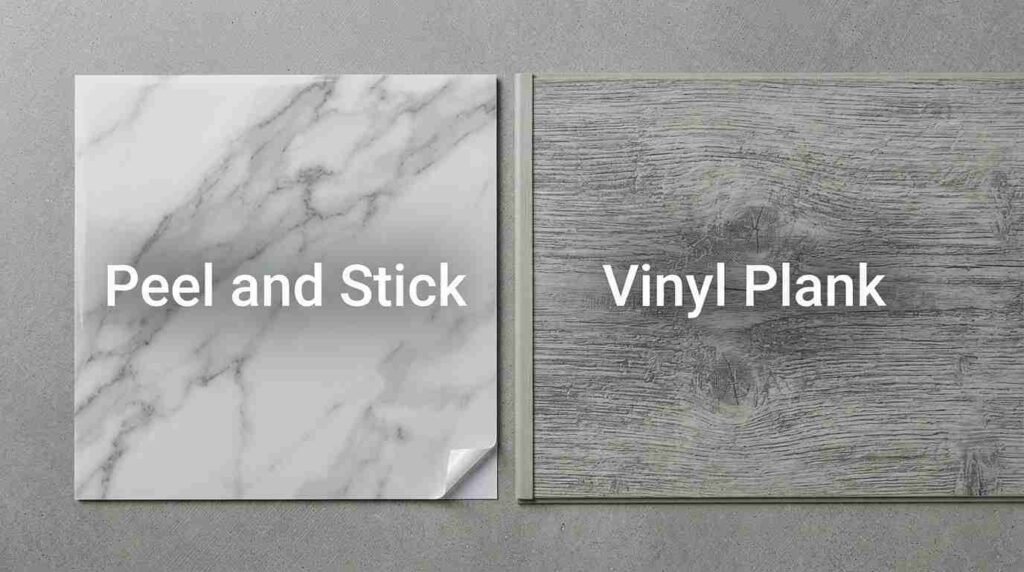
| Feature | Peel and Stick Tile | Vinyl Plank (LVP) |
| Cost (materials) | $0.50-$3.00 per sq ft | $1-$5 per sq ft |
| Cost (installed) | $3–$13 per sq ft, often free labor if you DIY | $4.50–$13 per sq ft |
| Thickness | Thin, 1.5–3 mm | Thicker, 4–8 mm+ |
| How long it lasts | 3-8 years | 15–25 years |
| How it installs | Peel the back, press it down | Planks click and lock together |
| DIY time (per 100 sq ft) | 2–4 hours | 6–8 hours |
| How it handles water | Fine, but seams can lift over time | Handles moisture better long-term |
| Subfloor needs | Has to be clean, dry, and smooth | No hard needs |
| Best fit | Renters, small rooms, quick updates | Homeowners, busy rooms, long-term floors |
Which Lasts Longer: Peel and Stick Tile or Vinyl Plank?
If you’re trying to decide between peel and stick tile and vinyl plank, vinyl plank will last much longer. The main reason is how the two types of flooring are made.
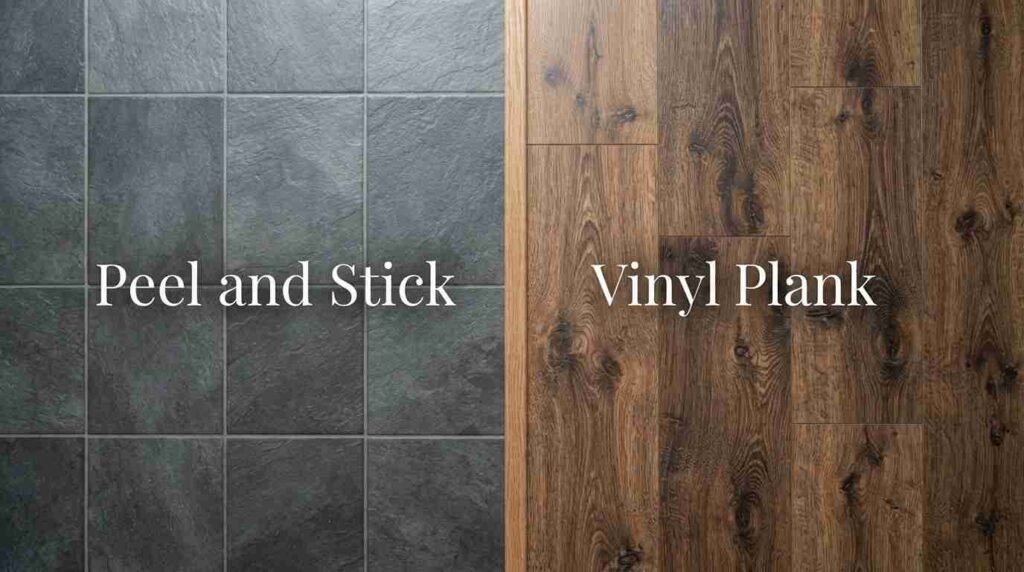
Peel and stick tiles are thin, and their protective top layer is thin too. Because of this, they can start showing wear after a few years. Most peel and stick tiles last around 3 to 8 years before they may start thinning, getting scuffed, or lifting at the corners.
Vinyl plank is built heavier and is more durable. With a good wear layer, it can last around 15 to 25 years without needing to be replaced. Some premium rigid-core planks can last even longer if you take good care of them.
So, if you want a floor that can last for many years, vinyl plank is the better choice. With peel and stick, you will probably need to redo the floor after a few years, while vinyl plank can last much longer without needing to be replaced.
Durability of Both Peel and Stick Tiles vs. Vinyl Plank
Both peel and stick tiles and vinyl plank flooring can develop scratches, scuffs, and signs of wear over time. However, if you choose thinner self-adhesive tiles with a weaker protective layer, you may notice surface damage sooner in busy areas.
Vinyl plank flooring, especially luxury vinyl plank (LVP), often has a protective wear layer that helps resist everyday scratches and scuffs. Still, the quality of the product matters, so you should compare the wear layer and warranty before choosing a floor for your home. If you have pets or move furniture often, look for flooring designed to handle your daily use.
Maintenance Tips for Peel and Stick Tiles vs. Vinyl Plank
Both flooring types are easy to maintain, so you can keep your floor clean with regular sweeping and damp mopping. However, you should use a cleaner approved for your flooring and avoid harsh chemicals, abrasive scrubbers, and excess water to protect the surface.
If you choose peel and stick tiles, pay extra attention to the seams because water can seep underneath and weaken the adhesive. Vinyl plank flooring also needs proper care, so follow the manufacturer’s cleaning instructions for your specific product.
To keep either floor looking good for longer, place felt pads under furniture, use entrance mats to catch dirt, and wipe up spills promptly. These simple steps help you reduce surface damage and keep your flooring in better condition.
Water Resistance Test of Peel and Stick Vs Vinyl Plank Flooring
When it comes to water, these two flooring types don’t behave quite the same. Although, both are marketed as water-friendly, but that does not mean they handle moisture in the same way.
When you choose peel and stick tiles, the glue holds each tile in place. However, if water gets under the edges, the glue can become weaker over time, causing the tiles to lift. This can be a bigger problem in bathrooms and laundry rooms because these areas often get wet or stay humid.
On the other hand, vinyl plank flooring works differently because the planks usually lock together instead of using glue to hold them in place. That is why, many vinyl planks also have a strong core that helps them keep their shape when exposed to moisture. However, you should still check whether your chosen vinyl plank flooring is suitable for wet areas.
It means neither flooring type is meant to handle flooding. But if you’re choosing between the two for a bathroom or kitchen floor, vinyl plank is the safer bet because it handles moisture better over time. If you’re planning to use peel and stick in a bathroom, we’ve covered what actually works there.
Installing Comparison of Peel and Stick Tile and Vinyl Plank Flooring
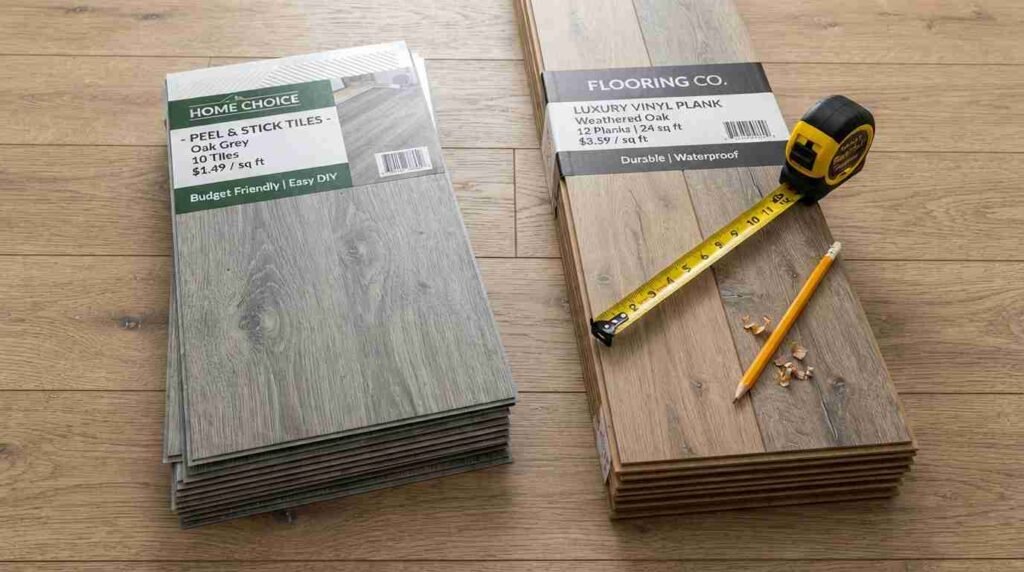
If you want to finish the job in one afternoon with very few tools, peel and stick is the easier choice. You simply peel off the backing and press the tiles into place. But, if you’re okay with spending a weekend on the project, vinyl plank takes more time but gives you a tighter, more finished result.
New to peel and stick flooring? Start with our beginner’s guide before you buy anything.
| Peel and Stick Tiles | Vinyl Plank Flooring | |
| Tools you need | Basically none, maybe a utility knife | Spacers, a tapping block, a saw for cuts |
| Subfloor prep | Needs to be spotless, dust free, or it won’t stick | Can handle a few small imperfections |
| How hard it is | Very beginner-friendly | Still doable, just takes more patience |
| Time for 100 sq ft | 2-4 hours | 6-8 hours |
| Easiest mistake to avoid | Sticking it down on a dusty floor | Laying it over an uneven floor, so it squeaks or gaps later |
Comfort and Sound: Peel and Stick Tiles vs. Vinyl Plank
Peel and stick tiles have a thin, firm surface, so you may feel the hard floor underneath when you walk on them. They also provide little cushioning and do not absorb much footstep noise.
While on the other hand, vinyl plank flooring is often thicker, so it may feel more solid under your feet. Some planks also come with attached underlayment that helps reduce noise. However, the comfort and sound depend on the product and the floor underneath it.
If you want a floor that feels more substantial in your living room or bedroom, vinyl plank may be a better choice. However, if you mainly want to update the look of a small room, peel and stick tiles may work well for you.
Repair and Replacement: Peel and Stick Tiles vs. Vinyl Plank
Peel and stick tiles can be easier to repair because you can often remove and replace one damaged tile without disturbing the rest of the floor. However, the old adhesive may make removal difficult, especially if the tile has been in place for a long time.
Vinyl plank flooring can also be repaired, but the process depends on how your floor was installed. If you have click-lock planks, you may need to remove nearby planks to reach the damaged one. Some vinyl plank products allow individual plank replacement without taking apart the entire floor. Here is the complete removal guide, which can help you without creating any damage on your subfloor.
Before you choose either option, think about how easy it will be to repair your floor later. Peel and stick tiles may be more convenient for small, isolated repairs, while vinyl plank repairs depend more on the product and installation method. Always check the manufacturer’s repair instructions before you start.
What You’ll Pay: Peel and Stick Tiles vs. Vinyl Plank
Peel and stick tiles usually cost less upfront than vinyl plank flooring. However, your total cost depends on the material, floor preparation, and installation method.
For a detailed breakdown of material prices, labor, and total installation costs, read our guide to peel and stick tiles vs. vinyl plank flooring costs.
Does It Affect The Sale Value of Home?
Yes, the type of flooring you choose can matter if you’re thinking about your home’s resale value. Vinyl plank generally adds more resale value than peel and stick tile, so this is something worth considering if you plan to sell someday.
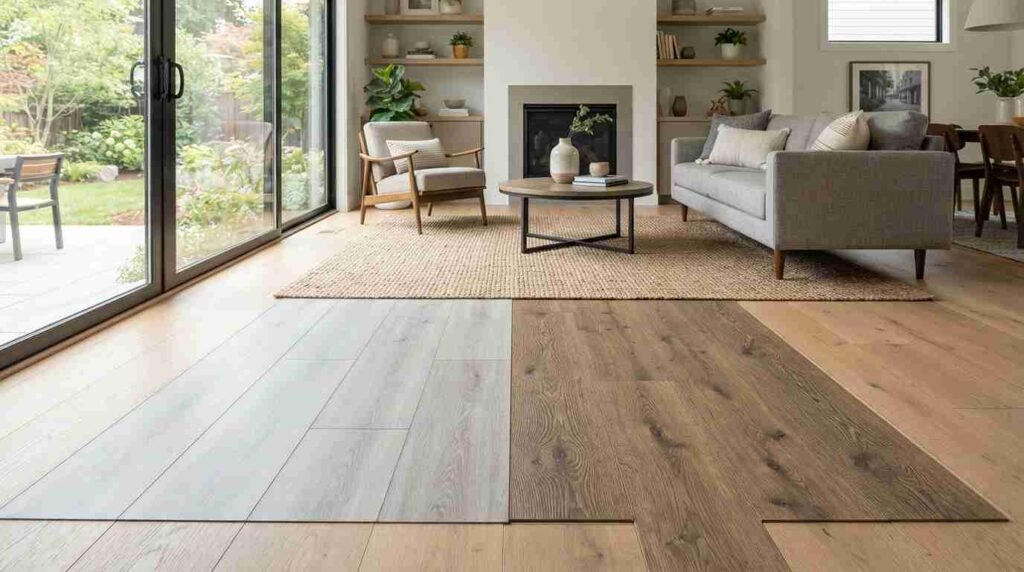
Vinyl plank is usually seen as a real flooring upgrade. Buyers and appraisers often treat it as a legitimate, semi-permanent floor, especially in mid-range homes. This gives it more weight when compared with a temporary flooring option.
Peel and stick tiles don’t carry the same weight. Most people, including appraisers, see them as a temporary fix rather than a flooring improvement that adds value to the house.
So, if you’re flooring a place that you plan to sell, vinyl plank is the option that works more in your favor. But if you’re flooring a rental or somewhere you won’t stay for long, peel and stick is the more sensible spend.
So, Which One Should You Get?
By now, the main differences should be clearer. But the best choice still depends on your budget, how long you plan to stay, and what you need from the floor.
Go with peel and stick tiles if:
- You’re renting and can’t make permanent changes
- Money’s tight right now
- You just want a fast, easy refresh
- You’re okay redoing it again in a few years
Peel and stick makes more sense when you want something simple and affordable without making a long-term flooring change.
Go with vinyl plank if:
- You own the place and want it to last
- The room gets a lot of foot traffic, kids, or pets
- You want it to actually look like real wood
- You’re getting the house ready to sell
Vinyl plank is the better fit when you want a floor that can stay in place for many years and handle more everyday use.
Still not sure if peel and stick makes sense for you at all? Here’s a full breakdown of the pros and cons , and if you’ve already got peel and stick down and it’s lifting on you, here’s how to fix that.
Common Questions
Is peel and stick cheaper than vinyl plank?
Almost always. You’ll pay less for peel and stick material, and if you install the flooring yourself, you can skip the labor costs completely. This makes peel and stick a cheaper option when you’re working with a tight budget.
Which one is better for a kitchen or bathroom?
Vinyl plank is the better choice. The planks lock together, so they don’t depend on glued seams in the same way peel and stick tiles do. The firmer core also handles moisture better, which makes vinyl plank a better fit for kitchens and bathrooms.
Will peel and stick flooring hurt my home’s value?
Not directly, but it usually won’t add value either. Most buyers and appraisers see peel and stick flooring as a short-term fix rather than a real upgrade. Vinyl plank is more likely to be viewed as an actual flooring improvement, especially when you’re preparing a home for sale.
Can I install peel and stick tiles over vinyl plank, or vice versa?
You can often install peel and stick tiles over a clean, smooth vinyl plank floor. The surface is important because the adhesive needs something clean and smooth to stick to. Going the other way is trickier. Vinyl plank needs a flat, stable surface underneath, so installing it over peel and stick is not as simple. In most cases, it’s better to remove the peel and stick tiles first. Here’s how to remove peel and stick floor tiles step by step before installing the new flooring.
Is vinyl plank tougher than peel and stick tile?
Yes, by a good margin. Vinyl plank has a thicker protective layer and a sturdier core, so it can handle everyday wear better. This is also why vinyl plank usually lasts 15 to 25 years, while peel and stick tiles usually last around 3 to 8 years.
Ending Words
If you want something cheap, quick, and easy to install, peel and stick tiles can be a good choice. They work especially well when you’re renting, updating a small room, or don’t mind replacing the floor again in a few years.
If you want something that lasts longer and handles more everyday use, vinyl plank flooring is the better option. It costs more at first, but it can last 15 to 25 years, handle moisture and heavy traffic better, and can be a better choice if you’re planning to sell your home.
In the end, neither option is right for every situation. Choose peel and stick when saving money and keeping the project simple matter most. Choose vinyl plank when you want a longer-lasting floor.