
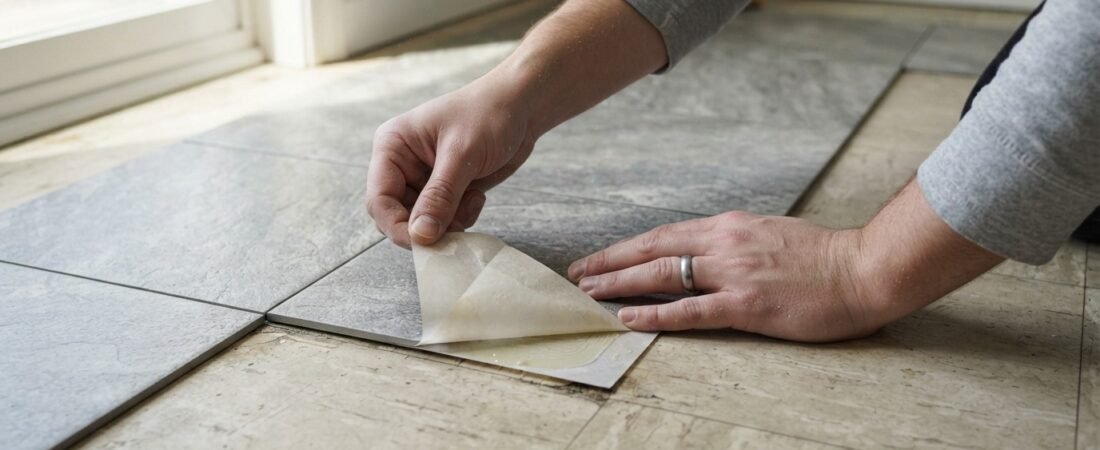
If you already have old vinyl on your floor, removing the whole thing may feel like more work than you want to take on. That naturally leads to the question: can you put new peel and stick floor tiles right over it?
Yes, you can in some cases. But the bigger question is whether your existing vinyl is a good base for the new tiles. It may look perfectly fine at first, but things like wax, a soft cushioned layer, or a pressed-in pattern can affect how well the new tile sticks.
Short answer: You can put peel and stick tile over vinyl if the vinyl is firmly stuck down, flat, smooth, clean, and dry. Don’t judge the floor only by how it looks. A vinyl floor that appears clean and fine may still have a problem that can cause the new tiles to lift or lose their bond. A quick inspection before you buy anything can help you find those problems first.
Is Your Vinyl a Good Base? Quick Answer Table
Before you decide to cover your vinyl, use this quick check to see where your floor stands. The same idea applies when you’re putting peel and stick tiles over other existing flooring too, but vinyl has a few specific problems you need to watch for.
| What your vinyl looks like | Good to build on? | Main thing to watch for |
| Smooth, firm sheet vinyl | Usually yes | Cleaning and prep |
| Firm vinyl tile | Sometimes | Seams and old glue |
| Textured or patterned vinyl | Risky | Pattern can show through new tile |
| Loose vinyl | No | Movement breaks the new bond |
| Cushioned or soft vinyl | Usually no | Compresses under weight |
| Damaged, bubbled, or torn vinyl | No, not until fixed | New tile follows the same flaws |
| Waxed or shiny vinyl | No, not until prepped | Wax blocks the glue from gripping |
Sheet Vinyl, Vinyl Tile, or Old Peel and Stick: Does It Matter Which One You Have?
“Vinyl flooring” can mean different things, and the type you have changes what you need to check before putting new peel and stick tile over it.
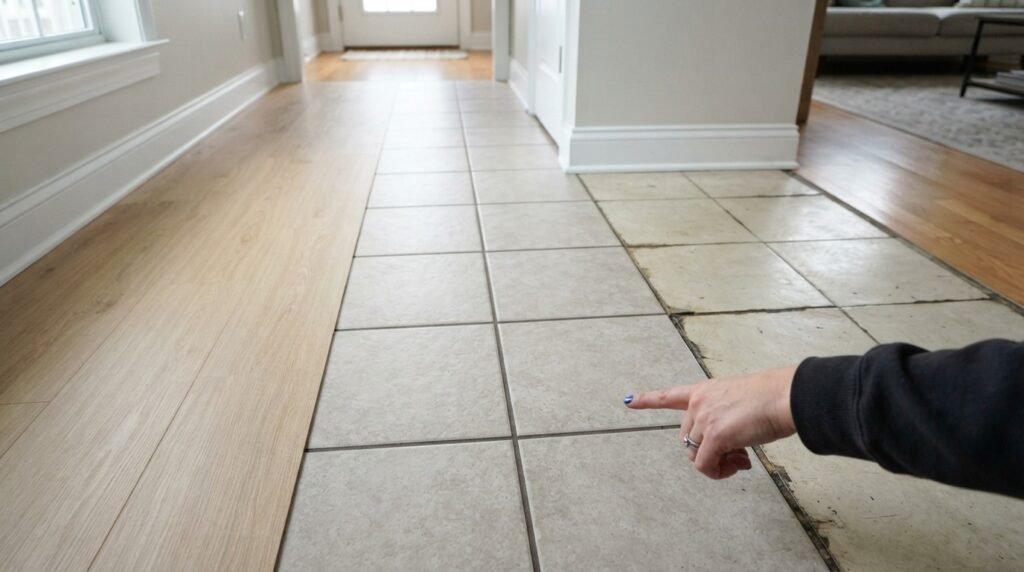
1. Sheet Vinyl
Sheet vinyl comes in large rolls, so it usually has fewer seams. The main things to check are the texture, since a lot of sheet vinyl has a pressed-in pattern, and any wax or shine on the surface. Both can affect how well the new tile sticks.
2. Vinyl Tile
Vinyl tile is laid down piece by piece, so there are more seams and more chances for one tile to be loose while the others are still fine. Old glue underneath can also be a factor, especially if any tiles have been replaced before.
3. Old Peel and Stick Tile
Old peel and stick tile deserves a closer look. It is easy to group it with regular vinyl tile, but the adhesive underneath makes it a little different.
If the old peel and stick floor is still firmly stuck down and in good shape, it can be a suitable base. But if it is already lifting, missing pieces, or coming loose, that is a different story. Putting new adhesive tile over a floor whose own adhesive is already failing usually means the new tile can fail faster too. Also, If your old vinyl is already showing curling edges, don’t cover the problem with new flooring. See how to fix curling peel-and-stick floor tiles before installing anything over them.
How to Check Your Vinyl Floor Before You Buy Anything
Before you spend money on new tile, take a few minutes to check the vinyl floor you already have. You don’t need special tools for most of these checks. Just walk through the floor and look for anything that could cause a problem later.
Vinyl isn’t the only old flooring you may be able to cover. If you’re also considering installing peel and stick tiles, here’s what you need to check first.
1. Walk the Whole Floor
Walk across the entire floor and press down in a few spots as you go. Pay attention to any movement, soft spots, or areas that flex under your foot. A firm vinyl floor should not feel like it is moving underneath you.
2. Look Across the Floor From a Low Angle
Get down low and look across the floor, almost at eye level with the ground. This can help you spot bumps, dips, and bubbles that are easy to miss when you’re standing up.
3. Run Your Hand Over the Surface
Run your hand across the vinyl and feel for anything you can’t easily see. Texture, raised patterns, and old dents can be easier to notice by touch.
4. Check the Seams and Edges
Look closely at the seams and edges of the vinyl. Check for lifting, curling, or gaps where sheet vinyl pieces or tiles meet. These areas can cause problems if they are already coming loose.
5. Look for Shine or a Waxy Feel
Pay attention to how the surface looks and feels. A very glossy or slippery surface may have a coating on it, rather than being clean vinyl. Wax can get in the way of the new tile sticking properly.
6. Press on Soft-Feeling Areas
If any part of the floor feels soft, press on it and see how much it moves. This can tell you whether you’re dealing with cushioned vinyl instead of a firm, solid type. That difference matters when you’re putting a new adhesive floor over the old one.
7. Check for Dampness
Check the floor for any signs of dampness, especially if you’re working in a bathroom, kitchen, or basement. Moisture can create problems for the existing vinyl and the new peel and stick tile.
8. Check the New Tile’s Instructions
Before you buy anything, read the instructions for the new tile you’re considering. Not every peel and stick product allows the same surfaces, so don’t assume that a product that works over one type of vinyl will work over another. Checking this before you buy can save you from a problem later.
Should You Sand Vinyl Before Installing Peel and Stick Tile?
Not automatically. You might think sanding is the easiest way to give your new peel and stick tile a better surface to grip, but existing vinyl needs a more careful check first.
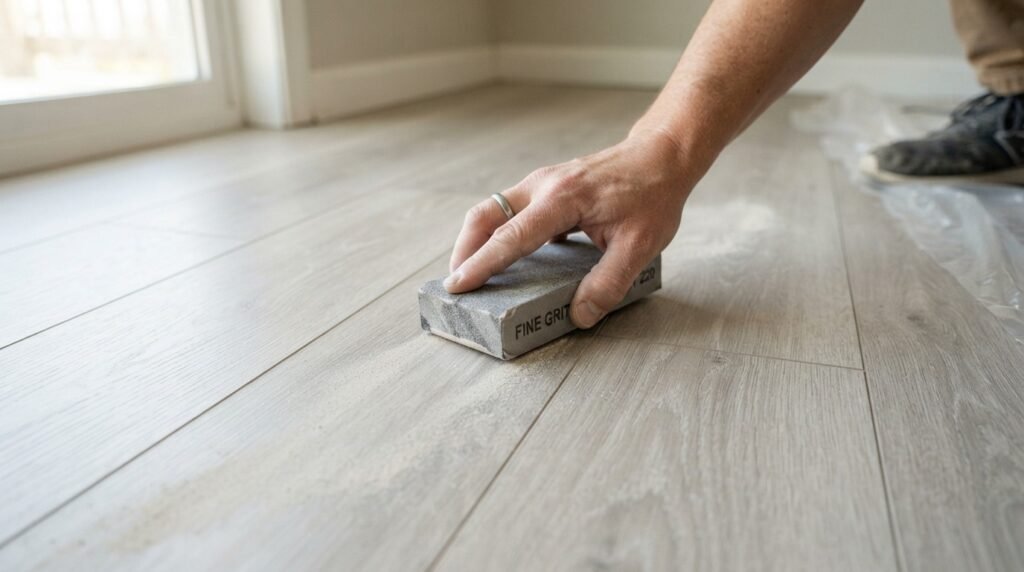
If your vinyl is glossy or has a very light surface texture, sanding might seem useful because it can change the surface slightly and give the adhesive more to grip. However, you should not assume that sanding is always allowed. Some peel and stick flooring manufacturers specifically say not to sand existing vinyl, so check the installation instructions for your exact tile before you touch the floor.
There is another reason not to jump straight to sanding. If your vinyl is loose, cushioned, warped, damaged, or affected by moisture, roughening the surface won’t fix the problem underneath. The new tile may still move, flex, or lose its bond because the vinyl itself is not a stable base.
What If Your Vinyl Is Textured?
Texture is a different problem from a slightly glossy surface. If you can clearly feel raised patterns, wood-grain lines, or deep embossing under your hand, sanding may not be the right way to deal with it. In many cases, manufacturers recommend an embossing leveler or skim coat to create a smooth surface instead. That gives the new tile a more even area to bond to and helps prevent the old pattern from showing through the new flooring.
So, before you sand, first figure out what kind of vinyl problem you actually have. A light surface issue may have a different solution from deep embossing, and neither sanding nor cleaning will make loose or cushioned vinyl suitable.
Most importantly, follow the preparation instructions for the specific peel and stick tile you’re buying. Products can have different requirements for existing vinyl, and some allow installation over certain vinyl surfaces while others do not. That is why the right question isn’t simply, “Should I sand my vinyl?” It is “What does my new tile require for this specific type of vinyl?”
Do You Need to Use a Primer Before Installing Peel and Stick Tile Over Vinyl?
Not always. In fact, you shouldn’t assume that primer is the next step just because you’re installing peel and stick tile over vinyl.
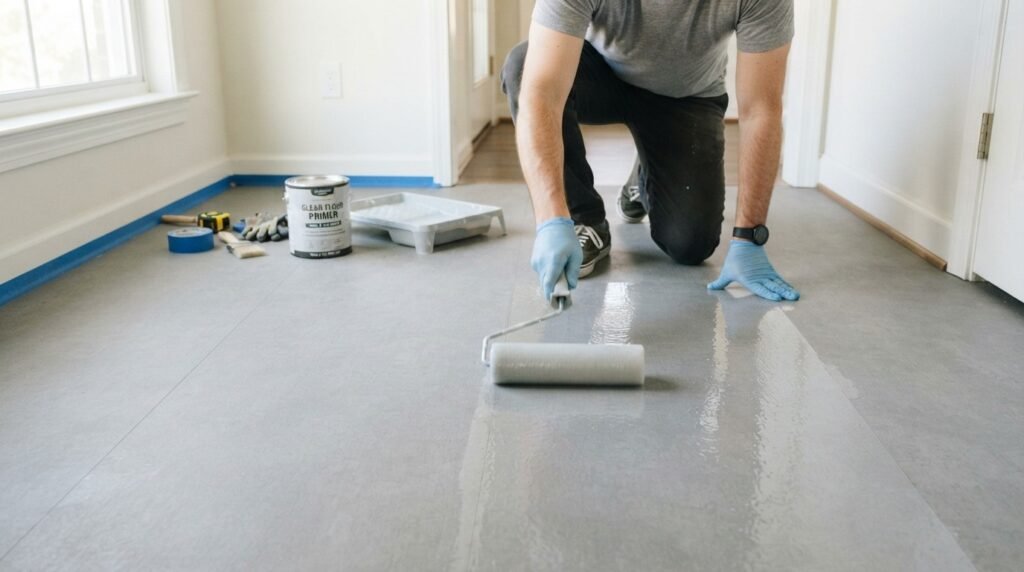
You may come across advice telling you to prime the vinyl first, especially if the surface is glossy or you are worried about adhesion. However, some peel and stick products are designed to stick directly to an approved vinyl surface, and their instructions may tell you not to add anything extra. A layer of primer can change the surface your tile adhesive is meant to bond to, so check the installation instructions for your specific tile before you use one.
That’s why you should look at the vinyl itself before deciding whether primer is needed. If the floor is firm and properly attached but the product instructions call for a compatible primer, then primer may be part of the required preparation. If the vinyl is unstable, however, you need to deal with that problem first through proper preparation or removal.
So, just like sanding, primer is not a one-size-fits-all step. First check the condition of your vinyl, then check what your specific peel and stick tile allows. That way, you aren’t adding another layer to the floor when the product doesn’t actually need it.
3 Vinyl Problems That Can Stop New Peel and Stick Tiles From Sticking
Many guides stop at “clean the floor first.” But not every vinyl problem comes from dirt. Some issues are part of the vinyl itself, so cleaning alone won’t make the surface ready for new peel and stick floor tiles.
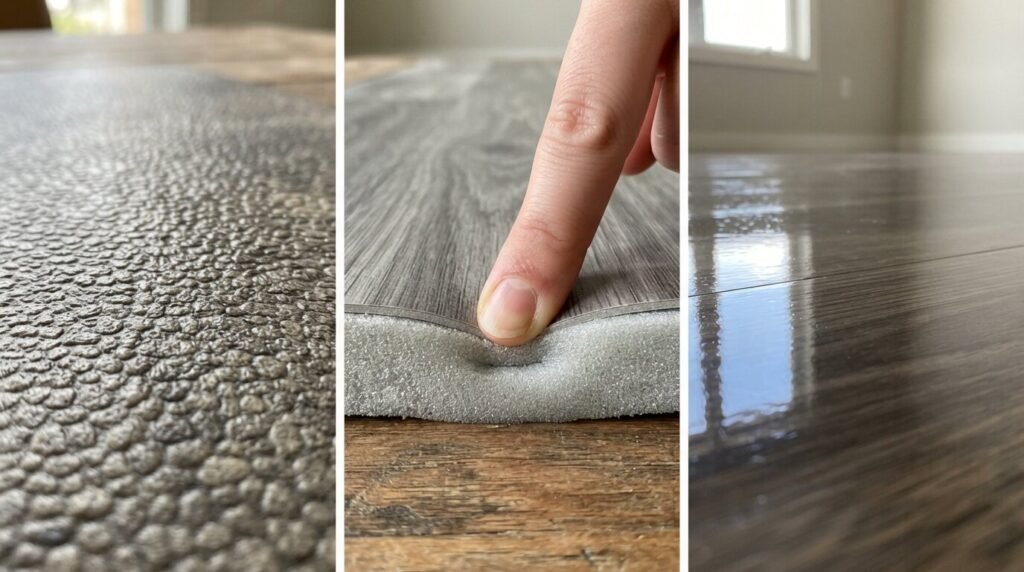
1. Textured or Embossed Vinyl
A lot of vinyl flooring has a pattern pressed into the surface to make it look like tile, stone, or wood grain. The problem is that your new tile adhesive may not make full contact with that uneven surface.
Instead, the adhesive mainly touches the raised parts while leaving less contact with the lower areas. That can create a weaker bond and make the new tile more likely to shift or lift over time.
2. Cushioned or Foam-Backed Vinyl
Some vinyl flooring has a soft or foam-backed layer that makes the floor more comfortable to walk on. That may feel good under your feet, but it can cause trouble when you want to stick new flooring over it.
The soft surface can compress and flex every time someone walks across the floor. Your new peel and stick tile needs a firm surface underneath it, not one that moves or gives under pressure.
3. Waxed or Polished Vinyl
This is an easy problem to miss because a waxed floor can look completely clean. The shine may not be from the vinyl itself. It can come from a wax or polish coating sitting on top of the surface.
Regular cleaning won’t remove that coating because it isn’t dirt. It creates a layer between the vinyl and your new tile adhesive, which can prevent the adhesive from gripping properly. Hence, the coating needs to be properly stripped or otherwise dealt with before you install the new tile.
Why You Shouldn’t Add Extra Glue to Peel and Stick Flooring
If a peel and stick tile isn’t holding, you might think adding a little extra glue will make it stick better. However, that can create a bigger problem because vinyl flooring can react with certain adhesives over time.
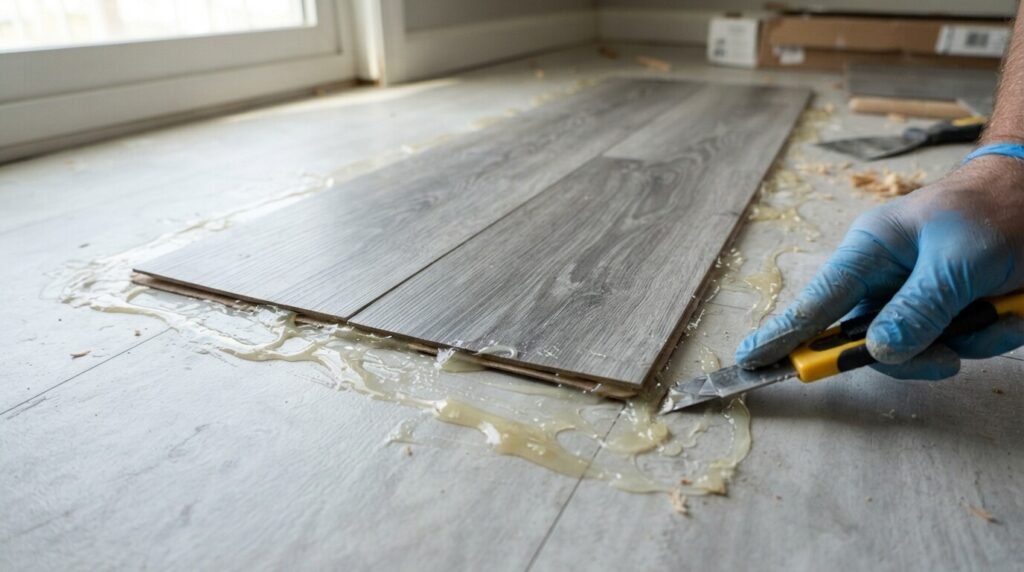
Vinyl contains chemicals that can slowly move through the material and react with outside adhesives. This process is sometimes called plasticizer migration. When you add a glue that isn’t meant for that flooring, you can trigger this reaction. As a result, the tile may soften, become discolored, or even lose its ability to stick properly.
You also need to think about the manufacturer’s warranty. Some manufacturers don’t allow extra adhesive to be used with their peel and stick flooring, so adding your own glue could void the warranty.
That’s why you shouldn’t reach for extra glue as soon as a tile starts to come loose. Instead, check why it isn’t sticking in the first place. The problem could be with the vinyl surface, moisture, movement, or the tile’s original adhesive. Once you find the actual cause, you can deal with that problem instead of adding another layer of adhesive that may cause trouble later.
What Happens If You Install Peel and Stick Tile Over Bad Vinyl?
Skipping the vinyl checks can be tempting, especially when the floor looks fine at first. However, problems with the old vinyl don’t always show up on day one. As you walk on the new floor and the layers move, flex, or lose contact, the adhesive can slowly start to fail.
However, if your new tiles are already starting to lift, the problem may not be the vinyl itself. Here’s how to find out why peel and stick floor tiles aren’t sticking and what could be causing the adhesive to fail.
Loose Vinyl Can Make the New Tile Lift
If the old vinyl is loose, it can keep moving underneath your new peel and stick tile. Because the new tile is attached to a surface that is already moving, that movement puts stress on the adhesive. Over time, the bond can weaken, and you may start to see the new tile lifting at the edges or coming loose.
Textured Vinyl Can Reduce Adhesive Contact
If your vinyl has a raised or embossed pattern, the new adhesive may not make full contact with the surface. Instead, it mainly grips the higher parts of the pattern. As a result, the bond can be weaker, and the old pattern may eventually show through the new tile or contribute to lifting around the edges.
Wax or Polish Can Keep the Tile From Bonding Properly
A waxed or polished vinyl floor can look perfectly clean, but the coating is still sitting between the vinyl and the new adhesive. Because the adhesive is bonding to that coating instead of the actual vinyl surface, you may never get the strong bond you need. The tiles can then start shifting or lifting not long after installation.
Cushioned Vinyl Can Keep Stressing the Adhesive
Cushioned vinyl has a soft layer that compresses when you walk across it. Your new peel and stick tile moves slightly with that surface each time the floor is used. As a result, the adhesive has to handle repeated movement instead of staying firmly bonded to a stable base. Over time, that constant flexing can cause the adhesive to fail.
That’s why the checks earlier in this article matter. A vinyl floor can look perfectly acceptable before installation, but if the surface is loose, heavily textured, waxed, or cushioned, the problem may only become obvious after your new tile has already been installed.
When You Shouldn’t Cover Vinyl at All
Sometimes covering the old vinyl isn’t the right move, and removal is the better choice. Skip installing directly over the vinyl if:
- It’s loose or moving in multiple spots.
- It’s heavily textured or embossed.
- It’s cushioned or soft underfoot.
- The wax or coating won’t come off with proper stripping.
- There’s ongoing moisture affecting the floor.
- The vinyl is already torn, bubbled, or missing pieces in several areas.
- It’s old peel and stick flooring that’s already failing on its own.
The whole point of covering an old floor is to skip unnecessary work, not to hide a floor that actually needs fixing first. So, if several of these problems apply, removing the old flooring properly may be less work in the long run than dealing with a new floor that starts failing later. If you remove the vinyl and find a concrete floor underneath, check whether that concrete is ready for peel and stick floor tiles before installing over it.
Vinyl-to-Peel-and-Stick Compatibility Checklist
☐ Vinyl is firmly attached, with no movement or soft spots
☐ Surface is flat, with no major bumps, dips, or bubbles
☐ No deep texture or embossed pattern
☐ No wax, polish, or oily coating
☐ Seams and edges are flat, with no lifting or curling
☐ Floor is dry, with no signs of moisture underneath
☐ Vinyl is not cushioned or soft underfoot
☐ No major tears, missing pieces, or bubbling
☐ New tile manufacturer’s instructions allow installation over vinyl
FAQs
Can you put peel and stick floor tiles over sheet vinyl?
Yes, if the sheet vinyl is firmly attached, flat, dry, and suitable for the new tile. Check for deep embossing, wax, cushioning, loose areas, and the manufacturer’s installation requirements first.
Can you put peel and stick tile over old vinyl tile?
You may be able to, but check each old vinyl tile for movement, loose edges, cracks, and missing pieces. Because vinyl tiles have seams between pieces, one loose tile can create a weak spot under the new flooring.
Will peel and stick tiles stick to textured vinyl?
It depends on how deep the texture is and what the new tile manufacturer allows. Light texture may be acceptable for some products, while deep embossing can reduce adhesive contact and may require a different type of surface preparation.
Can you sand vinyl before putting peel and stick tile over it?
Not automatically. Some products may allow specific surface preparation, while others specifically say not to sand existing vinyl. Check your new tile’s instructions before sanding because the correct preparation depends on the product.
Final Thoughts
Yes, you can put peel and stick floor tiles over vinyl if the surface is firm, flat, dry, and in good condition. However, loose, cushioned, heavily textured, waxed, or damaged vinyl can cause the new tiles to fail. Check your vinyl first, then follow the new tile manufacturer’s instructions before you install.