
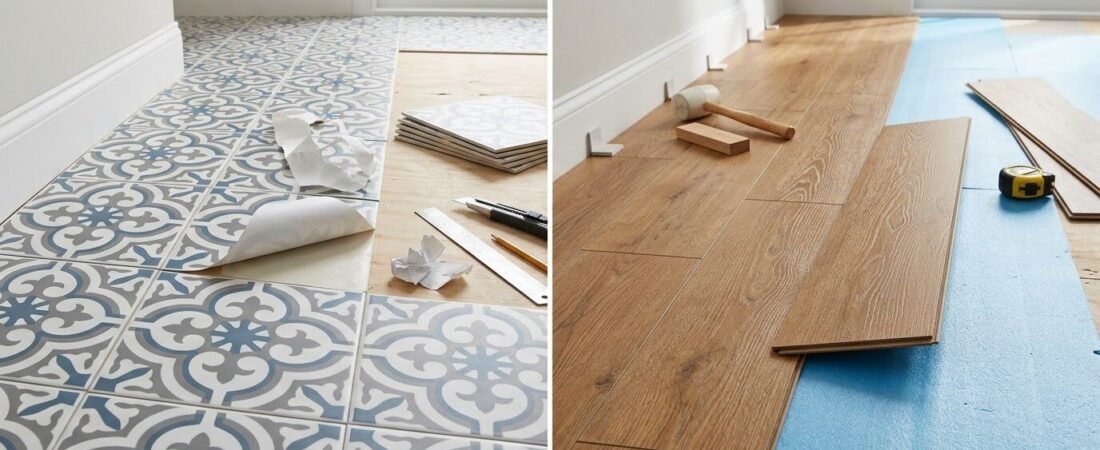
Peel-and-stick floor tiles usually cost less to install than luxury vinyl plank flooring (LVP), especially if you handle the work yourself. You can expect to pay around $3 to $8 per square foot for peel-and-stick tiles with professional installation, compared with about $3 to $11 per square foot for vinyl plank flooring. However, your final cost depends on more than the price of the flooring itself.
If you’re trying to save money on your next flooring project, you also need to consider how much material you need, whether you can install it yourself, and if your existing floor needs any preparation. For example, a floor that needs repairs can increase your total cost, even when you choose inexpensive self-adhesive floor tiles.
So, which option will actually save YOU more money? Let’s compare the material prices, installation costs, and extra expenses to help you choose the right flooring for your budget.
Peel and Stick Tiles vs. Vinyl Plank Flooring: Cost Comparison
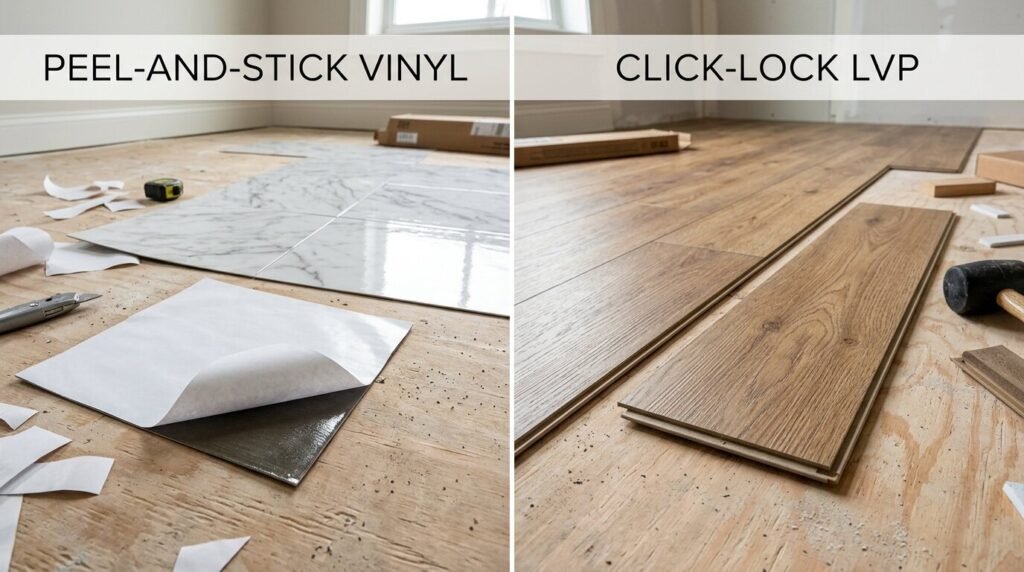
If you want to compare flooring costs quickly, the table below shows what you might pay for materials, a DIY installation, or professional installation. These prices are estimates per square foot, so your actual cost may vary depending on the brand you choose, the supplies you need, and local labor rates.
If you’re more concerned about durability, appearance, and everyday use than price alone, read our guide to peel-and-stick tiles vs. vinyl plank flooring to compare which option may work better for your home.
| Flooring type | Materials only | DIY (with supplies) | Professional installation |
| Peel-and-stick floor tiles | $1–$5 | $1.25–$5.50 | $3–$8 |
| Peel-and-stick vinyl planks | Varies by brand | Varies by brand | $2–$8 |
| Click-lock or glue-down vinyl planks | $2–$7 | $2.50–$8.50 | $3–$8 |
Material Cost per Square Foot
If you’re choosing flooring based on price, peel-and-stick floor tiles are often the cheaper option to buy. You can find many self-adhesive tiles for about $1 to $5 per square foot, while vinyl plank flooring typically costs $2 to $7 per square foot. However, the price depends on the brand, thickness, and style you choose, so compare similar products before making your decision..
Professional Installation Cost per Square Foot
If you’d rather hire a professional, you’ll need to include labor in your flooring budget. Installing peel-and-stick tiles may cost around $2 to $3 per square foot for labor, although rates vary by location and project size.
Vinyl plank installation can cost more, especially if you choose glue-down planks that require careful floor preparation and adhesive application. However, the final price also depends on your existing floor, so ask your installer whether preparation and other extra work are included in the quote.
How Much Does Each Peel-and-Stick Floor Tile Cost?
If you’re shopping for peel-and-stick flooring, you can find basic tiles for under $1 per square foot, while many mid-range options cost around $2 to $6. Premium designs with thicker construction or a stronger wear layer can cost $7 to $12 per square foot. These prices are estimates, so check the cost of the specific product before you set your budget.
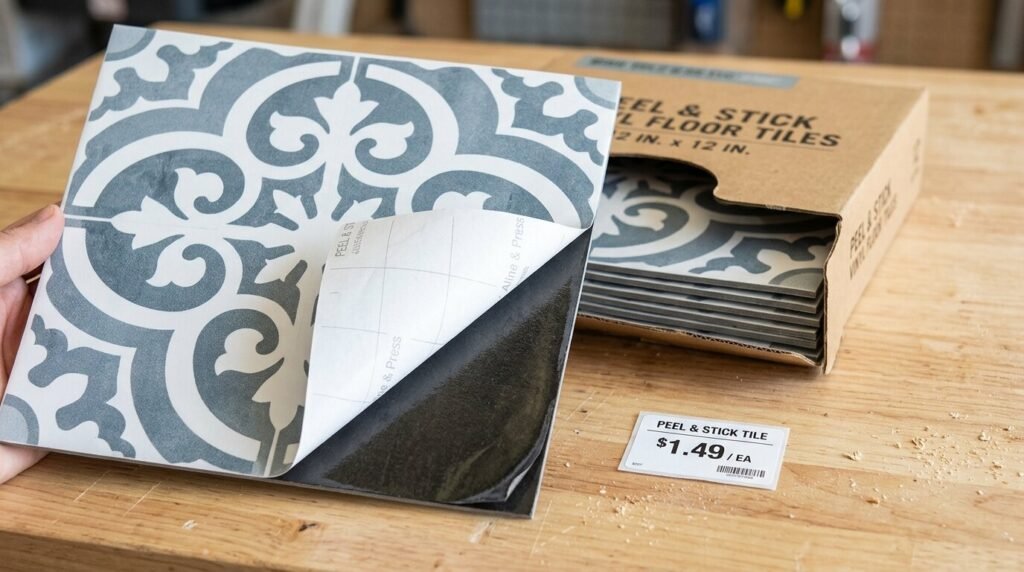
But why is there such a big price difference? Three main factors affect what you’ll pay:
- Thickness: Thicker tiles often cost more because they can feel firmer under your feet.
- Wear layer: This clear protective layer helps guard the printed design against everyday wear. A more durable wear layer can increase the price.
- Brand: Well-known brands may charge more for their designs, product features, or construction.
So, before you choose the cheapest tiles, consider how much foot traffic your room gets and how long you want the flooring to last. A low-priced option may suit a spare room, while a busy entryway may need a more durable product.
Additional Materials and Supplies You Need to Analyze Peel and Stick Tiles Cost
One reason peel-and-stick floor tiles can be affordable is that you don’t need separate adhesive for most products. You may still need a few tools and supplies to prepare your floor and install the tiles properly, though. Depending on your floor’s condition, your shopping list may include:
- Floor cleaner and a mop: To remove dirt, grease, and residue before installation.
- Utility knife: To cut tiles around doorways, corners, and other obstacles.
- Ruler or tape measure: To measure your room and make accurate cuts.
- Flooring roller: To press the tiles firmly against the floor, if recommended by the manufacturer.
- Floor patch: To fill small holes or low spots when the existing surface needs repair.
These supplies can add to your total installation cost, although basic tools may cost less per square foot when you use them across a larger room. Your preparation costs can be higher if the floor needs patching or other repairs. That’s why you should check the condition of your existing floor before deciding how much your peel-and-stick flooring project will cost.
How Much Does Each Vinyl Plank Flooring Cost?
Vinyl plank flooring comes in long boards that look like wood. Luxury vinyl plank (LVP) is often thicker and more durable than peel-and-stick tiles, so it can cost more.
However, if you’re still deciding between these flooring options, read our guide to peel-and-stick flooring pros and cons to see what you should consider before choosing.
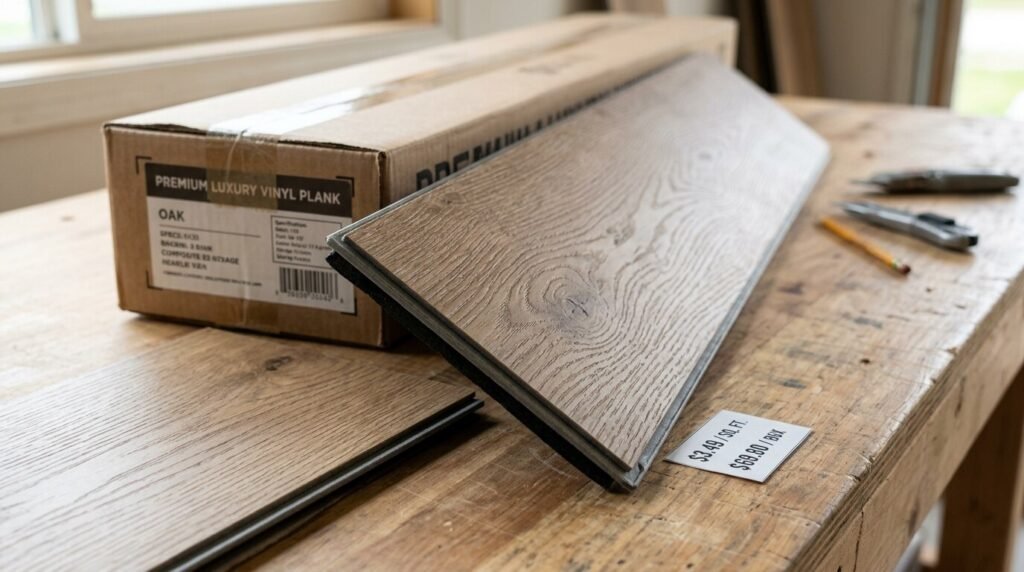
Cost of Vinyl Planks Alone
Most vinyl planks cost around $2 to $7 per square foot, depending on the brand and quality. Prices often increase with thicker planks, a stronger core, or attached padding.
Click-Lock vs. Glue-Down LVP Cost
Your installation method also affects the total cost:
- Click-lock planks: Snap together without glue, making them a popular choice for DIY projects.
- Glue-down planks: Require flooring adhesive and more installation work, so professional labor may cost more. Total installed costs can range from $3 to $11 per square foot.
Peel-and-stick vinyl planks are another option, typically costing around $2 to $8 per square foot with installation.
Additional Materials and Supplies
Depending on the product, you may also need underlayment, adhesive, cutting tools, or spacers. These extras can add about $0.50 to $1 or more per square foot, so include them when comparing your flooring budget.
What to Check in a Flooring Installation Quote
Before you hire an installer, make sure you understand what the quote covers. Ask these questions so you can compare the total cost of peel-and-stick tiles and vinyl plank flooring:
- Does the price include flooring materials or labor only?
- Is removing the old floor included?
- Does the price cover subfloor preparation and repairs?
- Are trim and transition strips included?
- Is the price per square foot or the total cost for your room?
These details help you avoid unexpected charges and compare quotes more accurately before choosing the flooring that fits your budget.
Peel-and-Stick Tiles vs. Vinyl Plank Flooring Cost by Room Size
The price per square foot helps you compare flooring options, but your room size shows how much you’ll actually spend. To make the comparison easier, these examples use a peel-and-stick tile price of $3 per square foot and a vinyl plank price of $5 per square foot. Each estimate also includes 10% extra flooring for cuts and mistakes.
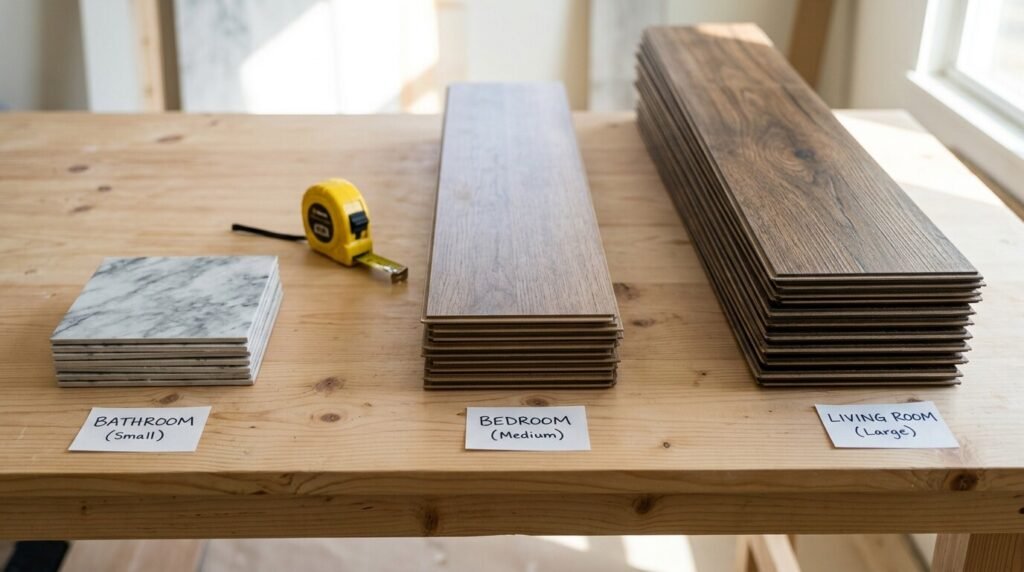
1. Cost for a 100-Square-Foot Room
If you’re updating a small bathroom, laundry room, or bedroom, you’ll need about 110 square feet of flooring, including the extra material. At the sample prices above, peel-and-stick tiles would cost about $330 for materials, while vinyl planks would cost about $550. With professional installation, the totals would be around $605 for peel-and-stick tiles and $880 for vinyl planks.
2. Cost for a 200-Square-Foot Room
For a larger bedroom or small living room, you’ll need about 220 square feet of flooring with the extra material included. Your peel-and-stick tile materials would cost around $660, compared with $1,100 for vinyl planks. If you hire a professional, the estimated totals rise to $1,210 for peel-and-stick tiles and $1,760 for vinyl planks.
3. Cost for a 500-Square-Foot Area
If you’re covering a large living room or an open-plan area, you’ll need about 550 square feet of flooring. At the same sample prices, peel-and-stick tiles would cost $1,650 for materials, while vinyl planks would cost $2,750. With professional installation, you’d pay around $3,025 for peel-and-stick tiles and $4,400 for vinyl planks.
As you can see, the price difference grows with your room size. If your main goal is to keep your flooring budget low, peel-and-stick tiles can save you a substantial amount, especially in larger rooms. However, remember that these estimates don’t include floor repairs or other major preparation work, which can increase the cost of either option.
How to Calculate Your Total Flooring Cost: Peel and Stick Vs Vinyl Plank Flooring
You can estimate the cost of your peel-and-stick tiles or vinyl plank flooring in three simple steps. This helps you set a budget before you buy materials or hire an installer.
Measure Your Floor Area
Measure the length and width of each room in feet, then multiply them to find the square footage. If you’re covering more than one room, add their areas together to get the total.
Calculate How Much Flooring You Need
Add about 10% to your total area to allow for cuts, waste, and mistakes. For example, if your room measures 150 square feet, you’ll need about 165 square feet of flooring.
Add Labor and Other Project Costs
Multiply the total square footage by the flooring price per square foot. Then add labor, floor removal, subfloor preparation, and finishing materials if needed.
For example, if you need 165 square feet of flooring at $4 per square foot, your materials will cost $660 before labor and other expenses. Add those extra costs to estimate your full project budget.
Extra Costs That Can Increase Your Flooring Budget
The price on the flooring box isn’t your full project cost. You may also need extra materials, floor preparation, or removal work. These expenses can increase the cost of both peel-and-stick tiles and vinyl plank flooring.
1. Flooring 3Waste and Extra Tiles or Planks
You’ll need to cut flooring around walls, corners, and doorways, so buy about 10% extra for cuts and mistakes. This adds to your material cost, especially if you choose more expensive vinyl planks.
2. Removing the Existing Floor
If your current floor is damaged or unsuitable, you may need to pay for removal and disposal. However, you can sometimes install new flooring over an existing surface if it’s clean, dry, smooth, and firmly attached. Check the manufacturer’s instructions before you decide.
3. Subfloor Preparation and Leveling
Peel-and-stick tiles need a smooth, firm surface because bumps and cracks can affect adhesion or show through the tiles. You may need patching compound or floor leveler to fix these problems. Vinyl planks can hide some minor surface marks, but they still need a suitable, even base.
4. Underlayment, Adhesive, and Installation Supplies
Peel-and-stick tiles already have adhesive, so you usually don’t need separate glue. Click-lock vinyl planks may need underlayment, while glue-down planks require compatible adhesive. Check what your chosen flooring includes so you can budget for any extra supplies.
5. Trim, Transition Strips, and Finishing Materials
You may need transition strips where your new floor meets another flooring type, plus trim along the walls. These finishing pieces help create a neat edge, but they add to your total cost. Include them in your budget before comparing the two flooring options.
DIY vs. Professional Installation: Which Costs Less, Peel and Stick Tiles or Vinyl Plank Flooring?
Installing the flooring yourself is usually the cheaper option because you avoid labor charges. However, the amount you save depends on the flooring type and how much work your room needs. Here’s what to consider before deciding whether to do it yourself or hire a professional.
What You Save by Installing the Floor Yourself
If you install peel-and-stick tiles yourself, you can save around $2 to $3 per square foot in labor. Vinyl plank installation can save you about $1 to $6 per square foot or more, depending on the product and installation method. For a 200-square-foot room, these savings can add up to hundreds of dollars. However, make sure you’re comfortable measuring, cutting, and preparing the floor before taking on the job.
When Professional Installation Adds to the Cost
Hiring a professional can increase your total cost, especially if your floor needs extra preparation or the installation is complicated. Glue-down vinyl planks, unusual room shapes, stairs, and uneven subfloors can all require more time and labor. Peel-and-stick tiles are often simpler to install, so labor may cost less. Still, compare quotes for your specific project before deciding whether professional installation fits your budget.
FAQs
Is Click-Lock Vinyl Plank More Expensive to Install Than Peel-and-Stick Tiles?
Usually, yes. Click-lock vinyl planks often cost more per square foot, and professional installation can add to the price. However, you can save on labor by installing them yourself because the planks snap together without glue.
What Costs Are Not Included in the Flooring Price per Square Foot?
The listed price may cover only the flooring materials or basic installation. You may need to pay extra for waste, old floor removal, subfloor repairs, underlayment, adhesive, trim, and transition strips. If you’re hiring an installer, check whether labor and floor preparation are included before agreeing to the quote.
Does cheaper flooring always mean a cheaper installation?
No. Low-cost flooring can still require expensive preparation, repairs, or extra supplies. Before you buy, check whether your existing floor is suitable and include these extra costs in your budget.
Is peel-and-stick flooring a good choice for a rental property?
It can be a budget-friendly option for a temporary update, especially in a small room. However, the adhesive may leave residue or damage the existing floor when you remove the tiles. If you’re renting, check your lease and get your landlord’s permission before installing them.
Final Thoughts
Peel-and-stick tiles are often the cheaper choice if you want an affordable floor that’s easy to install. However, vinyl plank flooring may offer better value if you need a more durable surface. Compare the full project cost, not just the price per square foot, so you can choose the flooring that fits your budget and your needs.