
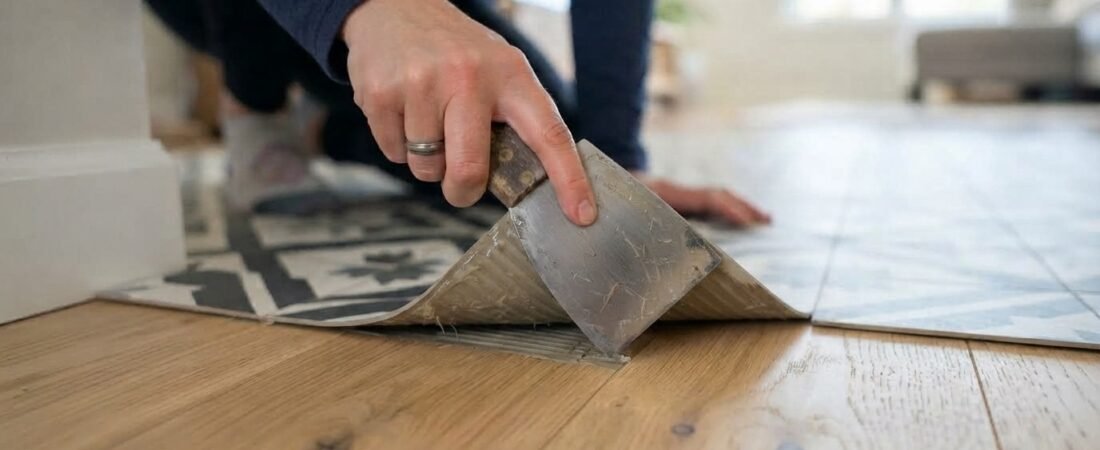
Peel and stick floor tiles are made to stay in place, but they can usually be removed when it is time for a change. The tricky part is taking them up without scratching, gouging, or damaging the floor underneath. However, a tile that has started to lift does not always need to be removed right away. Before you decide what to do with a curled tile, it helps to know why the edges start lifting in the first place
If a tile comes up easily, the job can be quite simple. Older tiles or strongly bonded ones may need a little more care. The safest approach is to loosen the tile first, lift an edge, and slowly peel it away instead of forcing it up.
The simple thing is, Start by lifting a corner or edge with a putty knife, then slowly peel the tile back. If it is stuck, gently warm it with a hair dryer to loosen the adhesive before continuing.
This guide explains how to remove peel and stick floor tiles step by step, including what to do when a tile is stuck and how to protect the subfloor during removal.
Check for Asbestos Before You Start
Before you grab a scraper and start pulling up those old tiles, take a moment to check when the flooring was installed. If the peel and stick tiles have been down since before the 1990s, they, or the layer underneath, it might contain asbestos. If the flooring has been down for years, its age may also be a reason for replacing it. This guide explains how long peel and stick flooring can last and what affects its lifespan.
This is important because scraping, sanding, or heating these tiles can release tiny asbestos fibers into the air. You do not want to breathe them in.
If you are unsure about the age of your flooring, it is better to check than to guess. Have a sample tested or ask a professional to inspect the floor before removing anything. If asbestos is found, leave the job to a trained professional rather than trying to remove the tiles yourself.
If the flooring is newer and asbestos is not a concern, you can safely move on to the removal steps below. However, before removing the tiles, learn how peel and stick flooring is installed, how its adhesive backing works, and what to expect when replacing it with new flooring in this beginner’s guide to peel and stick flooring.
Tools or Materials You Need for Removing Peel and Stick Tiles
| Tools or Supply | What It’s For |
| Putty knife or floor scraper | Getting under the edge of each tile |
| Hair dryer, heat gun, or clothes iron | Softening the glue so tiles come up clean |
| Adhesive remover or mineral spirits | Breaking down whatever glue is left behind |
| Plastic scraper or old credit card | Scraping leftover glue without scratching the floor |
| Bucket, sponge, clean rags | Wiping the floor down once the mess is gone |
| Shop vacuum | Picking up dust and grit at the end |
| Goggles, dust mask, gloves, knee pads | Keeping you safe while you scrape and kneel |
How to Remove Peel and Stick Floor Tiles- Step by Step Guide
Removing peel and stick adhesive floor tiles is usually a simple process when you take it one tile at a time. The steps below explain how to remove peel and stick tiles and take up old peel and stick flooring while keeping the floor underneath in good condition.
- Check the age of your floor
If the tiles went down before the 1990s, get a sample tested for asbestos before doing anything else. If it’s newer, move on.
- Put on Basic Protective Gear
Put on goggles, a dust mask, gloves, and knee pads. Dust and old glue aren’t good to breathe in. Knee pads are also helpful if you will be working on the floor for a long time. Old tiles can break as they come up, and dust or dried adhesive can become airborne during removal. A little protection makes the job more comfortable and safer.
- Warm up the tile.
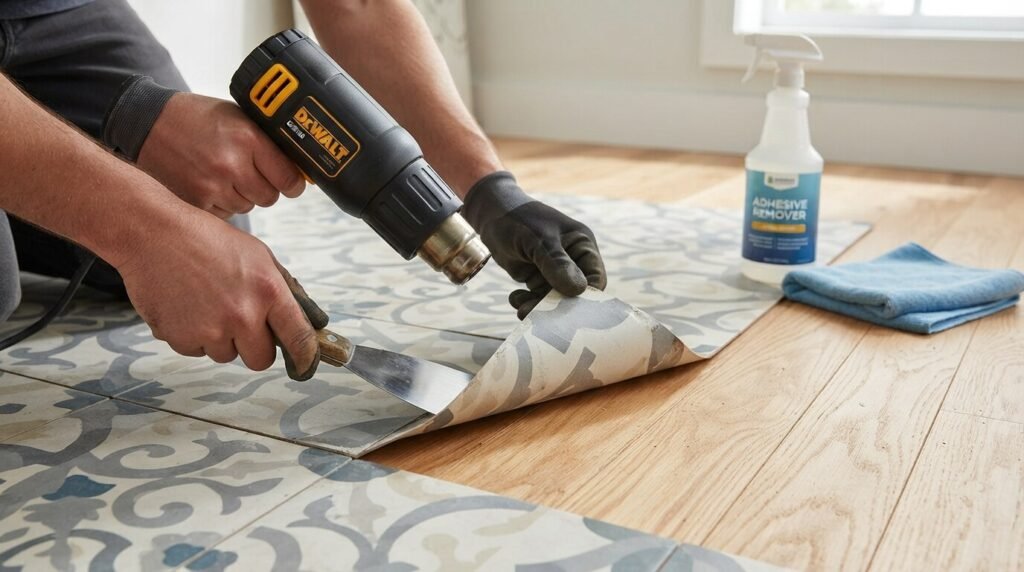
If a tile feels firmly stuck, gentle heat can soften the adhesive and make it easier to remove. Start with the edges, since that is where the tile needs to loosen first.
- A hair dryer is usually enough for a small area. Hold it about 1-2 inches above the tile and warm the edges for around a minute.
- A heat gun can also be used on its lowest setting, but it needs more care because it gets much hotter. Keep it about 2-3 inches away and move it constantly rather than leaving it in one spot.
- An iron can also provide gentle heat when used carefully. Place a towel over the tile and warm it for about 30-60 seconds.
Pro Tip: Never use heat on flooring that may contain asbestos. If the age or material is uncertain, have it tested before starting removal.
- Start at the Corner or Loose Edges
Now, look for a corner that is already slightly raised. If there is no loose edge, slide a putty knife carefully underneath a corner after warming the tile. Keep the putty knife low and fairly flat against the floor. The goal is to get underneath the tile without digging the scraper into the subfloor.
- Peel the Tile Back Slowly, Low to the Ground.
Once the corner is lifted, grip the tile and slowly peel it back toward yourself. Keep the tile close to the floor instead of pulling it straight upward.
A slow, low pull gives the adhesive more time to release and can help the tile come off in one piece. If the tile starts tearing or becomes difficult to pull, stop and warm the area again instead of forcing it.
- Move to the next tile.
Continue removing the peel and stick tiles one at a time. Working in small sections makes the job easier to control. If several tiles are firmly stuck, warm a few at a time so they do not cool completely before you reach them. There is no need to rush through the floor
- Take Extra Care Around Grout Lines
If the peel and stick tiles have been installed with grout between them, the grout may hold the edges together.
In that case, carefully cut through the grout before trying to lift the surrounding tile. A grout saw or suitable oscillating tool can help with this step. Work carefully around the tile edges so the tool does not dig into the floor underneath.
- Scrape off Leftover Glue.
After the tiles are removed, some adhesive may remain on the floor. Do not immediately attack thick or stubborn glue with a lot of force.
For small amounts, a plastic scraper may be enough. If an adhesive remover or mineral spirits is needed, test it on a small, hidden area first to make sure it does not damage the floor underneath.
- Clean the floor.
Wipe it down with a mild cleaner or a vinegar-and-water mix.
- Let it dry completely, then vacuum.
A damp or dusty floor is one of the top reasons new flooring won’t stick later.
What If a Peel and Stick Tile Won’t Come Up?
If a peel and stick floor tile will not come up, do not force it. A stuck tile usually needs more time to loosen rather than more pulling power. If the tiles are coming loose or refusing to stick, it helps to find out what is causing the problem first. These common peel and stick tile sticking problems may help explain what is going wrong.
Start by warming the tile with a hair dryer for a short time. Then try lifting one corner with a putty knife and slowly work along the edge. If the tile still will not move, warm it again and try another section instead of pushing the scraper harder.
If the tile begins to tear, stop pulling. Work underneath the remaining piece a little at a time until it starts to release.
The best way to remove a stubborn peel and stick tile is to soften the adhesive and slowly separate the tile from the floor. This reduces the amount of force needed and helps protect the subfloor from scratches or gouges.
If the scraper starts digging into the floor underneath, stop and change the angle. The goal is to loosen the bond gradually so the tile can be removed with as little force as possible.
How to Avoid Damaging the Subfloor During Removal
The best way to protect the subfloor is to remove each tile slowly and avoid using more force than necessary. Most damage happens when a stuck tile is pulled too hard or a scraper is pushed too deeply into the floor.
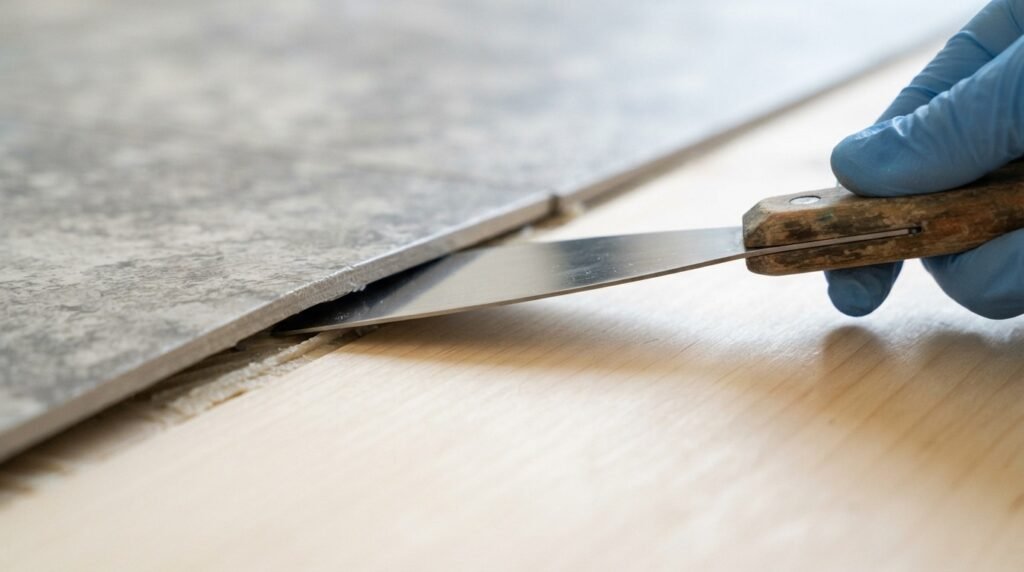
Keep these tips in mind while removing peel and stick floor tiles:
- Keep the scraper low and flat instead of pointing it down into the floor.
- Peel tiles slowly rather than pulling them up suddenly.
- Use gentle heat when a tile is firmly stuck.
- Do not force the scraper if it will not slide underneath the tile.
- Stop when the floor underneath starts to lift or scratch and adjust your approach.
Taking a little extra time is usually better than having to repair a damaged subfloor later.
What to Do After Removing the Tiles
Once you have removed all the peel and stick floor tiles, give the floor a quick check. Look for any pieces of tile, loose material, or obvious damage left behind.
Start by looking across the floor for scratches, gouges, lifted areas, or pieces of the surface that came up with the tile. Run your hand lightly over the floor to check for scratches, raised spots, or areas that feel rough. You can also look across the floor from different angles to spot anything that may not be easy to see at first.
Sweep or vacuum the area to remove small pieces and dust. If you still see adhesive stuck to the floor, do not scrape it aggressively. The main goal at this point is to check the condition of the floor without causing more damage.
If the floor looks smooth and solid, you can move on to the next step for your new flooring. If the old tiles are being removed because they have not worked out well, it may also help to look at the pros and cons of peel and stick floor tiles before choosing the next flooring.
Common Mistakes to Avoid
Removing peel and stick floor tiles is not difficult, but a few small mistakes can make the job frustrating.
Do not start by forcing the hardest tile. Try an easy corner first. Once you see how the tiles are coming up, you will know how much pressure and heat you need for the rest of the floor.
Do not pull a stuck tile straight up. If it feels like the tile is fighting back, stop and loosen it with gentle heat. Then peel it back slowly instead of trying to tear it away.
Do not push the scraper down into the floor. If you feel the scraper catching on the surface underneath, change the angle and work more gently. The scraper should help lift the tile, not dig into the floor.
Do not rush when a tile starts breaking. A stubborn tile may come up in pieces. Remove the loose piece first, then work carefully under what is left.
Do not use more heat than you need. The goal is only to make the adhesive easier to loosen. A hair dryer is often enough for a stubborn tile.
Taking a little extra time with the difficult tiles can save you from damaging the floor underneath.
Frequently Asked Questions
What’s the easiest way to get old peel and stick tiles up?
Warm the tile first with a hair dryer or heat gun, then lift a corner with a putty knife and peel it back slowly. Doing a few tiles at a time, right after heating them, gives you the cleanest results.
Is peel and stick tile hard to remove?
Not really. It comes up easily, and most people can do it themselves in about an hour per 100 square feet with just a scraper and something to warm up the stubborn spots.
How do I get the sticky spots off the floor afterward?
An adhesive remover, mineral spirits, or plain vinegar and water will break most of it down. Scrape gently, wipe clean, and let it dry all the way before moving on.
Can I put new flooring down right after removing the old tile?
Yes, as long as the floor is clean, dry, and flat. New peel and stick tile doesn’t mind a little leftover glue, but anything that clicks together, like vinyl plank, needs a smoother surface to lock in place right.
Do you need heat to remove peel and stick floor tiles?
No, not always. Some tiles will come up without heat, but gentle heat can help loosen the adhesive when a tile is difficult to remove.
Can Peel and Stick Floor Tiles Be Removed Without Damaging the Subfloor?
Yes, peel and stick floor tiles can usually be removed without damaging the subfloor. The key is to avoid pulling or scraping with too much force. Some tiles may peel away by hand, while others need gentle heat and a scraper to loosen the adhesive.
Final Thoughts
Removing peel and stick floor tiles does not have to be a difficult job. If you take your time, start at an edge, and peel each tile back slowly, you can usually get them up without causing damage to the floor underneath.
For tiles that are hard to remove, a little gentle heat can help loosen the adhesive. Just remember to keep the scraper low and use light pressure rather than forcing it into the floor.
Once the tiles are up, give the floor a quick check and see what condition it is in. Taking a careful approach from the start can make the whole removal job easier and leave you with a better surface for whatever comes next.