
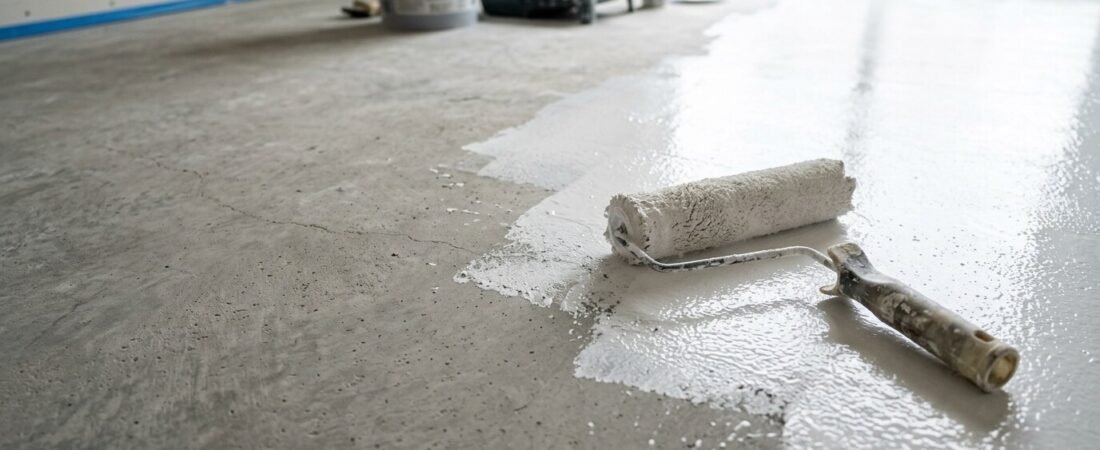
Usually, a primer is a thin coat that you put on the floor before installing the tile. Because, it helps seal the concrete and gives the adhesive a better surface to stick to. In this guide, you will learn which primers work well for peel and stick floor tiles, how to use them, and when you may not need one. You will also learn what to look for in a concrete floor primer.
This guide is only about primer. For the other steps, read our guide on peel and stick floor tiles over concrete.
Quick answer: Yes, a primer is usually a good choice for bare concrete. Choose one that works with peel and stick or self-adhesive floor tiles, and always check the tile manufacturer’s instructions first. The instructions on your tile box should have the final say.
Do You Actually Need a Primer for Concrete Floor?
If you are installing peel and stick tiles over bare concrete, yes, use a primer. In most cases, as we already explained, bare concrete is porous and dusty, so primer gives your tile glue a better surface to stick to.
FloorPops recommends using primer over concrete, and Henry makes primers for dry, dusty, porous floors. Those are the same conditions you often find on a bare concrete floor.
Primer also costs much less than removing loose tiles and doing the floor again. So, if you are working with bare concrete, priming the floor is a small step that protects your new flooring. However, you need to remember that primer only helps prepare a suitable surface for bonding, but it won’t fill gaps left by damaged concrete. If you find cracks or holes while checking your slab, use this guide to repair concrete cracks and holes before laying peel and stick tiles before you start priming.
Try This Quick Water Test
You can check your concrete in about a minute:
- Put a few drops of water on the floor.
- Wait about one minute.
- If the water soaks into the concrete, the surface is porous. Use a primer.
- If the water stays on top in round beads, the surface may already be sealed or painted. Do not apply primer yet. Check the next section to see what you need to do first.
What If Your Concrete Has Too Much Alkali?
Alkali is a chemical found in concrete. If the level is too high, it can cause problems with the tile glue and affect how well your tiles stick. FloorPops warns against excessive alkali, and Henry says the concrete must be free of excessive alkali before you use its primer. A concrete pH test can help you check the floor.
Some flooring manufacturers make special primers for floors with high alkalinity. However, do not assume these products are suitable for peel and stick floor tiles. If your concrete has high alkalinity, check your tile manufacturer’s instructions before choosing a primer.
How to Put Primer on Your Concrete Floor
Clean and dry the floor first. Then follow these three basic steps:
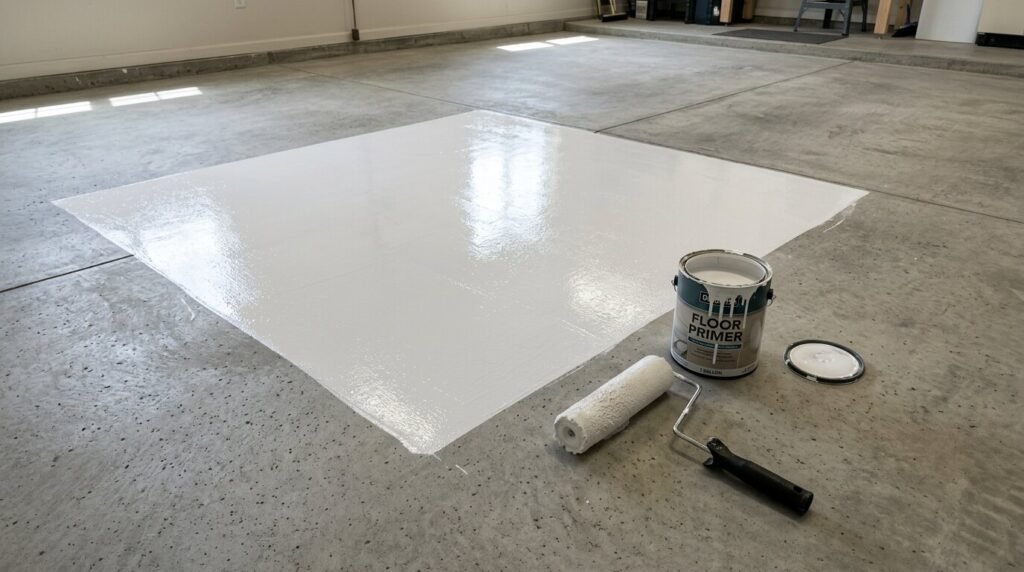
- Mix the primer only when required. TEC 560 needs to be mixed with 1 part primer and 1 part water. Henry 336 and FloorPops go on straight from the container.
- Roll on a thin, even coat. Use a short-nap roller and a brush around the edges. Do not leave puddles or thick spots.
- Let the primer dry completely. Follow the drying time listed for your primer. With TEC 560, use the water-drop test to make sure the primer is dry. Do not rush this step.
Primer can help prepare your concrete surface, but it won’t replace a proper crack repair. If you need to fix cracks first, compare the best concrete crack fillers for peel-and-stick tile to find a product suited to your repair.
3 Best Primer To Use for Installing Peel and Stick Tiles Over Concrete Surface
You have three good primer options for peel and stick floor tiles: Henry 336, FloorPops Peel & Stick Tile Primer, and TEC Multipurpose Primer 560. All three are made for flooring, but they are not used in exactly the same way.
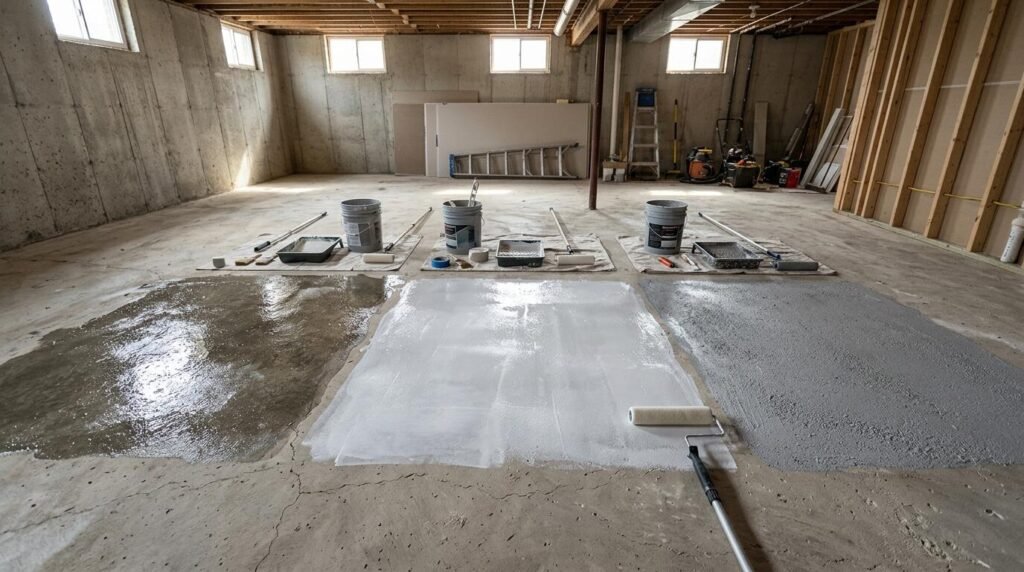
If you want a simple option for bare concrete, Henry 336 is the easiest all-around choice. FloorPops is a good fit if you are using FloorPops tiles, while TEC 560 makes more sense when you also want a primer that can work for other flooring jobs.
| Primer | Best for | Add water? | Coverage | Dry time |
| Henry 336 | Bare, dusty, porous concrete | No | About 87–100 sq. ft./quart | About 30-t0 minutes |
| FloorPops Primer | FloorPops tiles on concrete or plywood | No | About 87.5–100 sq. ft./quart | About 30-90 minutes |
| TEC Multipurpose Primer 560 | Concrete, plywood, and gypsum floors | Yes, 1:1 for peel and stick vinyl tile | About 82.5 sq. ft./quart after mixing | About 30 minutes-3 hours |
1. Henry 336 Self-Stick Tile Primer
Henry 336 is a white latex primer made for self-stick tile. It is a strong all-around choice when you are working with bare, dusty, porous concrete. You use it full strength, so do not add water. Apply it with a short-nap roller or coarse brush, and do not leave puddles on the floor.
Henry lists a coverage of about 87 to 100 square feet per quart, although the coverage can vary, so check the label on your container. The primer usually dries in about 30 minutes to 1 hour.
You also need to control the temperature. Henry recommends keeping the room, primer, and tiles at 65°F or warmer for 48 hours before, during, and after installation. It can also be used over radiant-heated floors as long as the floor stays below 85°F.
Watch out: Your concrete must be dry and free of sealer and excessive alkali before you use this primer.
2. FloorPops Peel & Stick Tile Primer
FloorPops makes this primer specifically for its peel and stick tiles on concrete or plywood. It is a good choice when you want to follow the tile manufacturer’s own primer recommendation.You also use this primer full strength, so do not add water. Apply it with a short-nap roller or coarse brush. Put on a good coat and let the floor absorb it instead of leaving extra primer sitting on top.
Good to know: FloorPops says you can use its own primer or a similar bond-boosting primer. You are not limited to one brand.
Watch out: Do not use it on damp concrete or concrete with excessive alkali.
3. TEC Multipurpose Primer 560
TEC Multipurpose Primer 560 is the most flexible option of the three. It works with peel and stick tile on dry, porous concrete, plywood, and gypsum floors. It can also be useful when you want a primer that works for other flooring jobs.
This one is different from Henry and FloorPops because you need to mix it with water for peel and stick vinyl tile. Use 1 part primer with 1 part water. After mixing, one quart covers about 82.5 square feet. Drying can take about 30 minutes to 3 hours. To check the surface, rub a drop of water over the primer with your finger. If the water stays clear, the primer is dry. If it turns milky, wait another 30 minutes and test again.
TEC recommends keeping the room and primer between 50°F and 70°F. Keep these conditions for 24 hours before and during the job and for 48 hours afterward. The floor must be clean, dry, and unpainted. Do not use this primer in wet areas.
New concrete can also have a coating called a curing compound. TEC says this primer can work over silicate and acrylic resin curing compounds. Other types need to be removed by grinding.
Watch out: The mixing instructions for TEC are different from Henry and FloorPops. Do not assume that every primer should be mixed with water.
5 Primers to Skip for Peel and Stick Vinyl Tiles
Not every primer with “peel and stick” on the label is made for peel and stick floor tiles. Some are designed for membranes, ceramic tile systems, or other flooring products. Here are 5 primers, you especially need to avoid using them on your concrete floor for peel and stick tiles.
So, before you buy a primer, check what the manufacturer says it is made for.
1. Custom Peel & Stick Primer
This primer is made for thin mats that go under ceramic tile. It is not designed for peel and stick vinyl floor tiles, so it is not the right choice for this job.
2. Schluter PRIMER-PS
This product is made for Schluter’s own peel and stick membranes. It is not a general primer for self-stick vinyl floor tiles, so do not use it just because its name includes “peel and stick.”
3. Mapei Primer T
It is designed for self-leveling floor compounds. It is also not made to prepare concrete for peel and stick vinyl floor tiles.
4. Mapei Eco Prim Grip
This product helps mortar, plaster, and self-leveling compounds bond to surfaces. It is designed for those materials, not as a primer for peel and stick vinyl tile.
5. Roberts FS400 First Step
This primer is designed to work with Roberts flooring adhesives. That does not make it a general-purpose primer for self-stick vinyl flooring.
The Simple Rule to Buy Primer for Peel and Stick Over Concrete
If the primer label does not clearly say it works with peel and stick or self-stick vinyl floor tile, do not buy it for this job.
The word “peel and stick” alone is not enough. Always check what type of flooring the primer is designed to work with.
Primer Coverage: How Much Do You Need for Peel and Stick Tiles?
The amount of primer you need depends on your floor size and the coverage listed on the product. For a 200-square-foot room, you would need roughly:
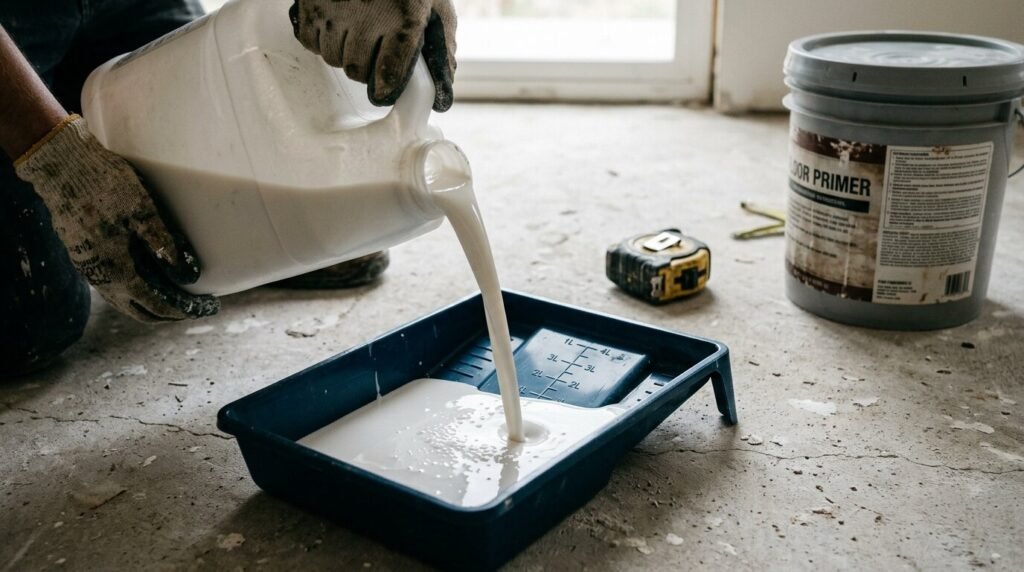
- Henry 336 or FloorPops: 2 to 3 quarts
- TEC 560 at a 1:1 mix: About 3 quarts of primer, which gives you about 6 quarts of mixed primer
Your concrete may need more primer if it is very porous because it can absorb the primer faster. Check the coverage on the product label before you buy, and get a little extra so you do not run short during the job.
When Can You Skip Primer on Concrete for Peel and Stick Tiles?
Primer is useful on bare concrete, but you do not always need it. Skipping primer can save you time and money when your floor and self adhesive tile are already suitable for installation without it.
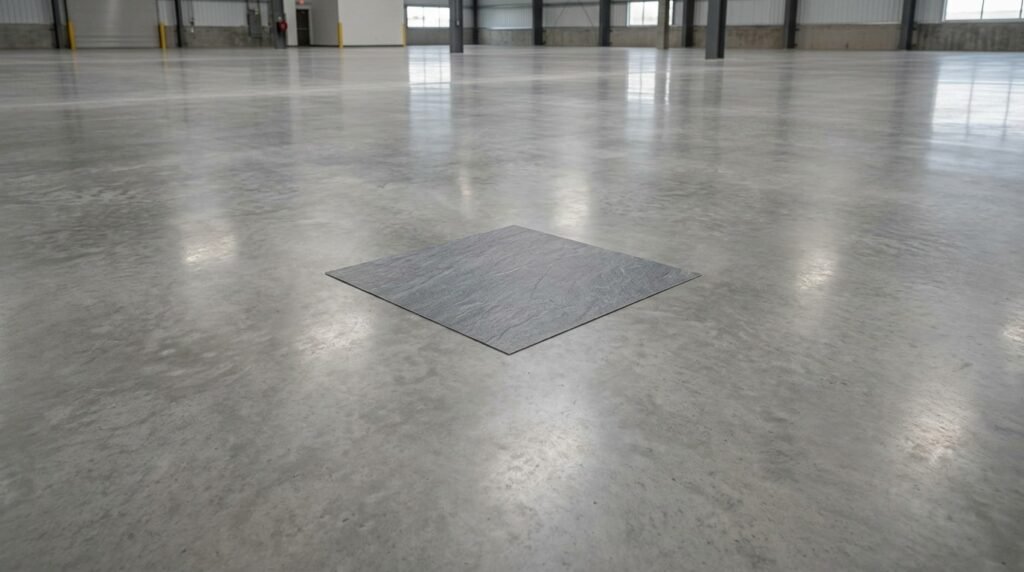
The key is to follow the tile manufacturer’s instructions. Do not skip primer just because you want to avoid an extra step.
- Your tile box says you do not need primer. Follow the tile manufacturer’s instructions. The manufacturer knows which surfaces its tile glue is designed to stick to.
- Your concrete floor is sealed or painted. Many concrete primers are made for bare concrete, not sealed surfaces. Henry recommends removing sealers before using some of its primers, while TEC specifies certain primers for unpainted floors. Check your primer label before you start. Sometimes you can skip primer, while other times you need to remove the sealer first.
Do not skip primer just because your concrete looks smooth. A smooth floor can still have dust or other surface problems that affect how well your tiles stick.
FAQs
Can I use primer over painted concrete?
Yes, but you need a concrete primer that is suitable for painted surfaces. First, check whether your existing paint is firmly attached to the floor. If it peels, flakes, or bubbles when you scrape it, remove the loose paint before you apply primer. Otherwise, your primer may stick to the paint instead of forming a reliable bond with the floor. Also, check whether your peel-and-stick floor tile manufacturer allows installation over painted concrete.
Can you prime concrete that has a sealer on it?
You should not apply a regular concrete primer over a sealed floor unless the product label says it is compatible with that sealer. The sealer may stop your primer from bonding properly, which can affect how well your peel-and-stick tiles stick. First, identify the type of sealer on your concrete and check your primer’s instructions. If the two products are not compatible, you may need to remove the sealer before you prime the floor.
Can concrete primer fix cracks or uneven areas?
No, concrete primer cannot fill cracks, repair holes, or level your floor. If your concrete has cracks or low spots, use a suitable concrete patching compound or floor-leveling compound to fix them first. Let the repair dry according to the product instructions, then check that your floor is flat and smooth. This gives your peel-and-stick floor tiles a more even surface and helps prevent gaps, loose edges, and poor adhesion.
Can you skip primer if your concrete looks smooth?
Not always. Even if your concrete looks smooth, it may still absorb moisture unevenly or leave fine dust that weakens the tile adhesive’s bond. Before you install your peel-and-stick floor tiles, clean the floor and rub your hand over the dry surface to check for loose dust. Then, check your tile manufacturer’s instructions to see whether you need a concrete primer. If primer is required, use one approved for your concrete surface and flooring system. A smooth-looking floor does not always mean your concrete is ready for peel-and-stick tiles.
Final Thoughts
The right primer gives your concrete a better surface for peel and stick tiles to grip. If you are working with bare, porous concrete, choose a primer made for self-adhesive flooring and follow the instructions on your tile and primer.
Once your concrete is properly primed and dry, you are ready for the next step.