
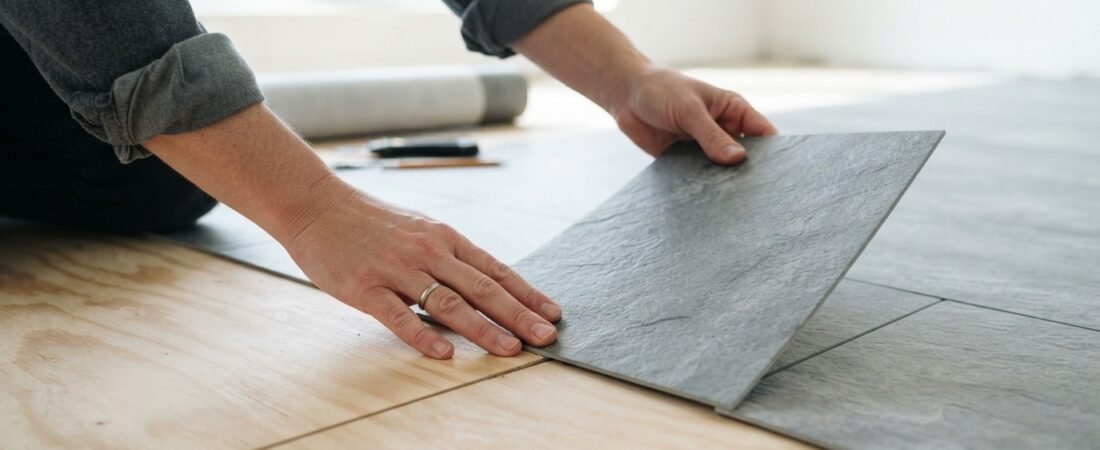
Yes, you can put peel and stick floor tiles over plywood, but your plywood must be in good condition. Smooth, dry, firm, and unsealed plywood gives self-adhesive vinyl tiles a good surface to stick to. However, rough, sealed, damp, or loose plywood can stop the adhesive from holding properly. As a result, your tiles may start lifting or coming loose. Here you can check out the most common causes about peel and stick fail in sticking.
The first thing to check is whether you really have plywood. Some floors look similar but are made from OSB, which has a different surface. You also need to look closely at the plywood for a few problems that are easy to miss, such as sheet joints, raised nails or screws, damaged areas, and places where the plywood moves.
If you want to install stick-on floor tiles over a plywood subfloor, you need to know whether your plywood is suitable. This guide explains which plywood works best, which types to avoid, and what you should check to help your tiles stay in place for months to come.
Plywood vs. OSB for Peel and Stick Floor Tiles
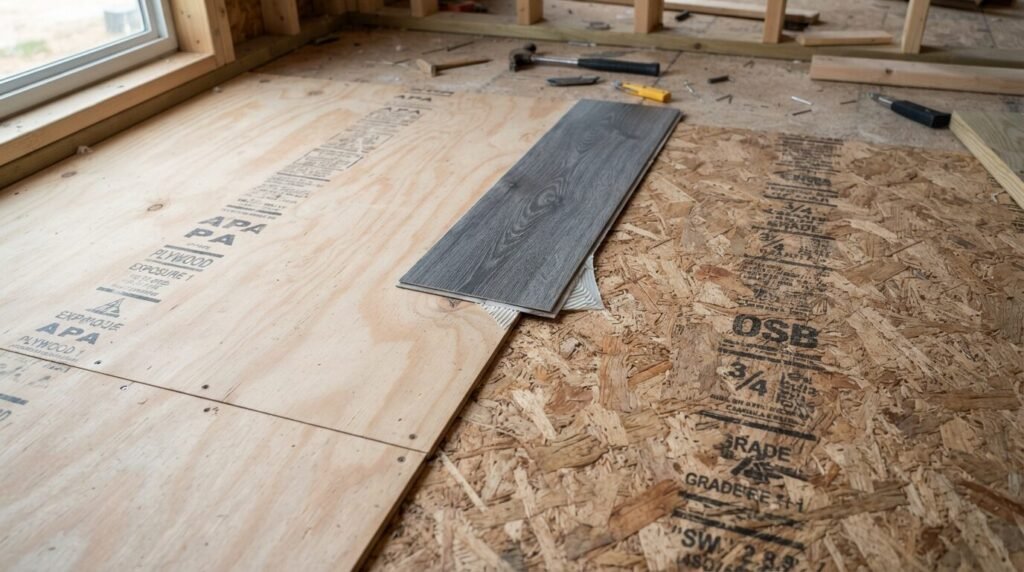
Plywood and OSB can look similar, but they are made in different ways. Plywood is made from thin sheets of wood that are glued together in layers. OSB, or oriented strand board, is made from small wood pieces that are pressed and glued together. Because of this, plywood usually has a smoother surface, while OSB has a rough, flaky look.
The easiest way to tell them apart is to look at the edge. Plywood has clear, flat layers that look a little like a sandwich. OSB has many small pieces of wood pressed together, so the edge looks more like a mix of wood chips.
If you have OSB, it is better not to stick peel and stick tiles directly to its rough surface. A thin, smooth plywood layer can give the tiles a better surface to stick to. If you already have suitable plywood, you normally do not need to add another layer.
When Can You Put Peel and Stick Floor Tiles Over Plywood?
Peel and stick floor tiles can work over plywood if your subfloor meets five important conditions:
- Suitable plywood grade: Choose underlayment-grade plywood or exterior-grade plywood with a smooth, sanded face.
- Smooth and flat surface: Your plywood should have no large gaps, surface voids, rough grain, or raised nail and screw heads.
- Dry condition: The plywood must be free from dampness, swelling, and water damage.
- Firm support: Your plywood panels must be securely fastened, with no loose boards, squeaks, or bounce.
- Unsealed surface: The surface should have no varnish, sealer, or glossy finish that could prevent the adhesive from sticking properly.
Once you confirm that your plywood is suitable, follow our guide on how to install peel and stick floor tiles over plywood to prepare your floor and lay your tiles correctly.
Which Plywood Condition is Suitable for Peel and Stick Floor Tiles?
Use this quick table to check your plywood before you install self-adhesive vinyl tiles.
| Your plywood condition | Will peel and stick floor tiles work? |
| Smooth, sanded, dry, and firmly fastened | Usually yes |
| Underlayment-grade plywood with tight seams | Yes, this is an ideal surface |
| Rough, splintery, or full of surface voids | Risky. Flaws can show through the tiles and weaken the adhesive bond. |
| Varnished, sealed, or glossy | Usually no. The adhesive may not grip properly. |
| Damp, swollen, or water-damaged | No. Moisture can damage the plywood and cause the tiles to fail. |
| Damp, swollen, or water-damaged | No. Moisture can damage the plywood and cause the tiles to fail. |
| Loose, squeaky, or flexing plywood | No. Movement can cause the tiles to lift or come loose. |
If your plywood falls into one of the risky categories, you may still be able to use peel and stick floor tiles after fixing the problem.
However, you should address surface flaws, moisture, or movement before installing your tiles. The next sections explain what to check so you can decide whether your plywood is ready for self-adhesive flooring.
Can You Use Peel and Stick Floor Tiles Over Plywood in Different Rooms?
You may be able to use peel and stick floor tiles over plywood in different rooms, but you need to check the conditions in each space. Moisture, heat, and floor movement can affect how well your tiles stick. Here is what you need to consider before you choose peel and stick flooring for your room.
1. Kitchens, Bathrooms, Basements, and Laundry Rooms
If you want to install peel and stick floor tiles in these rooms, check your plywood for moisture first. Spills and changes in humidity can make plywood damp or cause it to swell. As a result, your tiles may lose their grip. You also need to make sure your tiles are rated for the room, especially in bathrooms and other areas exposed to water. If your room is in a basement, check for moisture problems before covering the plywood with tiles.
2. Radiant Heat and Sunrooms
If your plywood floor is over a radiant heating system or gets direct sunlight, check your tile’s heat limits before you install it. High temperatures can soften the adhesive or cause the tiles to expand and shift. Some manufacturers do not recommend their tiles over radiant-heated floors, while others allow them only within certain temperature limits. So, follow your tile manufacturer’s instructions to avoid problems later.
3. RVs, Trailers, and Mobile Homes
If you want to install peel and stick floor tiles in an RV, trailer, or mobile home, check how stable your plywood floor is. These floors may experience more vibration, temperature changes, and flexing than floors in a regular home. That movement can weaken the adhesive bond and cause your tiles to lift over time. Therefore, make sure your plywood is smooth, clean, dry, and firmly secured before you install your tiles.
Plywood Subfloor vs. Plywood Underlayment: Which Do You Need for Peel and Stick Floor Tiles?
Your plywood subfloor may be strong enough to support your floor, but that doesn’t always mean it’s ready for peel and stick floor tiles. To understand why, you first need to know the difference between a plywood subfloor and plywood underlayment.
- Plywood subfloor: This is the main layer of plywood attached to your floor joists. Its job is to support your floor, not to provide a smooth surface for vinyl tiles.
- Plywood underlayment: This is a thinner layer placed over your subfloor. It helps create a smooth, suitable surface for self-adhesive vinyl tiles.
Type of Plywood To Use Under Peel and Stick Floor Tiles
Your plywood type affects how well peel and stick floor tiles stick and how your finished floor looks. If you choose the wrong plywood, your tiles may not bond properly or may show bumps and gaps underneath. So, before you install self-stick vinyl flooring, check which type of plywood you have.
1. Underlayment-Grade Plywood
Underlayment-grade plywood is usually your best choice for peel and stick floor tiles. Its smooth face gives your tiles a more even surface to stick to. It also has fewer surface flaws, so knots, gaps, and voids are less likely to show through thin vinyl tiles over time.
That is why many flooring manufacturers recommend a suitable underlayment-grade plywood. However, you should still check your tile manufacturer’s instructions to make sure your chosen plywood meets their requirements.
2. Standard Plywood Subfloor
Your existing plywood subfloor may work for peel and stick floor tiles, so you may not need to add another layer. However, your plywood must be smooth, firmly secured, and free from major flaws. Some manufacturers accept exterior-grade plywood with a sanded face, rated B-C or better.
If your plywood has tight seams and a smooth surface, you may be able to install peel and stick floor tiles directly on it. However, thickness alone does not tell you whether your plywood is suitable. Even thick plywood can cause problems if it has rough patches, gaps, or loose panels.
3. Rough or Construction-Grade Plywood
Rough or construction-grade plywood can cause problems because its surface may not be smooth enough for peel and stick floor tiles. You may find open knots, surface voids, rough grain, or uneven edges where the plywood sheets meet.
These flaws matter because thin vinyl tiles can show the imperfections underneath. Rough areas can also make it harder for the adhesive to hold properly, which may cause your tiles to lift or come loose over time.
If your plywood has these problems, prepare the surface before you install your tiles. Your goal is to give the self-adhesive vinyl tiles a smooth, even base so they can stick properly.
4. Painted, Sealed, or Treated Plywood
Your plywood’s finish also affects how well peel and stick floor tiles bond to the surface. If your plywood has varnish, sealer, or a glossy finish, the adhesive may not grip properly. Some manufacturers also advise against installing their tiles over sealed plywood.
Painted or chemically treated plywood needs extra care because not every coating works with every tile adhesive. So, don’t assume that your existing surface is suitable just because it looks smooth.
Before you install your tiles, check whether your tile manufacturer allows the coating or treatment on your plywood. You may need to prepare the surface or add a suitable underlayment to give your peel and stick floor tiles a better surface to bond to.
Right Plywood Subfloor Material To Use Under Peel and Stick Floor Tiles
Before you install peel and stick floor tiles over plywood, check whether your subfloor material is approved for your tiles. Some surfaces provide a suitable base, while others may prevent the adhesive from bonding properly. Use this table as a guide, but always follow your tile manufacturer’s installation instructions.
| Subfloor | Generally approved or Not? |
| Underlayment-grade plywood | Yes, if it meets the manufacturer’s requirements |
| Exterior-grade plywood (sanded face, B-C or better) | Often, but check the manufacturer’s instructions |
| Luan plywood | Often not approved |
| OSB (oriented strand board) | Often not approved for direct installation; a suitable plywood underlayment may be required |
| Particle board | Often not approved |
| Masonite / hardboard | Often not approved |
| Chipboard / fiberboard | Often not approved |
| Cement board | Not approved by many brands for direct installation; check the product instructions |
Before you choose your subfloor: Don’t assume a material is suitable just because it looks smooth or feels firm. Check your tile manufacturer’s requirements for approved plywood types, surface preparation, and underlayment. This helps you choose a suitable base and avoid installation or warranty problems.
Why Luan and OSB Can Cause Problems
If you have luan under your floor, your peel and stick floor tiles may not have a stable surface to stick to. Luan is thin and soft, so it can dent under your foot traffic. It may also contain voids that make the surface uneven. Some installers report that oils in luan can affect how well your tile adhesive sticks. That is why many manufacturers do not approve luan as a base for their tiles.
If your subfloor is OSB, watch for swelling or warping along the seams, especially if moisture reaches the panels. When the OSB changes shape, your vinyl tiles may lift or show uneven spots. To give your tiles a smoother base, you may need to cover the OSB with a suitable plywood underlayment. However, check your tile manufacturer’s instructions first to make sure the underlayment is approved.
Check If Your Plywood is Firm and Stiff Enough
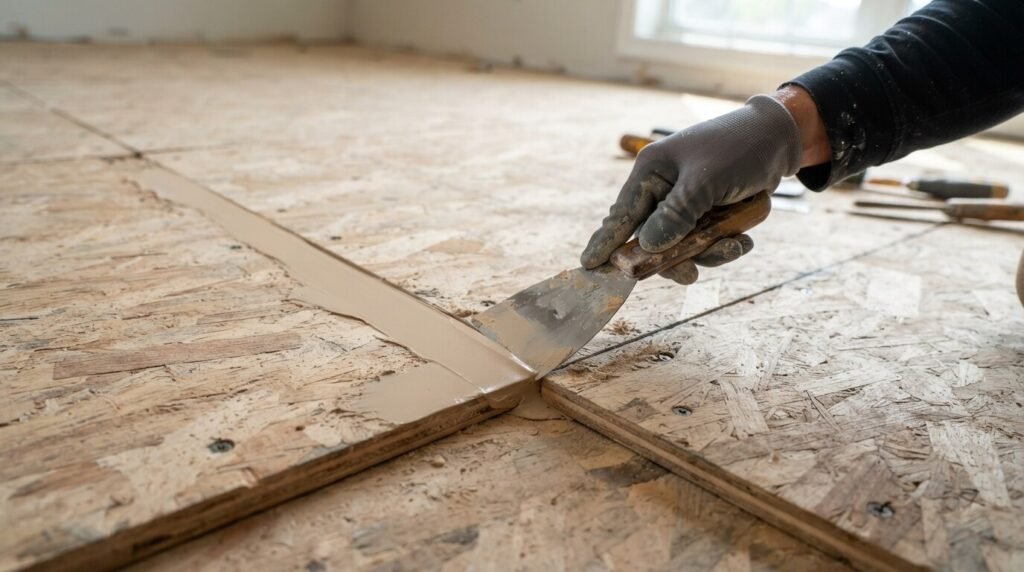
Your plywood needs more than a smooth surface to support peel and stick floor tiles. It must also stay firm and stable when you walk on it. If your plywood bends, bounces, or moves under your feet, the tiles may not stay in place.
Before you install your tiles, check your plywood for these problems:
- Loose panels or squeaks: If your plywood moves or squeaks when you walk on it, the panels may not be fastened firmly to the floor joists.
- Flexing or bounce: If your floor bends under your feet, the plywood may be too thin for your joist spacing or may not have enough support.
- Movement between sheets: If the plywood panels shift against each other, your tiles may lift or come loose along the seams.
You also need to check which layer needs attention. Your structural subfloor must have the right thickness for your joist spacing and local building code. If you need a smoother surface for your peel and stick floor tiles, you can add a layer of plywood underlayment. A 1/4-inch layer is commonly used for this purpose. However, it only improves the surface for your tiles; it does not strengthen a weak or bouncy subfloor.
How Flat and Smooth Does Plywood Need to Be for Peel and Stick Tiles?
Before you install peel and stick floor tiles, make sure your plywood is both flat and smooth. Flatness means your floor has no high or low spots, while smoothness means you have no rough patches, raised grain, or sharp edges. If your plywood has these flaws, they may show through your tiles or affect how well they stick.
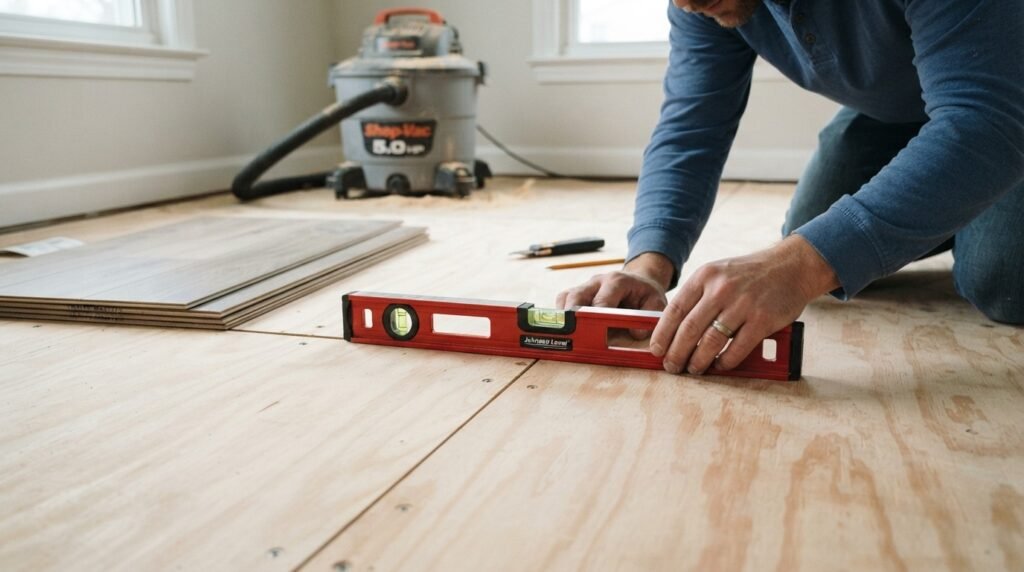
When you check your plywood, look for raised seams, uneven joints, gaps, dents, and rough patches. These problems can make your tiles look uneven or prevent them from sticking properly. Also, make sure nail and screw heads sit flush with the surface so they do not create bumps under your tiles.
One manufacturer’s guideline allows no more than 1/4 inch of unevenness over a 10-foot span. However, your tile brand may have different requirements, so check its installation instructions first.
Moisture and Plywood Subfloors
Moisture affects a plywood subfloor differently than it affects concrete. Concrete can hold moisture and slowly release it upward, so you may need a moisture test before installing flooring over it. Hence, If you are working with a concrete floor instead, our guide to preparing concrete for peel and stick floor tiles explains the moisture checks you need to make.
Plywood does not hold and release moisture in the same way. Instead, it can absorb water directly. If your plywood subfloor gets wet, it can swell, warp, or delaminate, especially around the edges and seams.
When You Should Not Use Peel and Stick Tiles Over Plywood
You should not put peel and stick tiles directly over plywood if you find any of these problems:
- Cracked, soft, or water-damaged plywood: Replace or repair damaged areas before you install the tiles.
- Bare OSB: If you have OSB instead of plywood, cover it with a smooth underlayment before installing peel and stick tiles.
- Oil, grease, or other residue: Clean the surface first if you see anything that could stop the tile adhesive from sticking properly.
- Plywood that flexes or bounces: If your plywood moves when you walk across it, secure or repair it before you cover it with tiles.
If your plywood is in good condition and does not have these problems, you can move on to installing your peel and stick floor tiles.
Choose a Peel and Stick Tile Rated for Plywood Subfloors
Most peel and stick tiles can be used over wood subfloors, including plywood. However, you should still check the product instructions before you buy. Look for plywood or wood subfloors in the list of approved surfaces.
If you are also thinking about installing the peel and stick tile over OSB, check that too. OSB and plywood have different surfaces, so a tile that works well over plywood may not be approved for OSB.
Checking the product instructions first can help you choose a peel and stick tile that is suitable for your plywood subfloor.
Plywood Compatibility Checklist Before Installing Peel and Stick Tile
Before you install peel and stick floor tiles, use this quick checklist to make sure your plywood is ready. Check each point below so you can catch any problems before they affect your new floor.
| Check | What You’re Looking For |
| Material type | Confirmed plywood, not bare OSB |
| Plywood grade | Smooth, sanded underlayment-grade, or properly covered subfloor-grade |
| Structural soundness | No flex, soft spots, cracks, or looseness |
| Fastener heads | Flat or filled, not raised above the surface |
| Seams | Filled and sanded level, staggered if using an added underlayment |
| Surface cleanliness | No oil, dust, or manufacturing residue |
| Moisture | Dry, with no swelling, warping, or discoloration |
| Manufacturer instructions | Confirmed tile is rated for plywood or wood subfloors |
Can Plywood Affect Your Peel and Stick Floor Tile Warranty?
Yes, your plywood choice can affect your peel and stick floor tile warranty. Many manufacturers set rules for the type of subfloor you can use. If your plywood does not meet those requirements, you may lose warranty coverage if your tiles fail.
Before you install your tiles, check whether the manufacturer requires:
- An approved plywood type
- A clean, dry, flat, and firm surface
- A surface without varnish, sealer, or other coatings that could affect the adhesive
What Can Void Your Peel and Stick Floor Tile Warranty?
You may void your warranty if you install your tiles against the manufacturer’s instructions. Common problems include:
- Use the wrong plywood type: Materials such as luan, OSB, and particle board may not be approved for your tiles.
- Install over a sealed surface: Varnish, sealer, or glossy coatings can stop the adhesive from bonding properly, and some manufacturers do not allow these surfaces.
- Add extra adhesive: Many manufacturers advise against adding glue to self-stick tiles. Extra adhesive may damage your tiles or cause bonding problems.
So, check your tile manufacturer’s installation instructions before you prepare your plywood. Keep the instructions and your purchase receipt in case you need to make a warranty claim. If you are unsure whether your plywood is approved, contact the manufacturer before you install your tiles.
FAQs
Can You Put Peel and Stick Tile Over Painted or Varnished Plywood?
If your plywood has varnish or sealer, the tile adhesive may not stick properly. Painted plywood may work, depending on the paint and your tile brand. Check your manufacturer’s instructions before you install your tiles.
How Thick Should Plywood Be Under Peel and Stick Tile?
Your structural subfloor must meet thickness requirements for your joist spacing and local building code. If your floor needs a smoother surface, you can add 1/4-inch plywood underlayment. However, you still need a firm, stable base for your tiles.
How Dry Does Plywood Need to Be Before Putting Over Self Adhesive Tiles?
Make sure your plywood is completely dry before you install your tiles. If you find damp spots, swelling, or signs of a leak, fix the problem and let the wood dry fully. Also, check your tile manufacturer’s moisture requirements.
So, before you install peel and stick floor tiles, check your plywood subfloor for signs of moisture damage. Look for soft spots, dark discoloration, swelling, warping, or areas where the layers are coming apart. Your plywood should feel dry, flat, and solid before you cover it with tiles.
Can you put peel and stick floor tiles over painted plywood?
You can, but you need to check the paint first. The paint should be firmly attached and should not peel, flake, or come off when you scratch it lightly. If the paint is loose, remove the weak areas and prepare the plywood before installing your peel and stick floor tiles.
Can you put peel and stick tiles over plywood underlayment?
Yes, you can put peel and stick tiles over plywood underlayment if the underlayment is suitable for flooring and has a smooth, even surface. Make sure the plywood is properly secured before you install the tiles.
Can you put peel and stick floor tiles over plywood subfloor without underlayment?
Yes, you can in some cases. If your plywood subfloor already has a smooth, suitable surface and meets the tile manufacturer’s requirements, you may not need a separate underlayment. If the plywood is rough or not suitable for direct installation, an underlayment can give you a better surface for the tiles.
Final Thoughts
Plywood can be a good base for peel and stick floor tiles, but you should not rush the installation. Take a few minutes to check your plywood and fix any problems you find first.
Once your plywood is ready, you can move forward with your tile installation with much more confidence.