
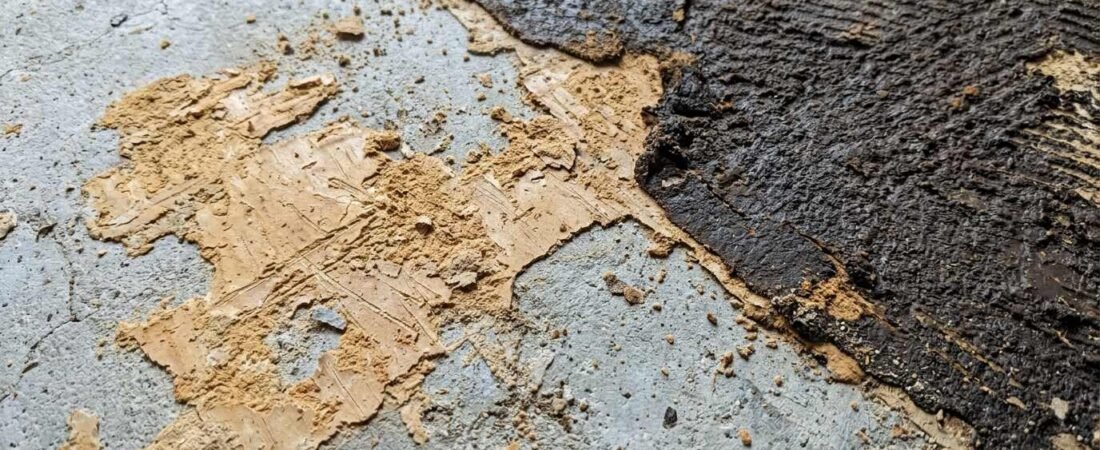
Old carpet can leave a stubborn layer of glue on your concrete floor. That glue may look harmless, but it can cause problems when you lay peel-and-stick floor tiles over it.
Before you install the tiles, deal with the carpet glue. If you leave thick, raised, or loose glue on the concrete, your tiles may not sit flat or stick properly. Also, you may not need to remove every stain, but you do need to make sure any remaining residue is safe for your new tiles.
For this, you need the right removal method which depends on the type of carpet you have. However, before you remove the glue, make sure your concrete floor is suitable for peel-and-stick tiles. Read our guide on putting peel-and-stick floor tiles over concrete to check the other surface conditions that matter before installation.
Here is the guide below to help you remove carpet glue from concrete without creating more problems for your new floor.
Identify the Carpet Glue on Your Concrete Floor
Before you remove carpet glue from concrete, check what it looks like and how it reacts to water. This helps you choose a suitable removal method instead of wasting time on one that does not work.
Dab a small spot of glue with a damp cloth and warm water. Wait briefly, then check whether the glue softens or becomes easier to wipe away. If it does, the adhesive may be water-sensitive. If it stays hard, you may need another method.
Use the table below to decide where to start.
| Glue type | What it looks like | Where to start |
| Yellow or tan carpet glue | Yellow or tan patches, dried lines, or sticky areas | Try scraping first, then test whether warm water softens the glue. |
| Old black carpet adhesive | Dark patches that may look hard, smooth, or shiny | Stop before scraping or testing it. Check the safety note below first. |
Yellow or Tan Carpet Glue
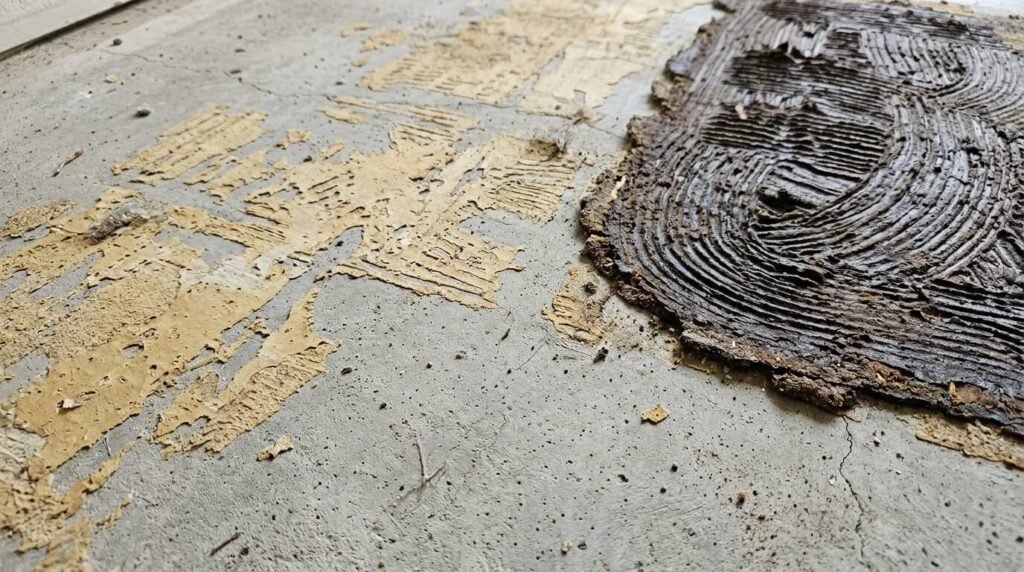
Yellow or tan carpet glue often dries into hard patches or thin lines on concrete. You may see these lines where the installer spread the glue under the old carpet.
You can often remove this glue with a floor scraper. If it is too hard to lift, you may need to soften it or use a suitable carpet adhesive remover. The next sections explain how to choose the right method for your floor.
Old Black Carpet Adhesive
Some older concrete floors have black, tar-like carpet adhesive. If you find it under your old carpet, do not assume it is safe to remove.
Stop and check for asbestos first. Some older black adhesives may contain asbestos, which can release harmful fibers when disturbed. Do not scrape, sand, grind, or dry-sweep the adhesive. Contact a qualified asbestos professional to assess it and arrange testing if needed.
If the adhesive contains asbestos, do not try to remove it yourself. Follow professional advice and local safety rules before moving ahead with your peel-and-stick tiles.
Tools and Supplies You Need to Remove Carpet Glue From Concrete Slab
Gather your tools before you start removing carpet glue from concrete. You will need:
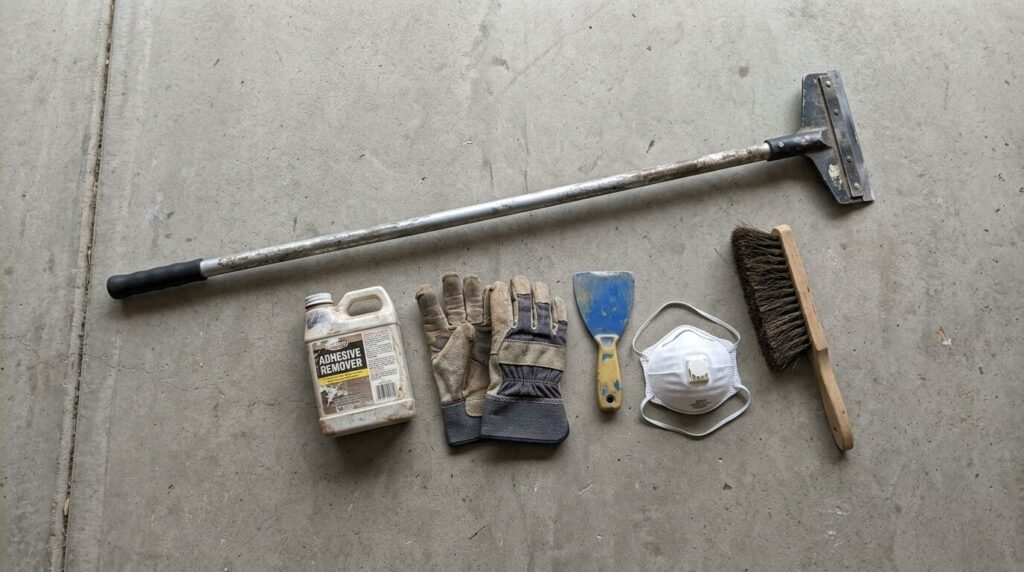
- Gloves and safety glasses
- A long-handled floor scraper
- A small razor scraper for edges
- A bucket, rags, and a mop
- Dish soap and warm water
- A carpet adhesive remover labeled as safe for your concrete floor and compatible with your tile manufacturer’s requirements
- Trash bags for collecting removed glue
- A fan or an open window for ventilation, especially if you use an adhesive remover
Work on a small area at a time, about a few square feet. This makes the glue easier to manage and helps you clean each section before moving on to the next.
How to Remove Carpet Glue from Concrete Step by Step
Once you know what type of carpet glue you have, you can choose the right way to remove it. Follow these steps to clear the residue without damaging your concrete floor.
Step 1: Scrape Off Loose and Raised Carpet Glue
Start by removing any glue that sticks up or comes loose easily. These raised patches and dried glue lines can create bumps under your peel-and-stick tiles, so you need to clear them before dealing with the thinner residue.
For this, hold your floor scraper at a low angle and gently push the blade under the glue. Keep it close to the concrete because digging into the surface can leave scratches. As the glue comes loose, collect the flakes in a bag so they do not spread across the floor.
Some adhesive may still remain after scraping, especially if it has dried into a hard layer. If your scraper cannot lift it without too much force, soften the glue before trying again.
Step 2: Soften Stubborn Carpet Glue if Needed
If dry scraping does not remove the remaining glue, try softening a small spot first. Here, you need to mix warm water with a little dish soap. Then you can dampen the glue without soaking the concrete. After a few minutes, test the spot with your scraper to see whether the adhesive has loosened.
However, please keep in mind that warm water will not work on every type of carpet glue. If the adhesive stays hard, do not keep soaking the floor because extra water will not necessarily help. You may need a suitable carpet adhesive remover instead.
A heat gun can soften some adhesives, but it can also cause burns and release harmful fumes. Therefore, avoid heat if you are unsure what type of glue you have, and never heat old black adhesive that may contain asbestos.
Step 3: Use a Suitable Carpet Adhesive Remover
If warm water and dish soap do not loosen the glue, a carpet adhesive remover may work better. Choose a product labeled for concrete, and check that its use is compatible with the requirements for your peel-and-stick tiles.
Before applying it to the whole floor, read the label carefully because products can have different application and cleaning instructions. Test a small spot first, then open a window or provide ventilation as directed.
Once you know the product works, apply it to a small area and leave it for the time stated on the label. Then scrape away the softened glue as instructed. Keep the remover away from flames if it is flammable, and never mix it with another cleaning product because the combination may release harmful fumes.
Step 4: Remove Loosened Glue and Cleaner Residue
After you scrape off the softened glue, you still need to remove any cleaner left on the concrete. This step matters because some adhesive removers leave an oily or soapy film that can interfere with the sticky backing on your new tiles.
Follow the product label to wipe, rinse, or wash the treated area. If the instructions call for clean water, use it to remove the remaining cleaner rather than leaving residue behind.
Once the floor is clean, let it dry completely before moving on. Follow the product’s drying instructions, too, because the concrete may need more time to dry after wet cleaning.
Step 5: Deal with Glue That Will Not Come Off
If the glue remains stuck after these steps, avoid scraping harder because you could damage the concrete. Instead, choose your next move based on how much glue remains and how large the area is.
- Try another treatment: If the glue responds to warm water or an approved remover, treat a small area again and scrape gently once it softens.
- Use a floor scraper machine: If you have a large room to clear, a rented walk-behind floor scraper may help lift stubborn adhesive more efficiently.
- Contact a flooring professional: If the glue covers a large area or resists suitable removal methods, a professional can assess the surface and recommend a safe way forward.
Be cautious with grinding or sanding because these methods can release large amounts of dust. If you suspect that the adhesive contains asbestos, stop work and seek professional advice rather than trying to grind or scrape it away. You should only consider mechanical removal after confirming that the adhesive is safe to disturb.
Can You Leave a Thin Layer of Carpet Glue on Concrete?
You may be able to leave a thin layer of carpet glue on concrete, but you need to check your tile manufacturer’s instructions first.
Remove thick glue, raised lines, and loose pieces. These can create bumps under your peel-and-stick tiles and prevent them from sitting flat.
If the remaining glue is thin and firmly attached, check whether your tile manufacturer allows that type of residue. Do not assume you can cover it just because it feels dry. Your tiles may require a completely clean concrete surface.
Check the installation instructions for your tiles before you decide what to leave behind. If the instructions are unclear, contact the manufacturer rather than guessing.
Remember: Primer will not fix thick or uneven carpet glue. It cannot flatten bumps or make loose adhesive secure. If you need help choosing a suitable product, read our guide to the best primer for peel-and-stick tiles on concrete.
Mistakes to Avoid When Removing Carpet Glue
Even if you choose the right removal method, a few common mistakes can leave your concrete floor unready for peel-and-stick tiles. Keep these points in mind as you work so you do not create extra problems.
- Using the wrong remover: Not every carpet glue responds to the same treatment. Test a small area first, and choose a remover that is suitable for your adhesive and concrete floor.
- Soaking the concrete: Too much water can take longer to dry and may leave you waiting before you can continue. Use only enough water to test or soften the glue.
- Leaving raised glue behind: You may think your peel-and-stick tiles will cover small ridges, but they can show through or stop the tiles from sitting flat. Scrape away raised and loose adhesive before moving on.
- Skipping the final cleanup: Even after the glue is gone, cleaner residue may remain on the concrete. Follow the product instructions to remove it because leftover residue can interfere with the tile adhesive.
- Scratching the concrete while scraping: Pushing the scraper too hard or digging its blade into the floor can damage the surface. Keep the blade at a low angle and lift the glue gently instead.
- Sweeping dust without protection: Scraping or other removal work can create dust and loose debris. Use suitable protective gear and a vacuum appropriate for the material. If you suspect asbestos in old black adhesive, stop and seek professional advice before disturbing it.
FAQs
Can You Put Peel-and-Stick Tiles Over Carpet Glue Stains?
You may be able to cover a flat, discolored area if the remaining stain does not affect the tile adhesive and your tile manufacturer allows it. However, a dark stain does not always mean the glue is harmless. Check whether any residue remains on the surface and follow the tile manufacturer’s instructions before covering it.
Can You Use Vinegar to Remove Carpet Glue from Concrete?
On a smaller case, yes vinegar may help with some water-sensitive residues. But it is not a reliable solution for every type of carpet adhesive. There are high chances that it may leave glue that needs to be cleaned off before you install your tiles. Hence, it is better to test a small area first, and do not use vinegar unless it is suitable for the adhesive and your floor-preparation requirements.
What If Carpet Glue Is Still Sticky After You Clean It?
Sticky residue may mean that some adhesive remains or that the remover has left a film on the concrete. Check the cleaner’s instructions to see whether you need to rinse or clean the area again. If the concrete still feels sticky after proper cleanup, do not install your tiles yet. Contact the remover’s manufacturer or your tile manufacturer for advice on removing the residue safely.
Can You Use a Floor Grinder to Remove Carpet Glue from Concrete?
A floor grinder may remove stubborn adhesive, but it can create hazardous dust and may damage the concrete if used incorrectly. Do not grind old black carpet adhesive unless a qualified professional has confirmed that it is safe to disturb. For other adhesives, check the manufacturer’s guidance or consult a flooring professional before choosing a grinding method.
Final Thoughts
Before you lay peel-and-stick tiles, make sure your concrete is free of raised glue, loose residue, and leftover cleaner. The goal is not just to remove the old adhesive but to leave a surface that meets your tile manufacturer’s requirements.
If you find old black carpet glue that may contain asbestos, stop and get professional advice before disturbing it. A little care now can help you avoid adhesion problems later.