
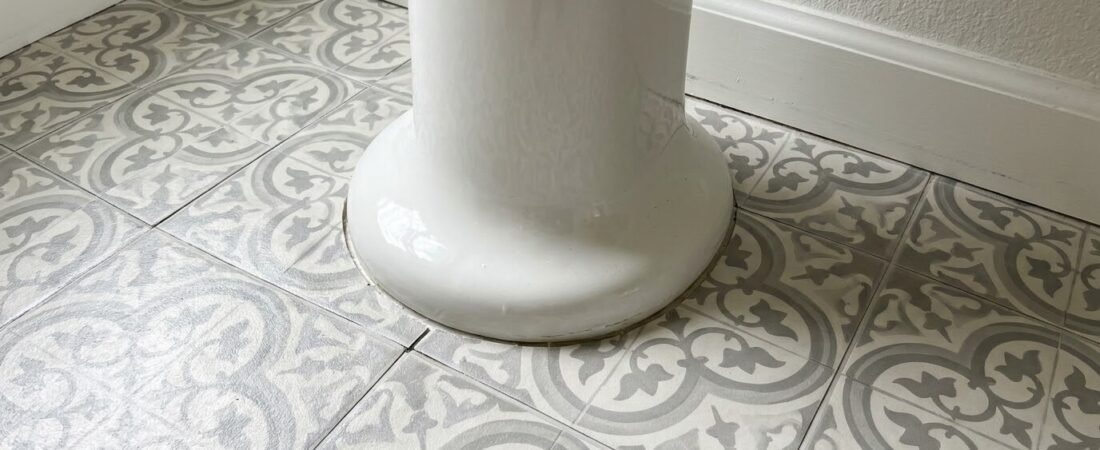
Yes, you can use peel and stick floor tiles around a bathroom sink. They work well in areas that get small splashes and drips, but not where water sits on the floor. You can use them around pedestal sinks, vanity sinks, and wall-mounted sinks. However, each type needs a different approach around the sink base. Avoid using self-adhesive vinyl tiles over underfloor heating, near active leaks, or in wet rooms.
This guide helps you decide if peel and stick floor tile is right for your bathroom sink area. You’ll learn where self-adhesive vinyl tile works best, which parts of the floor you can cover, and where you should avoid using it. This guide focuses on choosing the right areas, not on how to install the tiles. You’ll find links to the installation guides at the end.
Are Peel and Stick Floor Tiles Suitable for the Area Around a Bathroom Sink?
Yes. Peel and stick vinyl tile can work well on a small bathroom floor, including the area around your sink. Having a sink in the room does not mean you have to avoid these tiles. But, if you are planning to cover a larger bathroom floor, read our guide on using peel and stick floor tiles in a bathroom to understand where they work best.
However, you need to think about how much water reaches the floor. Most peel and stick floor tiles are water-resistant, not waterproof. They can handle small splashes, drips, and quick wipe-ups. But they are not made for puddles that sit for hours or water that keeps getting under the tile edges. Even major tile brands explain that their products are water-resistant, not waterproof, and are not suitable for constantly wet areas.
So, the main question is not whether I can use peel and stick tile near a bathroom sink. It’s how much water that part of your floor gets and how quickly you can clean it up. This will help you decide if these tiles are a good choice for your sink area.
Should You Tile Under or Around Your Bathroom Sink?
You can use peel and stick floor tiles around pedestal sinks, bathroom vanities, and wall-mounted sinks, but the best placement depends on how each sink is attached and how much floor space it covers. Use this table to see whether you can tile up to your sink or run peel and stick floor tiles underneath it.
| Sink type | Tile up to the sink | Tile underneath | What you should know |
|---|---|---|---|
| Pedestal sink | Yes | Only if you remove or lift the pedestal | The base may be bolted or caulked to the floor, so you usually don’t need to move it just to cover the visible floor. |
| Floor-mounted vanity | Yes | Optional, but you must remove the vanity first | If your vanity sits flat on the floor, tiling up to its base is usually easier. |
| Vanity with legs or floating vanity | Yes | Yes | You can run tiles underneath because the floor remains visible. Check the clearance under doors and drawers first. |
| Wall-mounted sink | Yes | Yes | You can run tiles across the open floor because the sink does not touch the ground. Plan around the exposed plumbing. |
In most cases, tiling up to your sink or vanity is the simpler option because you don’t have to move the fixture. Tiling underneath depends on how your sink is attached and whether you want a continuous floor.
Check If Your Bathroom Sink Area Too Wet for Peel and Stick Tile?
Before you use stick on floor tiles around a bathroom sink, check how wet the floor gets during normal use. Not every bathroom has the same amount of water, so your sink area may or may not be suitable.
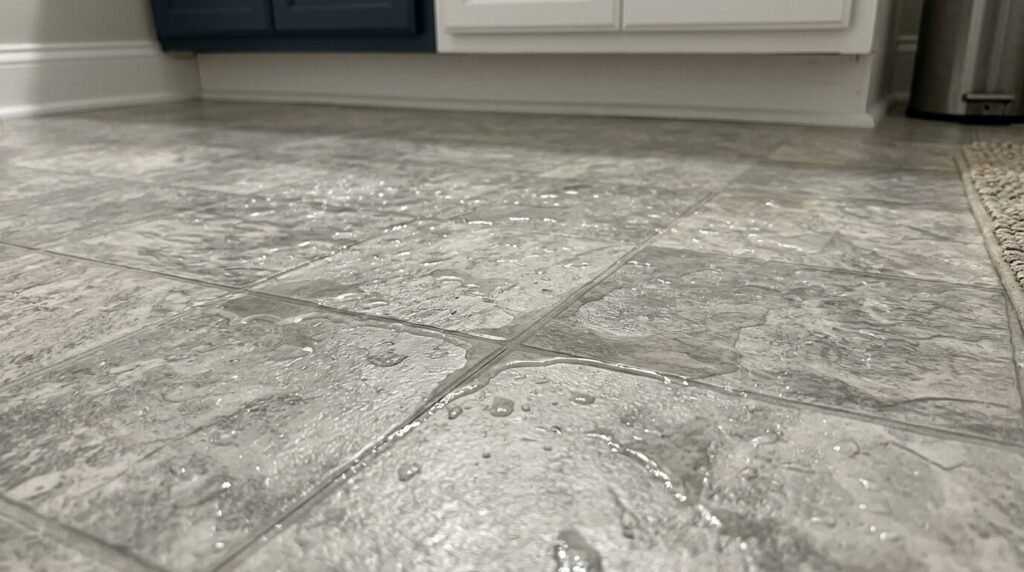
- Safe for peel and stick: Small splashes from hand washing, drips from wet hands, a damp bath mat, and normal mopping with a well-wrung mop.
- Risky: A floor that stays wet after each use, frequent splashing from kids, a slow drip from the water supply line or sink trap, or a bathroom with no exhaust fan.
- Not suitable: A floor with an active leak, regular puddles, or water that spreads across the bathroom.
Also, check under the sink and around the pipes. A small leak can go unnoticed if you only check the open floor. If you find any moisture, fix the leak and let the area dry completely before using self-adhesive vinyl tile. If the floor around your sink only gets a little water during normal use, peel and stick tile can be a good option. However, if water keeps collecting there, it is better to choose another flooring option.
Where Can You Use Peel and Stick Floor Tiles Around a Bathroom Sink?
You can use peel and stick floor tiles in several areas around your bathroom sink, but you need to pay attention to where water reaches the floor. Some spots are easier to cover, while others need extra care to prevent moisture from getting under the tile edges.
Where You Can Use Them
- In front of your sink: You can use peel and stick tiles here if the floor only gets a few drops while you wash your hands. Just wipe up the water before it reaches the tile edges.
- Beside your sink: You can cover this area without much concern if you don’t have a leak or regular water spills. Make sure the floor stays dry before you install the tiles. Measure the toe-kick clearance first so the tile thickness does not interfere with any cabinet doors or drawers.
- In the open floor area between sink and bathroom door: You can tile this section because it usually stays away from direct splashes. Check that you don’t have any damp spots before covering the floor.
Where You Need to Be Careful
- Along vanity or pedestal base: Water can collect where your tiles meet the sink base. Make neat cuts and check these edges regularly for moisture or lifting.
- Behind your sink: If water runs down the wall, it can collect along the floor edge. Check this area before you cover it with tiles.
- Under the exposed sink pipes: Check the drain trap and supply lines for slow drips. Fix any leak before you install tiles because repeated moisture can weaken the adhesive.
- Beside the bathtub or shower entrance: If you regularly step onto this area with wet feet, water can reach the tile seams. Avoid using ordinary self-adhesive tiles here if the floor stays wet.
What Bathroom Conditions Should You Check Before Using Peel and Stick Tile?
Before you use self adhesive tiles around your bathroom sink, check the room temperature, humidity, and ventilation. These conditions can affect how well the self-adhesive backing holds to your floor.
- Humidity and temperature: Self-adhesive tiles need suitable room conditions to stick properly. For example, one self-adhesive plank manufacturer recommends a temperature of 15 to 35°C and humidity of 40 to 65% after installation. So, make sure your bathroom has a working exhaust fan to remove steam and moisture. A bathroom with poor ventilation can stay damp for too long. Further, these ;oose corners or lifting edges are signs you shouldn’t ignore. You need to deal with properply, which we covered already, see how to fix the curling edges and tiles.
- Give the adhesive time to cure: Don’t expose your new floor tiles to water too soon. The adhesive needs time to cure and hold properly. One major home improvement retailer’s self-stick vinyl instructions recommend waiting 7 days before exposing the floor to water. If your bathroom sink is the only one you have, plan for this waiting period before installation.
Always check the instructions on your tile box or the manufacturer’s website before you start. Temperature limits, humidity levels, and waiting times can differ between peel and stick floor tile products.
Choose Less Slippery Peel and Stick Tiles for Your Bathroom Sink
When you choose peel and stick floor tiles for your bathroom sink area, don’t look at appearance alone. You also need to think about how much grip you get from the surface. Since water can splash onto the floor while you wash your hands, a slippery tile can make this area less safe. Because the right tile also matters. If you’re ready to choose one, see our guide to the best peel and stick floor tiles for around a bathroom sink, where you can compare different options, prices, and features.
You need to look for tiles with a slip-resistant rating before you buy. For example, one retailer lists a P3 anti-slip rating for its vinyl tiles, while another recommends using a mat in wet areas like bathrooms. You can also choose matte or lightly textured tiles because they usually provide better grip than smooth, glossy ones.
You can make the area safer by placing a non-slip bath mat in front of your sink. Just remember to lift it regularly so you can check underneath and let the floor dry. This keeps moisture from getting trapped between the mat and your tiles.
What to Know About Tiling Around Different Bathroom Sink Types
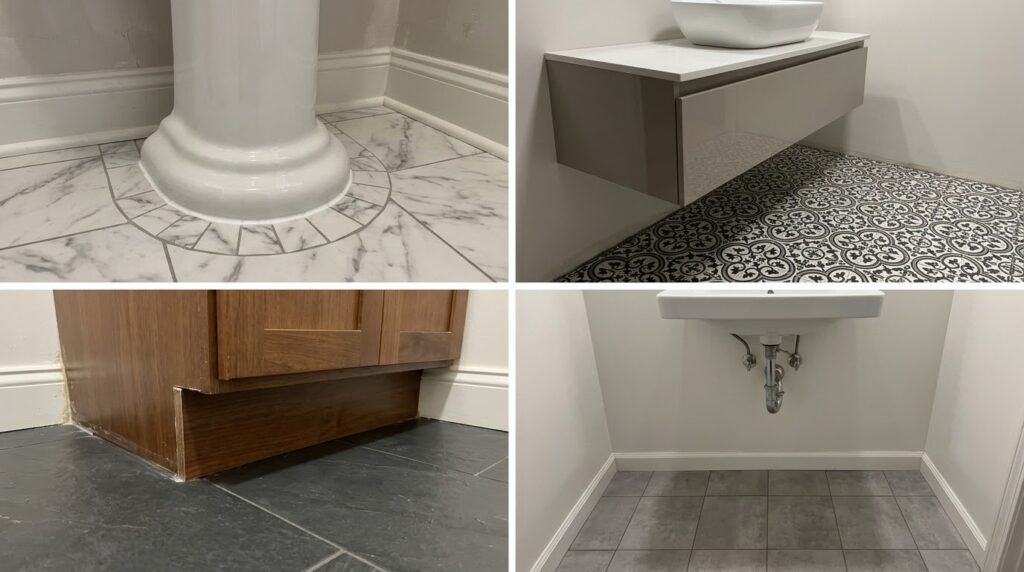
The type of bathroom sink you have affects how you place peel and stick floor tiles. Some sinks cover part of the floor, while others leave the entire area open. So, before you decide where to stop your tiles, check how your sink sits and how much floor space it covers.
1. Pedestal Sink
A pedestal sink is one of the easiest sink styles to work around. If you have a pedestal sink, you can cut your peel and stick floor tiles to fit around its base. Here is the complete guide you can read to understand on how to cut these self-adhesive tiles properly, so it does not damage your tile.
You can stop the tiles where the base meets the floor without removing the sink. In most cases, there is no need to run tiles underneath because the pedestal already covers that area. Removing a sink that is bolted or caulked to the floor just to cover a hidden space can create extra work for you.
2. Bathroom Vanity Sink
If your sink sits on a bathroom vanity, you have a few options. You can stop the tiles at the cabinet, run them underneath, or use them inside the cabinet for a finished look. If your vanity sits flat on the floor, you can usually tile around its base. However, if it has legs or hangs on the wall, you can run the tiles underneath because the floor remains visible.
Peel and stick floor tiles are thin, so they usually don’t get in the way of vanity doors and drawers. Still, measure the space first to make sure you can open everything properly. You can also add tiles inside the cabinet for a cleaner look, but remember that they won’t protect it from leaks or water damage.
3. Wall-Mounted Sink
If you have a wall-mounted sink, also called a wall-hung sink, you don’t have to cut tiles around a sink base. The sink stays above the floor, so you can lay your peel and stick floor tiles across the open area.
However, the floor under your sink remains visible. So, plan your tile layout carefully to get a neat finish. Also, check the exposed pipes and plumbing before you start. If a pipe leaks or drips, water can fall directly onto your new tiles.
4. Undermount Cabinet Vanity
If your bathroom vanity has a cabinet that sits directly on the floor, you can tile up to its base without moving it. Make straight cuts along the cabinet’s kickplate border so the tile edges follow the bottom of the vanity neatly. You can also run tiles underneath if you plan to remove the vanity first. However, if you are keeping the cabinet, tiling up to the base saves you extra work and avoids covering a floor area you won’t see.
Decide When to Tile Around Your Bathroom Sink or Vanity
The best time to lay peel and stick floor tiles depends on whether you plan to keep your existing sink or vanity. If you are not changing your fixtures, you can usually tile around them. However, if you plan to replace them, think about the new fixture’s size before covering the floor.
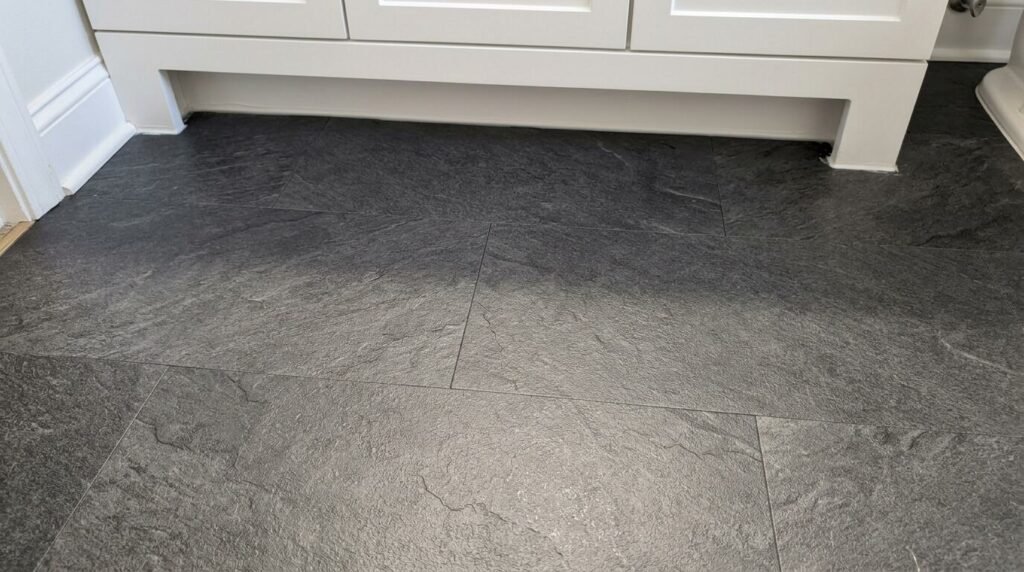
Here is what you should consider:
- Keeping your existing sink or vanity: You can tile around its base without moving it. This is usually the easiest option because you don’t have to remove your fixtures.
- Replacing your sink or vanity soon: Replace it before tiling. A new vanity may have a different size or shape, so tiles cut around the old cabinet may leave uncovered spots or visible marks. If you need to replace your vanity or change the flooring later, learn how to remove peel and stick floor tiles without damaging the floor.
- Wanting tiles underneath your new vanity: Lay the floor tiles first, then place the vanity on top. However, check the space under the doors and drawers because the extra tile height may affect how they open.
Peel and stick floor tiles are thin and easy to cut, so you can usually work around an existing sink or vanity without much trouble. However, think about future changes before you cover the floor.
What to Check on the Tile Box Before You Buy for Bathroom Sink
Before you buy peel and stick floor tiles for your bathroom sink area, read the product label carefully. Don’t rely only on the words “water-resistant” on the front of the box. Check these details to make sure the tiles suit your bathroom.
| What to check | Why it matters near a sink |
|---|---|
| Tile thickness | Helps you check whether vanity doors, drawers, or the toe kick will have enough clearance. |
| Humidity and temperature range | Shows whether your bathroom conditions are suitable for the adhesive. |
| Waiting time before water exposure | Tells you how long to wait before using the sink area normally. |
| Underfloor heating rating | Confirms whether the tiles are approved for use over heated floors. |
| Wet-area rating | Helps you tell whether the tiles are suitable for a bathroom with light splashes or unsuitable for wet rooms. |
| Cleaning instructions | Shows which cleaning methods are safe. Many brands warn against using steam mops. |
Choose tiles that clearly list bathroom use and explain their water-resistance limits. This gives you a better idea of where you can use them and where you should avoid them.
When You Should Avoid Peel and Stick Floor Tiles Near a Sink
Sometimes, peel and stick floor tiles are not the right choice for your bathroom sink area. Avoid using them in these situations:
- Constant standing water or an active leak: Fix the leak first. Water can get under the tiles, where you may not notice it until the adhesive or floor starts to fail.
- Poor ventilation and high humidity: If your bathroom has no working exhaust fan and stays damp, the adhesive may weaken over time.
- Wet rooms and shower floors: Some vinyl tiles are suitable for bathroom areas with light splashes, but not for wet rooms or shower floors. Always check the product instructions.
- Underfloor heating: Some peel and stick tiles are not approved for heated floors. Check with the manufacturer before you use them.
- Steam mops: Some major brands do not recommend steam mops because heat and moisture can weaken the adhesive.
If your bathroom has any of these conditions, consider sheet vinyl or another flooring option made for areas with more moisture.
FAQs
Can You Use the Sink Right After Installing Peel and Stick Floor Tiles?
Not right away. Give the adhesive enough time to cure before you use the sink and expose the new floor to water. Check your tile manufacturer’s instructions for the exact waiting time. Some products require you to wait up to 7 days before water exposure. If you have only one bathroom, plan ahead so you don’t need to use the sink area too soon.
Will Water From the Sink Make Peel and Stick Tiles Lift?
It can, especially if water keeps reaching the tile edges or getting underneath them. If you notice splashes around your sink, wipe them up instead of letting them sit. Also, check the tile edges from time to time. If you see curling, gaps, or loose corners, find out whether moisture is getting underneath before the problem spreads.
Can Peel and Stick Floor Tiles Handle Daily Bathroom Use?
Yes, you can use them in a bathroom that gets normal daily foot traffic. However, check the wear layer and cleaning instructions before choosing a product. Keep the floor clean, wipe up water quickly, and avoid dragging heavy items across the tiles because they can scratch or lift.
Can You Use Peel and Stick Floor Tiles in a Small Bathroom?
Yes, you can use them in a small bathroom if the floor stays mostly dry and your chosen product is approved for bathroom use. Before you buy, check whether the manufacturer allows use in bathrooms with showers. Also, make sure your bathroom has good ventilation so steam and moisture don’t stay trapped in the room. If water regularly collects on the floor, choose a more suitable flooring option.
Final Thoughts
Peel and stick floor tiles can be a practical choice around your bathroom sink if you choose the right product and keep the area mostly dry. Before you buy, check your sink type, bathroom conditions, and the manufacturer’s water and temperature limits. If your floor gets frequent puddles or has ongoing moisture problems, choose a more suitable flooring option instead. A little planning now can help you avoid loose edges, water damage, and early tile replacement.