
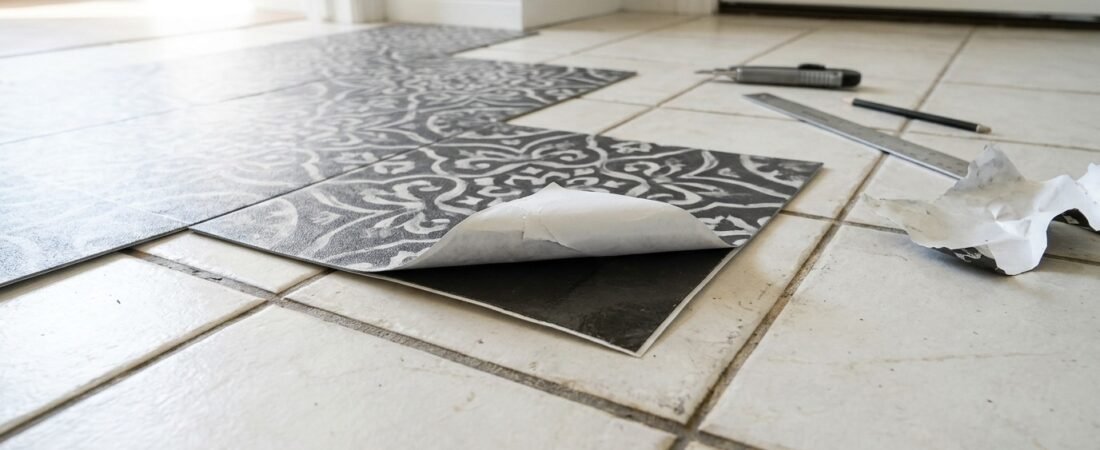
Yes, you can put stick-on floor tiles over ceramic tile without removing the old flooring first. Peel-and-stick tiles can bond to an existing ceramic floor when the tiles are firmly attached, the surface is clean and dry, and the grout lines are not too deep. However, glossy finishes, dirt, grease, and uneven grout joints can affect how well the new vinyl tiles stick and look after installation.
Stick-on floor tiles, also called peel and stick, make it easier to give your old ceramic floor a new look without the mess of tearing it out. But is your floor suitable for this type of installation?
In this guide, you’ll learn which ceramic tile surfaces you can cover, how to deal with grout lines, and what you need to do before applying self-adhesive tiles. Ceramic is just one type of existing flooring you may want to cover. You can also read our guide on putting peel-and-stick floor tiles over existing tile for advice on other tile surfaces.
Remember: This guide focuses on ceramic floors, not walls or backsplashes.
What You Need to Do To Stick Peel and Stick Over Ceramic Tiles?
Your ceramic tiles must be firmly attached, clean, dry, and smooth enough for the new tiles to stick properly. If your floor has deep grout lines, fill them before installing peel-and-stick floor tiles. Otherwise, you may see the old grout pattern through the new vinyl surface. Also, don’t cover loose, cracked, or moisture-damaged tiles because the new flooring won’t stay in place for long.
A simple way to judge your floor is to check whether it gives the new tiles a stable, even surface to stick to. If the ceramic tiles move, feel loose, or have damaged areas, covering them won’t fix the problem. The same applies to damp floors and surfaces with deep gaps.
The best surface for peel-and-stick tiles is a sound ceramic floor with tight grout joints and no movement. When your existing tiles meet these conditions, stick-on flooring has a much better chance of bonding properly and staying in place. Once your ceramic floor is ready, follow our guide on how to install peel-and-stick floor tiles to get the new tiles in place.
Test One Tile Before You Cover the Floor: Recommended
Clean a small area, press a spare stick-on tile firmly into place, and leave it for a few days. Then try to lift one corner. If it comes up easily, your ceramic floor needs more preparation, or the adhesive may not be suitable for that surface.
Will Grout Lines Affect Your Peel and Stick Tiles Over Ceramic?
You can usually cover ceramic tile with peel-and-stick flooring, but deep grout lines can cause problems. If your grout lines are too deep, thin vinyl tiles may press into them over time. As a result, you may start seeing the old grout pattern through your new floor. Wide or deep joints can also leave parts of the adhesive backing without proper contact.
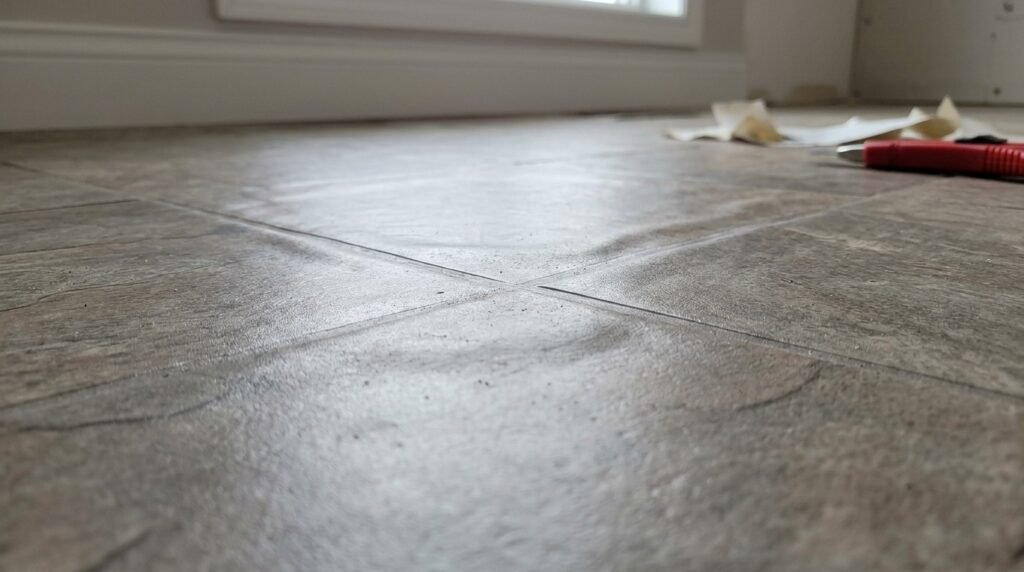
If your ceramic tiles have narrow, shallow grout lines and the floor feels smooth, you may be able to install stick-on tiles without filling them. However, fill deep or wide joints with a suitable floor patch before covering the ceramic. Check the tile manufacturer’s instructions because some products require a completely smooth surface.
You don’t need to remove your old ceramic floor just because it has grout lines. What matters is whether the gaps are deep enough to affect the new tile’s appearance or adhesive contact. You can check your existing grout before you buy or install new peel-and-stick tiles. Try these two simple tests:
- Fingernail test: Run your fingernail across a grout line. If your nail catches in the gap, the grout is deep enough to need attention.
- Straightedge test: Place a long, straight board or level across several ceramic tiles. Check for gaps underneath it, especially where the grout lines run. Also look for tiles that sit higher or lower than the ones next to them.
Where Can You Install Peel and Stick Tiles Over Ceramic Floors?
The room matters just as much as the condition of your ceramic floor. Peel-and-stick floor tiles work best in dry rooms where the temperature stays fairly steady. However, water, direct sunlight, and big temperature changes can weaken the adhesive or cause the new tiles to lift.
Here is where you can use stick-on tiles over ceramic tile and what you should watch for in each room.
| Room | Verdict | What you need to know |
| Bedroom, living room, and hallway | Good fit | These rooms usually stay dry and have steady temperatures, so they are among the best places for self-adhesive floor tiles. |
| Kitchen floor | Okay with care | Wipe up spills quickly so water does not seep between the tiles and weaken the adhesive. |
| Laundry room | Okay with care | You can cover an old ceramic floor, but check around the washer for leaks and standing water. |
| Bathroom floor, away from the tub and shower | Use with caution | Keep the seams tight and wipe up splashes quickly. Water that gets underneath the tiles can cause them to loosen. |
| Shower floor | Not suitable | Constant water and standing moisture can damage the adhesive bond. |
| Sunny or unheated room, such as a sunroom or porch | Risky | Direct sunlight and large temperature changes can heat the floor and put stress on the adhesive. |
| Floor with radiant heating | Check the product label | Some peel-and-stick tiles are not approved for heated floors. Check the manufacturer’s maximum safe floor temperature before installation. |
Even if your ceramic floor is smooth and firmly attached, that does not mean every room is suitable for stick-on tiles. One area to be careful with is any floor that often gets wet or stays in direct sunlight. Always check the tile manufacturer’s instructions for approved rooms, moisture limits, and temperature restrictions before you install the new flooring.
Can You Put Peel and Stick Tiles Over Glazed Ceramic?
Yes, but the glossy finish on glazed ceramic can make it harder for some peel-and-stick adhesives to bond. Grease, wax, and floor polish can also weaken the bond, even when the tiles look clean. Check whether your chosen flooring allows installation over glazed ceramic. Some products may require a special primer or surface treatment, while others may not be suitable for this surface.
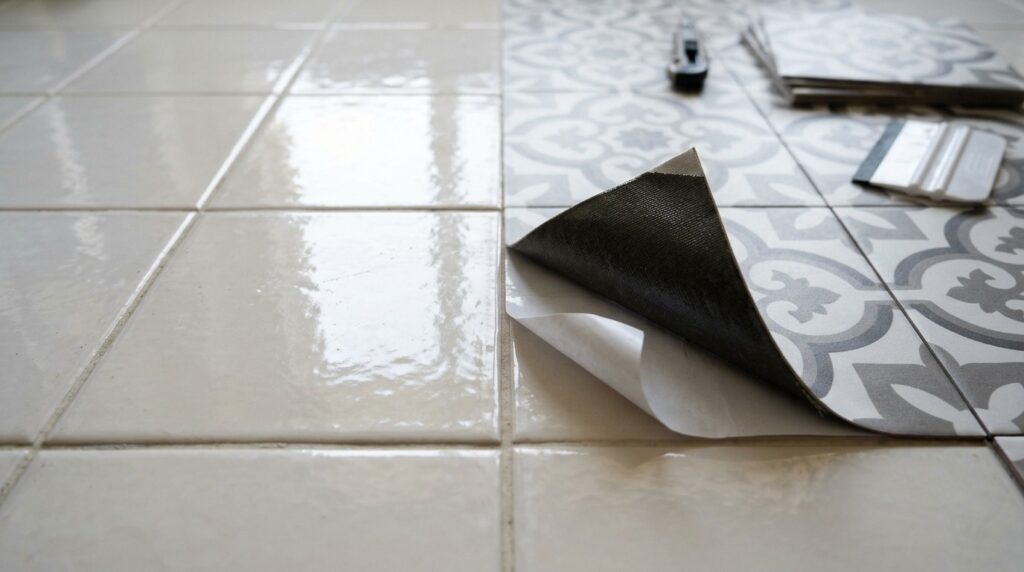
Before you cover the entire floor, make sure your ceramic tiles are firmly attached and free of coatings that could affect adhesion.
Should You Install Stick-On Tiles Over Ceramic or Remove the Old Floor?
You don’t always need to remove your existing ceramic floor before installing peel-and-stick tiles. If the old tiles are firmly attached, dry, and mostly flat, you can often cover them with new stick-on flooring. However, if the ceramic is loose, cracked, or damaged by water, removing it may be the better choice.
Use this comparison to decide which option makes more sense for your floor.
| What to consider | Cover the ceramic tile | Remove the ceramic tile first |
| Mess | Less dust and no major demolition | More dust, heavy work, and broken tile to clean up |
| Cost | Usually costs less because you avoid tile removal and disposal labor | Usually costs more due to removal, cleanup, and possible floor repairs |
| Time | Faster, although you still need to clean, patch, and prepare the old floor | Takes longer because you must remove the tiles and prepare the exposed subfloor |
| Best when | Your ceramic tiles are solid, dry, and mostly flat | Your old tiles are loose, cracked, uneven, or water-damaged |
| Main advantage | You save time and avoid tearing out a floor that is still in good shape | You can inspect the subfloor and repair hidden damage before installing new flooring |
Which Option Should You Choose?
If your ceramic floor passes the checks in this guide, covering it with self-adhesive floor tiles can save you a lot of work. You won’t need to break up the old tiles or pay to haul them away.
However, don’t cover a floor just to avoid removal work. Loose tiles, serious cracks, moisture damage, and major uneven spots need attention first. Removing the old ceramic lets you inspect the surface underneath and fix problems that new stick-on tiles would only hide.
Problems You May Face When Covering Ceramic With Stick-On Flooring
When you put stick-on tiles over an existing ceramic floor, a few problems can affect how the new flooring looks and stays in place. Check these issues before you cover your ceramic tiles.
1. Old Grout Lines Showing Through Peel-and-Stick Tiles
If your ceramic floor has deep grout lines, you may see their pattern through the new peel-and-stick floor tiles. Vinyl stick-on tiles are thin and flexible, so they can press into the gaps between the old ceramic tiles over time. This can leave visible lines or dips on your new floor.
2. Stick-On Tiles Lifting Around the Edges
If the adhesive backing does not bond well with the ceramic floor, the edges of your new stick-on tiles may start to curl or lift. Dust, grease, soap film, wax, and old sealer can all weaken the bond. You will notice that deep grout lines can also leave parts of the tile without proper contact with the floor. However, If the edges of your new tiles start curling up, it might be due to adhesive, which is not bonding well with the ceramic. Read why peel-and-stick floor tiles curl or stop sticking to find out what causes this problem and how to prevent it.
3. Poor Adhesion on Glossy Ceramic Tiles
Glazed ceramic tiles have a smooth, shiny finish that can make it harder for some peel-and-stick adhesives to grip. Even when the floor looks clean, the glossy surface may not provide the bond your new vinyl tiles need. If your new tiles start lifting or won’t stay in place, there may be a problem with the surface or adhesive. Find out why peel-and-stick floor tiles are not sticking and how to fix it.
4. Uneven Floor After Installing Stick-On Tiles
Peel-and-stick flooring cannot level an uneven ceramic floor. If some old tiles sit higher than others, or the grout joints have deep dips, those differences can still show through the new vinyl surface. Cracked edges and damaged areas can also affect the finished look.
5. Extra Floor Height Around Doors and Doorways
When you put stick-on tiles over ceramic tile, you add another layer instead of removing the old flooring. This increases the finished floor height and may leave less space under doors. You may also notice a height difference where the ceramic floor meets carpet, hardwood, or another type of flooring.
When Should You Avoid Stick-On Tiles Over Ceramic Floors?
Not every ceramic floor is a good base for peel-and-stick tiles. Even if you want to cover your old flooring without removing it, some problems can stop the new tiles from sticking or cause them to lift later.
Avoid the installation until you fix these issues:
- Wet floors or standing water: Don’t install self-adhesive tiles on shower floors or anywhere water regularly collects. Moisture can get under the seams and weaken the adhesive.
- Loose, hollow, or cracked ceramic tiles: Don’t cover damaged tiles and expect the new flooring to hold them in place. Repair or replace loose and broken tiles first.
- Heavily textured ceramic: Bumpy or uneven tiles prevent the adhesive backing from making full contact with the floor. You may need to smooth the surface with a suitable floor patch first.
- Moisture under the existing floor: If you have leaks, dampness, or water coming up through the floor, fix the source before installing new tiles. Covering the ceramic will only hide the problem for a while.
- Very hot or sunny areas: Direct sunlight and high floor temperatures can soften the adhesive and make stick-on tiles loosen. Check the product’s temperature limits before using it in these areas.
- Deep grout lines you don’t want to fill: Thin vinyl tiles can sink into deep joints or show the old grout pattern through the new floor. Fill wide or deep grout lines before you install them.
If your ceramic floor has any of these problems, fix the surface first or choose another flooring option. Installing peel-and-stick tiles over a damaged or unsuitable ceramic floor will not make those problems go away.
FAQs
Can You Use Groutable Peel-and-Stick Tiles Over Ceramic?
Yes, you can install groutable peel-and-stick tiles over ceramic, as long as the old floor is firm, clean, and flat. These tiles are thicker and made to hold grout, but deep gaps or loose ceramic tiles underneath can still affect the finished floor.
Will Removing Peel-and-Stick Tiles Damage the Ceramic Underneath?
The ceramic tiles usually stay intact because they have a hard, durable surface. However, removing the stick-on flooring can leave adhesive residue behind. If you plan to uncover the old floor later, read our guide on [how to remove peel-and-stick tiles without damaging the floor] for safer removal tips.
Do You Need Primer for Peel-and-Stick Tiles Over Ceramic?
Not always. Some stick-on tile products need a primer to bond properly with glazed ceramic, while others may not. For example, FloorPops recommends filling the grout lines and applying its primer when you install over existing tile. Check your tile manufacturer’s instructions before you start.
Can You Use Peel-and-Stick Tiles Over a Ceramic Bathroom Floor?
Yes, you can use peel-and-stick floor tiles over ceramic in dry bathroom areas, such as around the vanity. However, avoid shower floors and areas that stay wet because regular self-adhesive tiles are not made for constant moisture. Water can weaken the adhesive and cause the edges to lift. If you’re planning to use stick-on flooring in other parts of your bathroom, read whether peel-and-stick tiles are a good choice for bathroom floors before you start.
Final Thoughts
You don’t always have to remove an old ceramic floor to give your room a new look. Stick-on floor tiles can cover existing ceramic when the tiles are firmly attached, the surface is clean and dry, and the grout lines are not too deep. However, check the tile manufacturer’s instructions before you start, especially if your ceramic has a glossy finish.
If your floor meets these conditions, peel-and-stick tiles can save you the mess of removing the old flooring. Take time to check the surface first, because a good bond starts with the ceramic underneath.